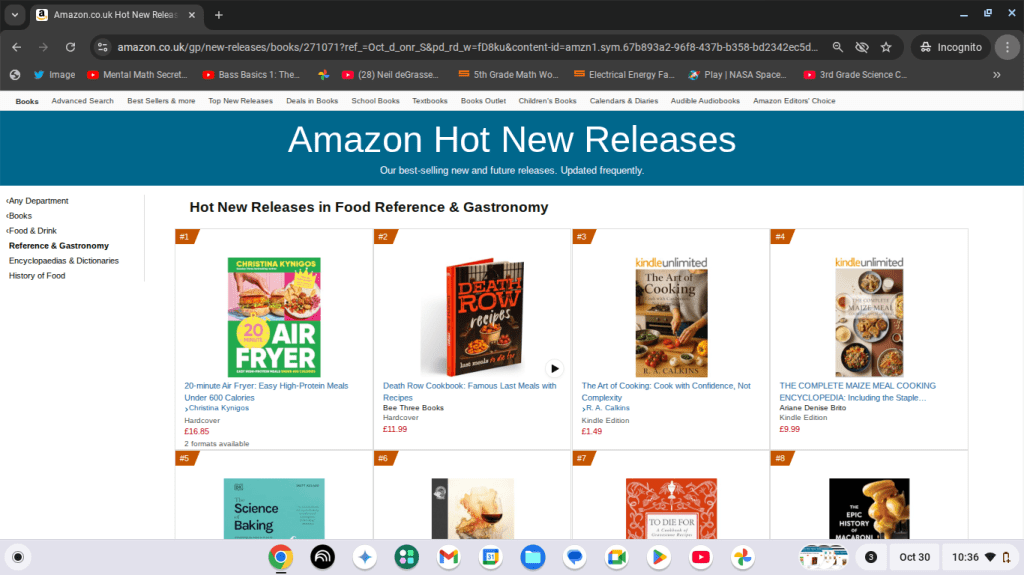
Dear followers and readers,
your help is needed to the extreme as the book can go up or down……
Brito, Ariane. The Complete Maize Meal Cooking Encyclopedia: Including the Staple International Strategic Policy (Ariane Crafts Cooking Encyclopedias). New York: ARIANE CRAFTS, 2025.
i would like to ask you to buy the complete maize meal cooking encyclopedia for your friends and family or just to donate to institutions and groups involved in producing solutions to solve the food crisis in the world, especially in southern africa.
please send the following letter with the book purchased to your local government or any multilateral organisation of your choice,
dear ministry of agriculture,
Please find the attached book ‘ the complete maize meal cooking encyclopedia’. I would like to request that your government adopt my book as evidence to translate research into implementable policy solutions.
The breakthrough character of this work rests on three interlocking and mutually reinforcing pillars:
Protein Engineering Modalities: The provision of dual, scientifically proven pathways for achieving protein sovereignty, ensuring scalable and inclusive solutions that address both high-capital industrial needs (Texturised Vegetable Protein, TVP) and low-capital Micro, Small, and Medium Enterprise (MSME) capacity (Maize Tofu Analogue).
Humanitarian Logistics: The successful translation of sophisticated industrial quality control techniques, such as cryo-stable food physics (utilising pregelatinized starch and hydrocolloids), into critical countermeasures against socio-economic fragility, particularly maternal time poverty and logistical failure.
The Circular Bioeconomy Contract: Establishing guaranteed commercial viability and environmental sustainability through mandatory waste valorization, converting maize waste streams (e.g., husks, cobs, and alcohol production residues) into high-value biopolymers and high-protein animal feed (DDGS).
The solution to maize’s protein deficit is presented through a dual-modality engineering strategy, offering pathways scalable to vastly different capital capacities.
3.1.1. Modality 1: High-Moisture Extrusion (HME) and Industrial Scaling
For large-scale, high-capital industrial operations, the book details protocols for producing shelf-stable, high-protein meat analogues through composite maize-legume blending utilizing High-Moisture Extrusion (HME).1 The resulting output is Texturised Vegetable Protein (TVP) chunks.1 This high-capital expenditure process is essential for achieving the fibrous, anisotropic (meat-like) texture required for long-term storage, high-volume production, and institutional procurement mandates.1
3.1.2. Modality 2: Protein Co-Precipitation (Low-Capital Wet Process)
To ensure inclusivity and mitigate market consolidation, the encyclopaedia provides blueprints for a lower-capital expenditure technique: the wet process of Protein Co-Precipitation.1 This technique yields a maize tofu analogue.1 This modality is critical for scaling up nutritious food production through local Micro, Small, and Medium Enterprises (MSMEs) and producer cooperatives, circumventing the high-capital hurdle of extrusion equipment.1
The intentional design of a dual-modality solution serves as a structural response to the political economy problem of market concentration. By offering scientifically proven alternatives tailored to the capital capacity of small enterprises, the book democratizes the scientific solution, directly mitigating the “Technological Frontier” barrier that typically excludes MSMEs from high-value processing sectors.
Ariane Denise Brito
by sending this letter and a purchased kindle or hardcover copy of the complete maize meal cooking encyclopedia you are helping to change the world for better and you are helping me as writer and mother. i thank you from the bottom of my heart!
ariane denise brito

