( ongoing)
Register for Institutional Updates & New Case Study Notifications”
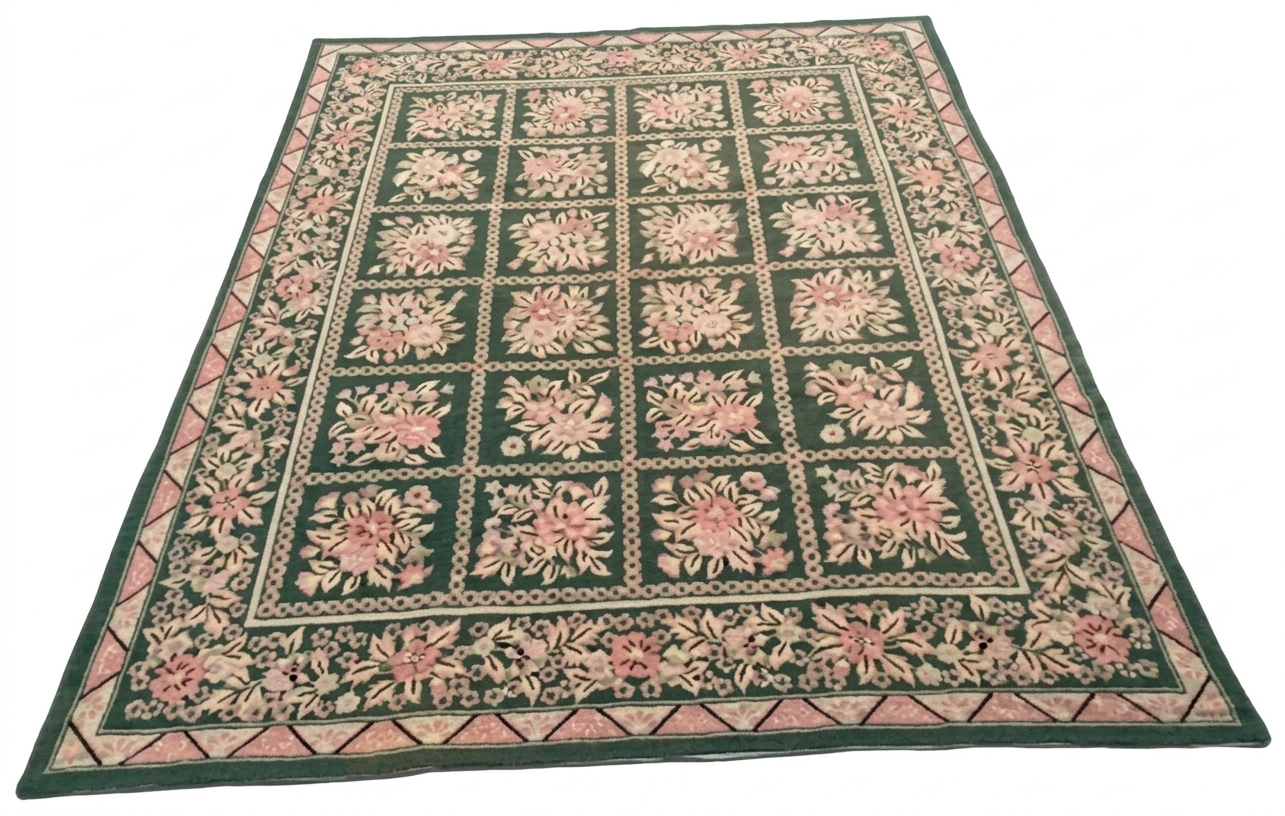
ACHR-INT-001 7×9 ft
ariane crafts, all rights reserved.
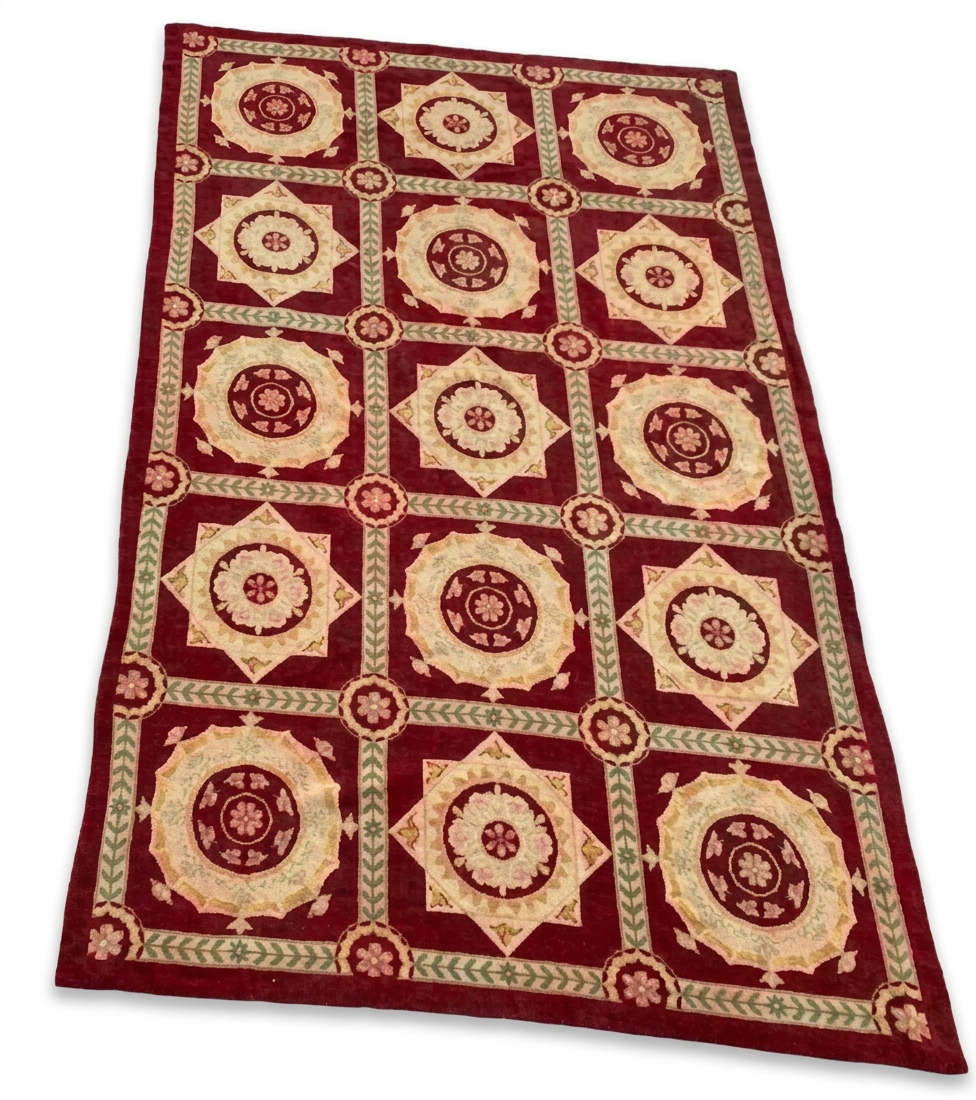
ACHR-INT-002 5x7ft
Ariane Crafts, All Rights Reserved
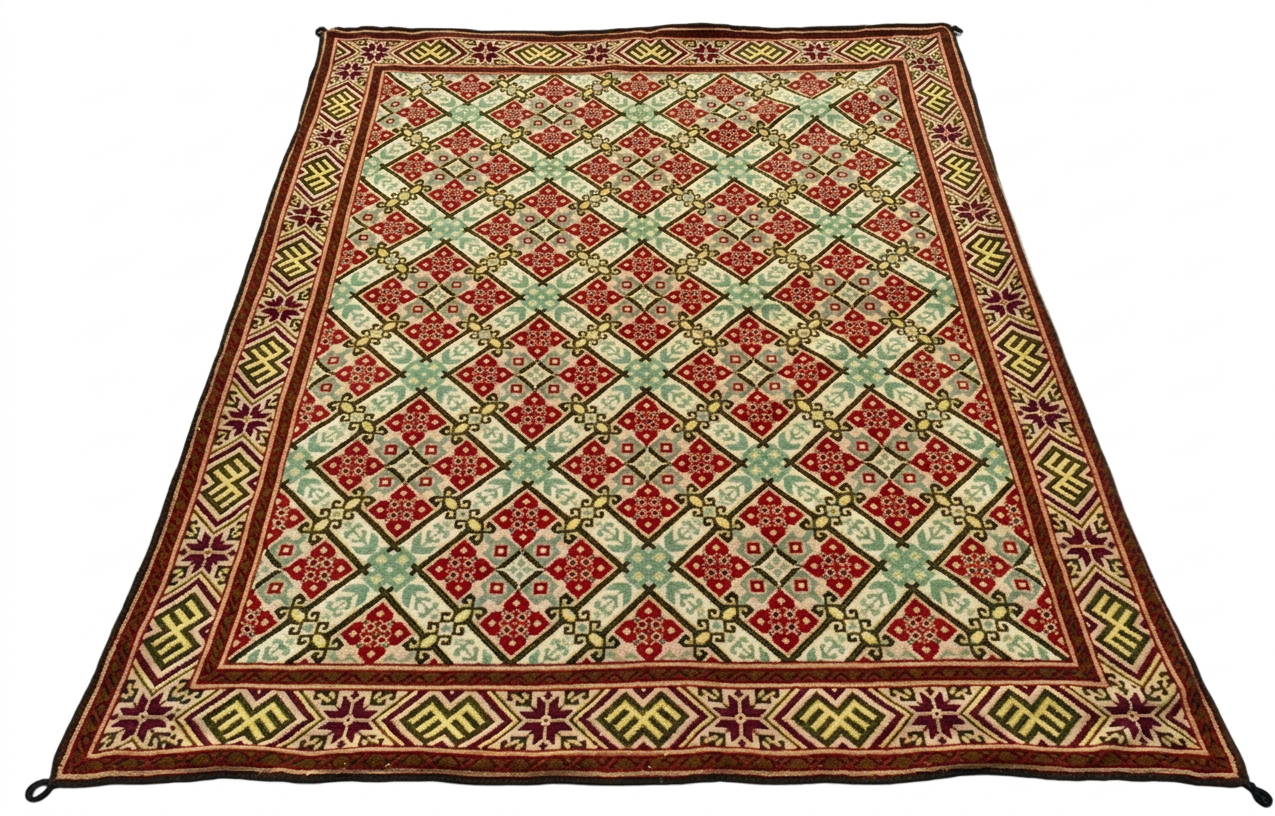
ACHR-INT-003 5×6 ft
ariane crafts, all rights reserved
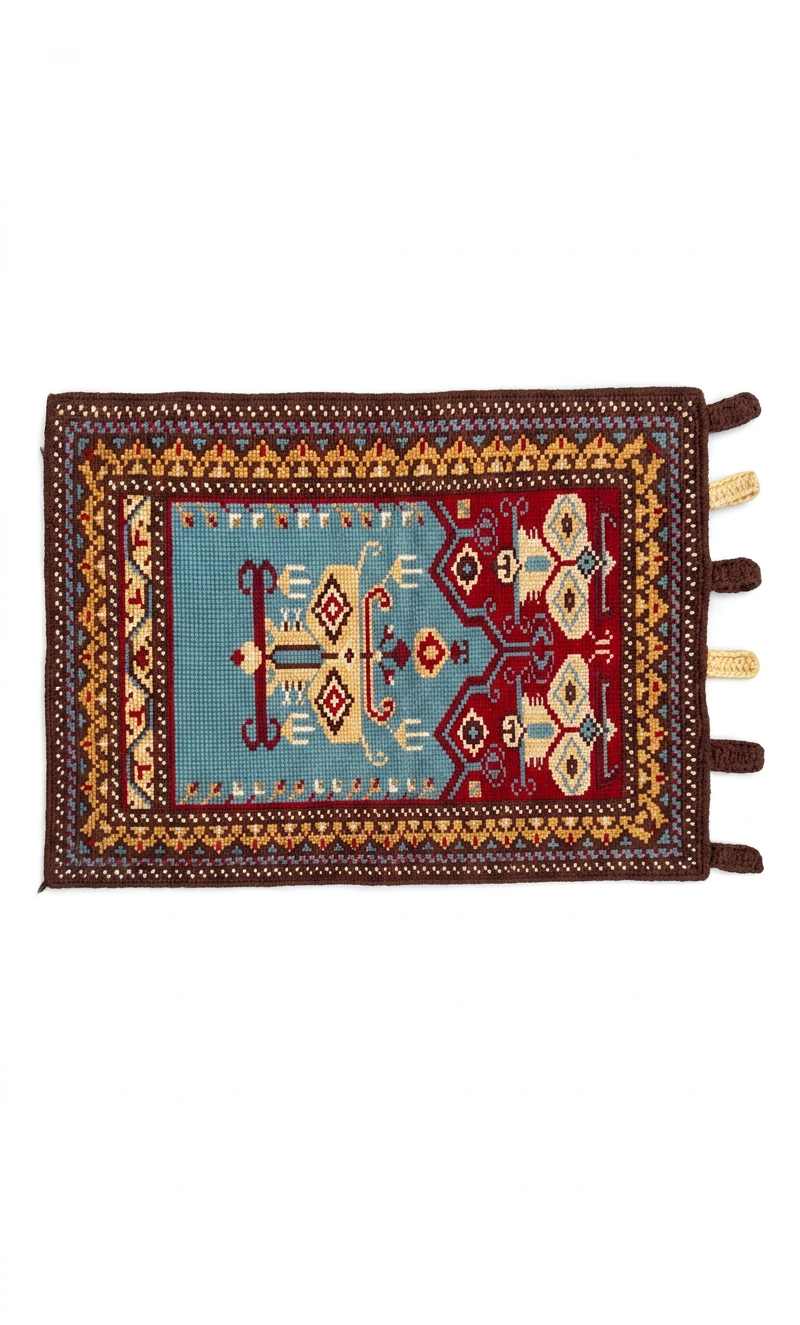
ACHR-INT-004 2×3 ft
ariane crafts, all rights reserved
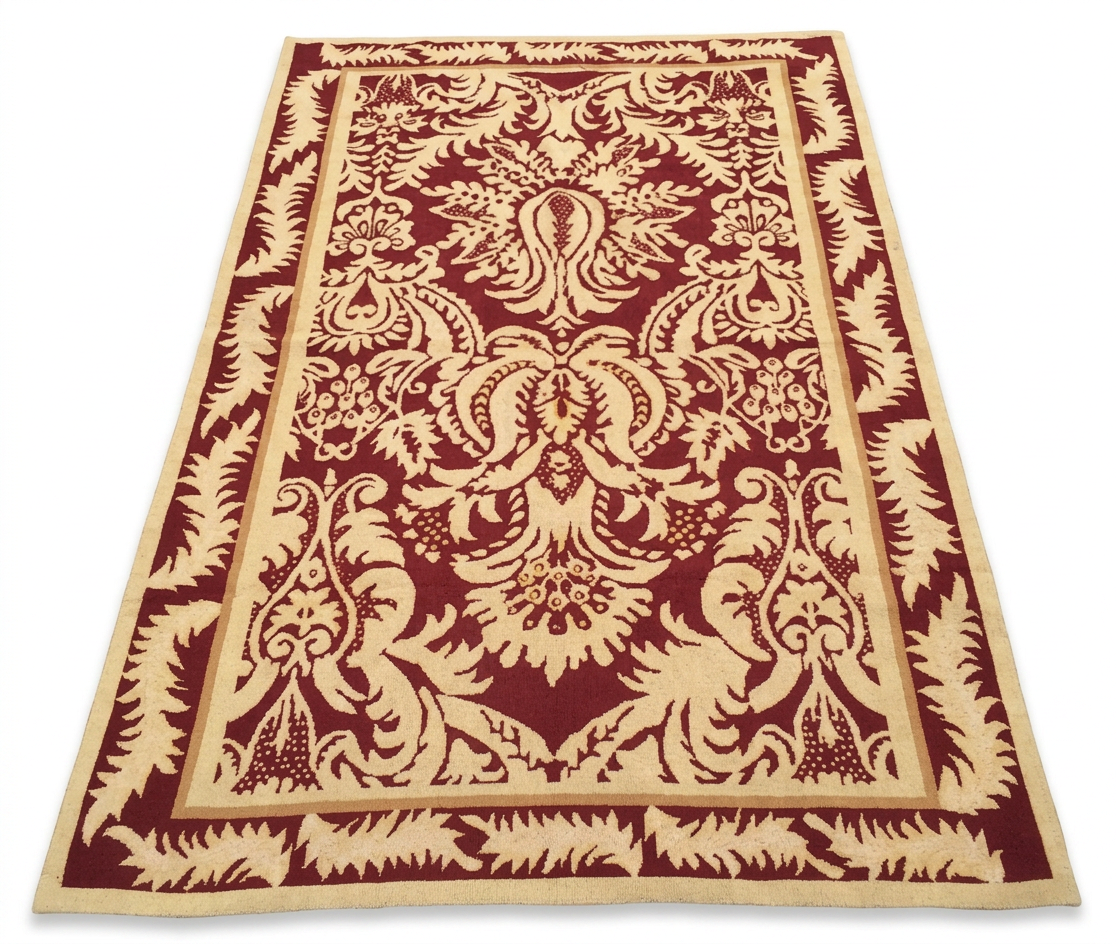
ACHR-INT-005 4×6 ft
ariane crafts, all rights reserved
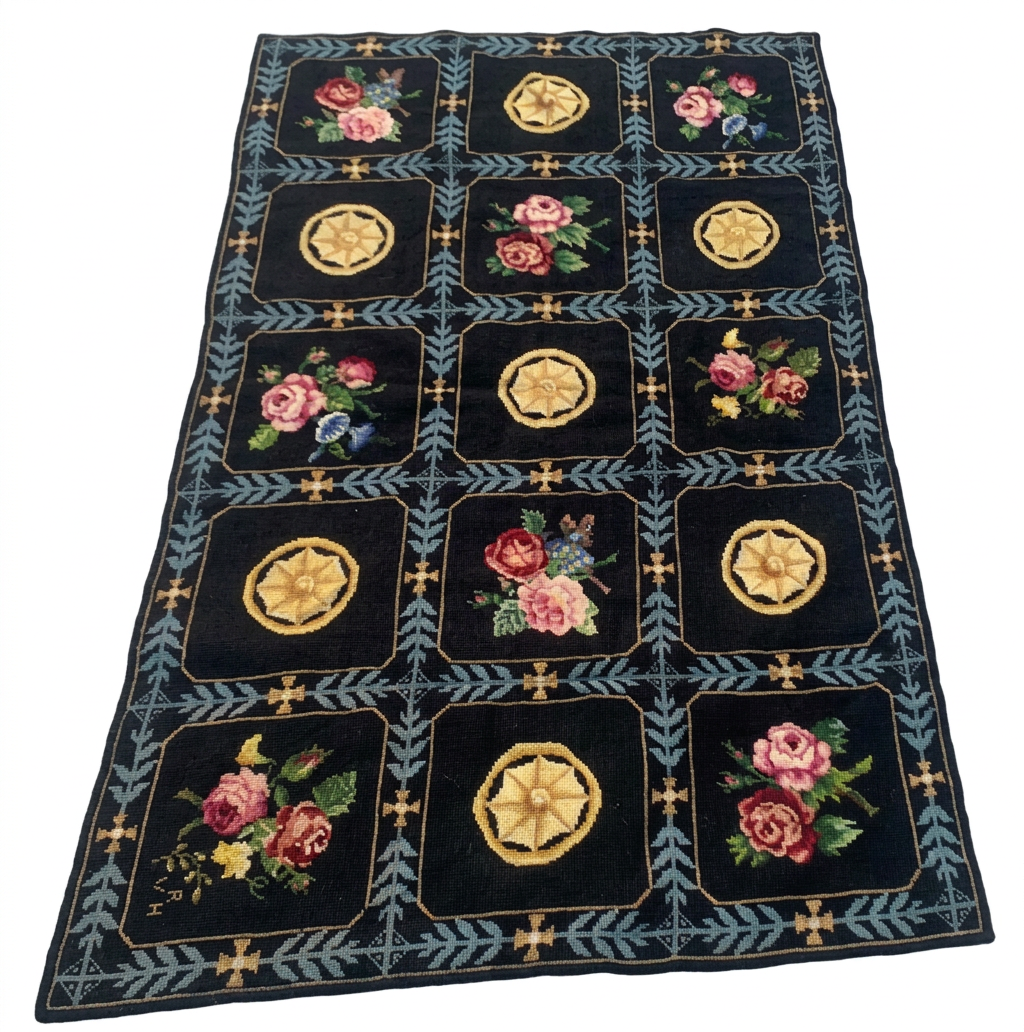
ACHR-INT-006 3×5 ft
ariane crafts, all rights reserved
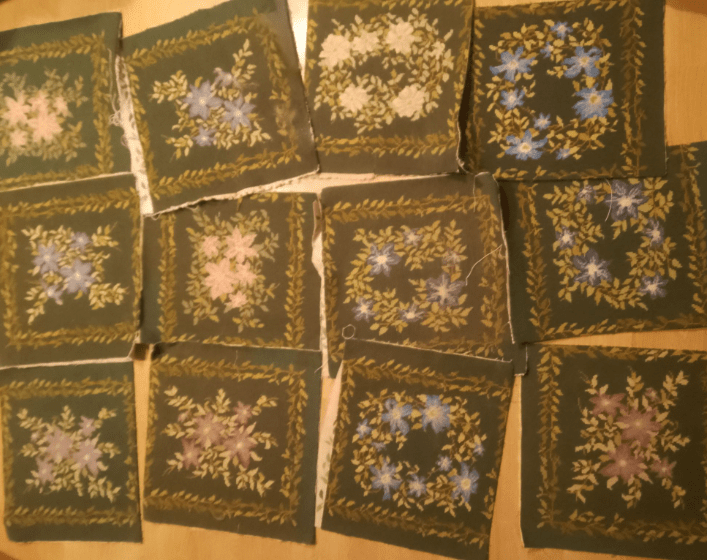
ACHR-INT-007
ariane crafts, all rights reserved
| Accession URN | Secure UUID | Object Specification & Dimension | Initial Curatorial Status |
| ACHR-INT-001 | 7ddd5589-a485-4484-919e-ac91e82b604d | Floral Medallion Needlepoint (7×9 ft) | High-mass; multi-hand tension anomalies. |
| ACHR-INT-002 | 83e8e25f-eb7e-49ce-a8e4-77ceb254e8c2 | Geometric Medallion Needlepoint (5×7 ft) | Stable foundation; localized oxidation. |
| ACHR-INT-003 | f7dbdcfe-5589-41f9-8a34-3195d9d230fe | Indigenous Kilim Flat-weave (5×6 ft) | Control asset; indigenous material integrity. |
| ACHR-INT-004 | 75b9bc7e-5293-42ac-84aa-9483fd0bfd6e | Miniature Prayer-Style Rug (2×3 ft) | High-density stitch work; minimal skewing. |
| ACHR-INT-005 | 853e9c6a-5943-4775-b8fa-f6fc785ca106 | Damask-Pattern Needlepoint (4×6 ft) | High colonial aesthetic weight; substrate analysis pending. |
| ACHR-INT-006 | e9d7c99b-5ea0-473a-b8ca-c9570e80d0bc | Floral-on-Black Specialty Rug (3×5 ft) | Critical dye-stability case study (Dye Migration). |
| ACHR-INT-007 | b299cd55-f614-4f17-8c88-363a48baf070 | Comparative Case Study: 1960s British Needlepoint | Technical outlier; advanced yarn fatigue and structural collapse. |
Introduction to Case Studies
“The following documentation presents a rigorous Comparative Cultural Analysis and material evaluation of seven significant international acquisitions. By staging these assets within a unified conservation framework, Ariane Crafts identifies the Ethno-Forensic markers that differentiate traditionally dyed, high-integrity Asian wools from the structurally compromised industrial yarns of the mid-twentieth century. This record serves as the definitive Video Documentation of Textiles Conservation & Restoration Case Studies, providing primary evidence of the ‘Mathematics of Construction’ and the subsequent mechanical failure of low-integrity materials.”
Principal Conservator’s Note: I have applied the Lanolin-Enriched (Eucalan) cleaning protocol as the primary intervention.
Archival Accession and Pre-Conservation Condition Report: Textile Object ACHR-INT-001
Institutional Accession and Administrative Overview
Asset Reference: ACHR-INT-001
Object Typology: Large-scale Needlepoint/Tapestry Rug
Dimensions: 7ft x 9ft (approx. 213cm x 274cm)
Date of Accession: September 2025
Curatorial Authority: Ariane Crafts, Principal Conservator
I. Executive Summary of Object Observation
The subject asset, an expansive needlepoint rug represents a critical intersection of British Colonial Aesthetic influence and indigenous domestic production. Preliminary forensic analysis indicates a piece executed with significant material mass, yet demonstrating a marked Technical Friction—the result of a non-institutionalised, multi-hand manufacturing process that deviates from established Western needlework orthography.
II. Forensic Technical Observations
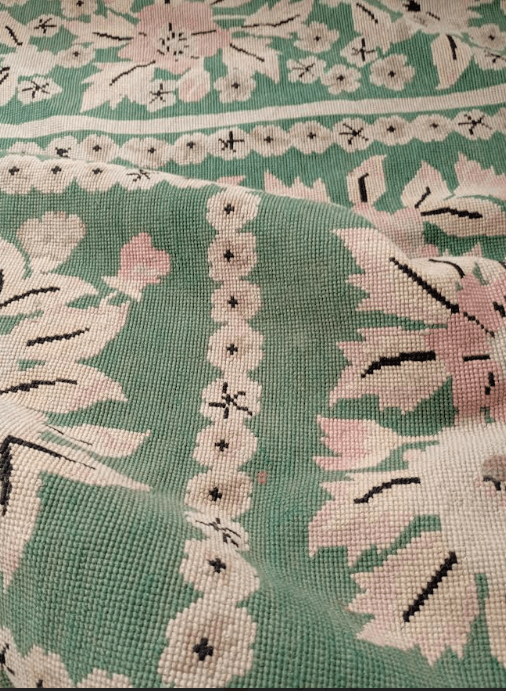
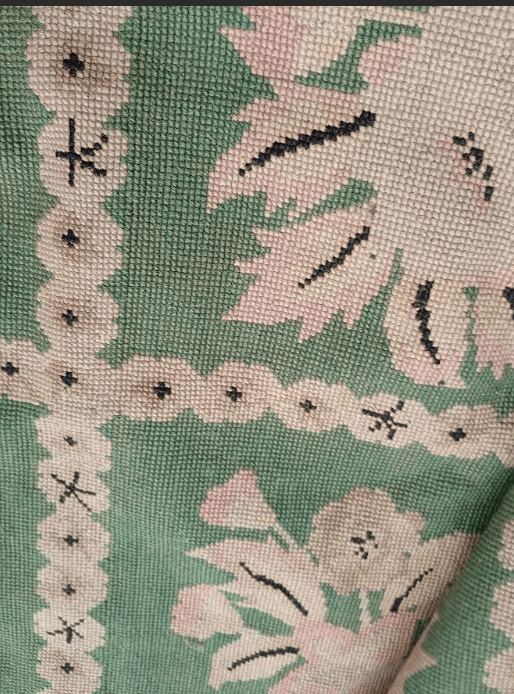
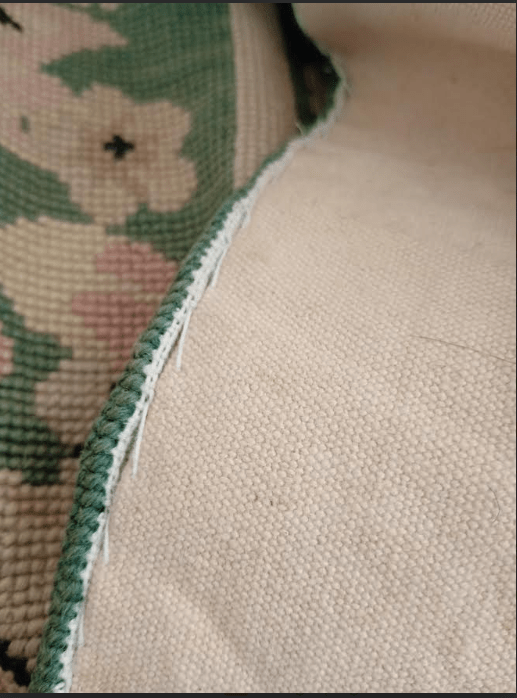
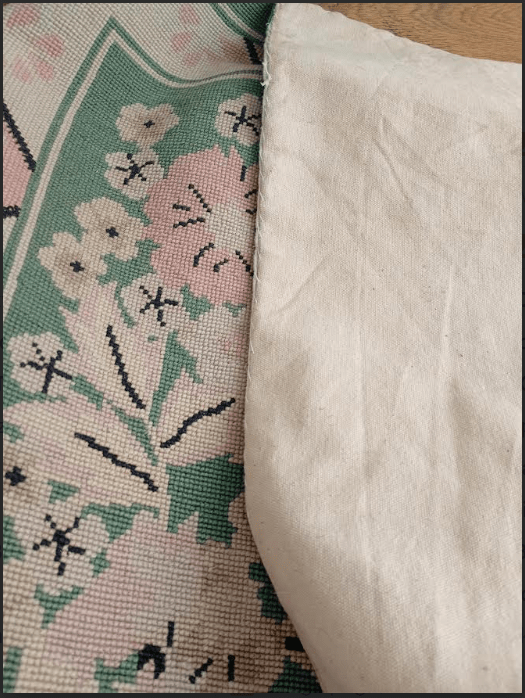
1. Morphological Inconsistencies in Stitch Geometry Macroscopic inspection reveals a notable lack of Tapestry Stitch Uniformity. Contrary to the British Institutional Standard, which mandates a unidirectional parallel alignment for the half-cross (tent) stitch, the asset displays erratic shifts in stitch orientation across various sectors. This phenomenon effectively creates a multi-directional light refraction, confirming that the practitioners were operating outside of formal Western vocational training.
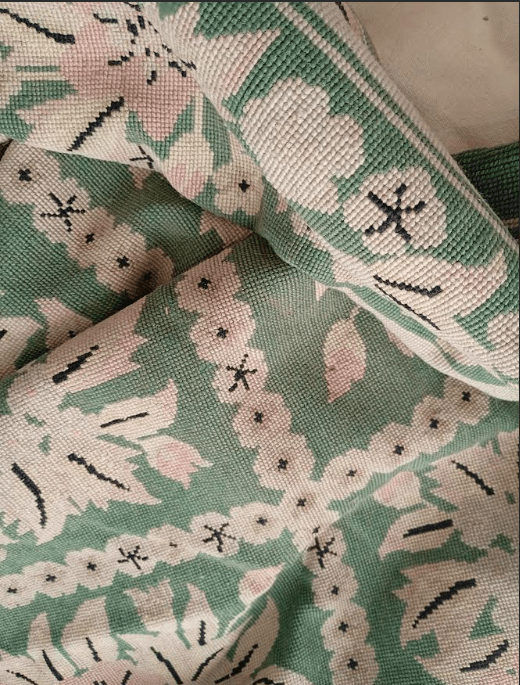
2. Multi-Hand Tension Anomalies Variations in tensile load across the 3-metre canvas foundation suggest that multiple individuals contributed to the construction without a unified technical supervisor. This has resulted in a Structural Skewing of the primary lattice, manifesting as asymmetrical corner buckling and compromised planar stability.
III. Condition Analysis & Contaminant Identification
1. Bio-Particulate Accumulation Surface-level particulates, including household debris and atmospheric dust, are embedded within the wool pile. These particulates act as abrasive agents that accelerate the mechanical degradation of the natural fibres.
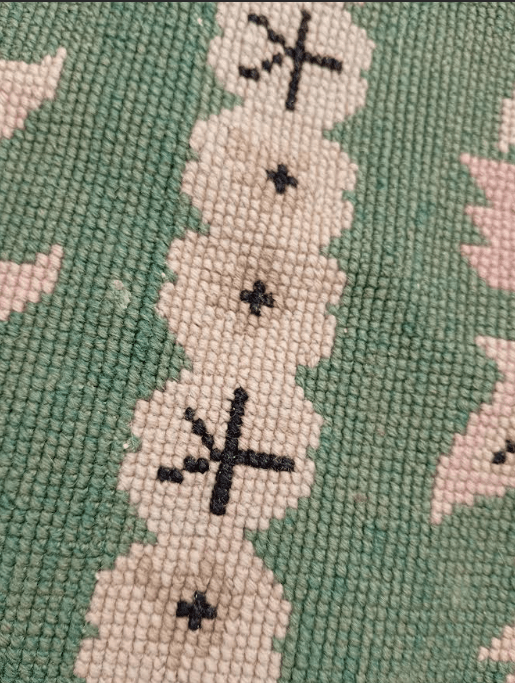
2. Lipophilic Oxidation (Grease Contamination) Significant localized concentrations of lipophilic contaminants (grease) are evident. These spots are identified as a combination of intrinsic lanolin oxidation (residual animal oils in the wool) and extrinsic environmental exposure. Such contaminants are chemically prone to darkening over time, leading to the irreversible discolouration of the floral motifs if left untreated.
IV. Proposed Conservation Protocol (Booklet 2 & 3 Development)
To ensure the Heritage Safeguarding of ACHR-INT-001, Ariane Crafts prescribes the following professional interventions:
- Mechanical De-soiling: High-efficiency, low-pressure particulate extraction through a monofilament screen to stabilize the surface without fibre loss.
- Selective Solvent Application: Localized treatment of lipophilic spots using non-polar, pH-neutral solvents to dissolve grease without inducing dye migration in the surrounding pink and green pigments.
- Controlled Humidification & Blocking: A gradual process of structural re-alignment to correct the multi-hand tension errors and return the asset to its intended 7x9ft archetype.
V. Concluding Statement
The documentation of these technical “flaws” is essential to the Sovereign Shield of Ariane Crafts. By identifying the lack of formal craftsmanship in the original execution, we highlight the necessity of the Master Conservator’s intervention. This object serves as a vital case study in the migration of Commonwealth needlepoint traditions and their subsequent localized adaptations.
BOOKLET 2: THE CONSERVATOR’S EYE – FORENSIC DOCUMENTATION
Asset: ACHR-INT-001 (The 3-Metre Diaspora Rug)
1. Comparative Micro-Analysis: Institutional vs. Non-Institutional Stitches
In this section, we present the visual proof of the Technical Friction inherent in this acquisition.
- The Observation: Analysis of the diagonal tension and stitch orientation.
- The Narrative: While a British Institutional needlework piece requires a singular, consistent 45-degree angle for all tapestry stitches, this asset reveals a “chaotic” orientation. This lack of Unidirectional Discipline indicates a domestic production environment where the makers adopted the Western tool (the tapestry needle) but retained a fluid, non-European approach to the substrate.
2. Contaminant Mapping: The Chemical Profile of the Diaspora
We move now to the high-detail identification of biological and industrial contaminants.
- External Particulates: Identification of embedded grit and domestic debris. These are the primary agents of mechanical abrasion.
- Lipophilic Staining (Grease): Detailed macro-view of the dark, oxidized spots within the floral medallions.
- Technical Diagnosis: These spots represent the “Life History” of the rug. As a Master Conservator, Ariane Crafts identifies these not as “dirt,” but as chemical hazards that threaten the Material Longevity of the wool fibres.
3. Structural Distortion: The 3-Metre Challenge
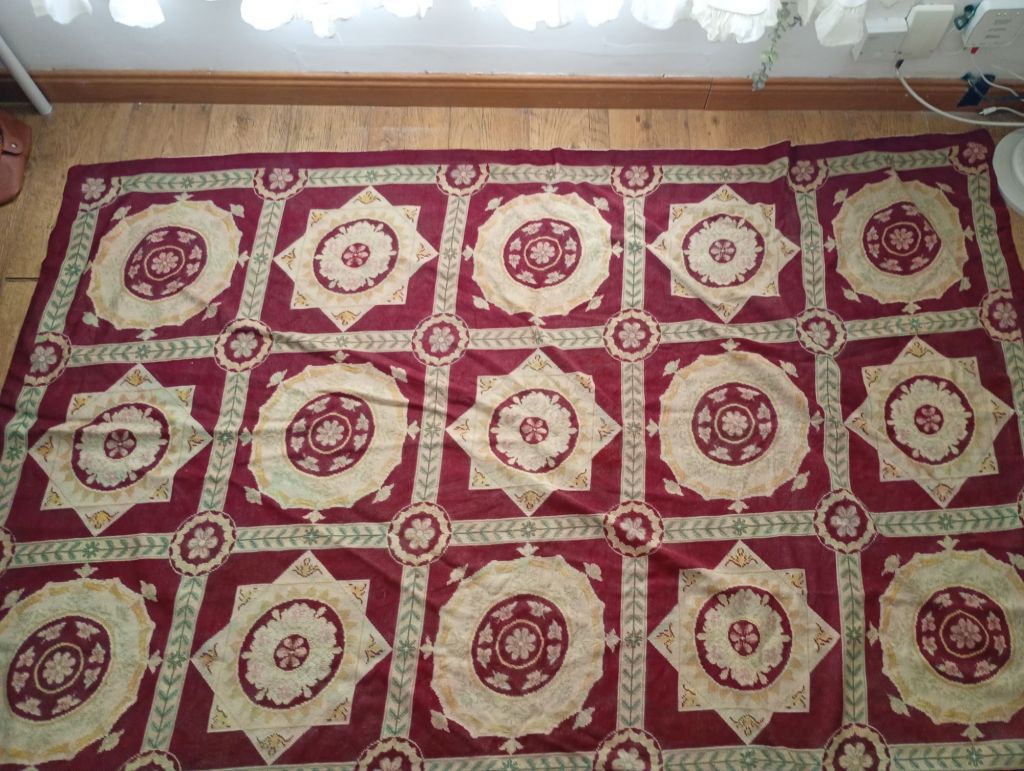
- The Evidence: A wide-angle view of the corner buckle and the irregular edge.
- The Problem: Because the tension was not uniform during the “Multi-Hand” production, the rug has lost its Orthogonal Precision.
- The Intervention: Ariane Crafts will implement a Controlled Humidification and Blocking protocol to re-establish the structural 7×9 ft archetype.
ARCHIVAL ACCESSION & PRE-CONSERVATION CONDITION REPORT
Asset Reference: ACHR-INT-002
Secure UUID: 83e8e25f-eb7e-49ce-a8e4-77ceb254e8c2
Object Typology: Geometric Medallion Needlepoint Rug (South Asian Diaspora)
Dimensions: 5ft x 7ft (approx. 152cm x 213cm)
Date of Accession: September 2025
Curatorial Authority: Ariane Crafts, Principal Conservator
I. Executive Summary of Object Observation
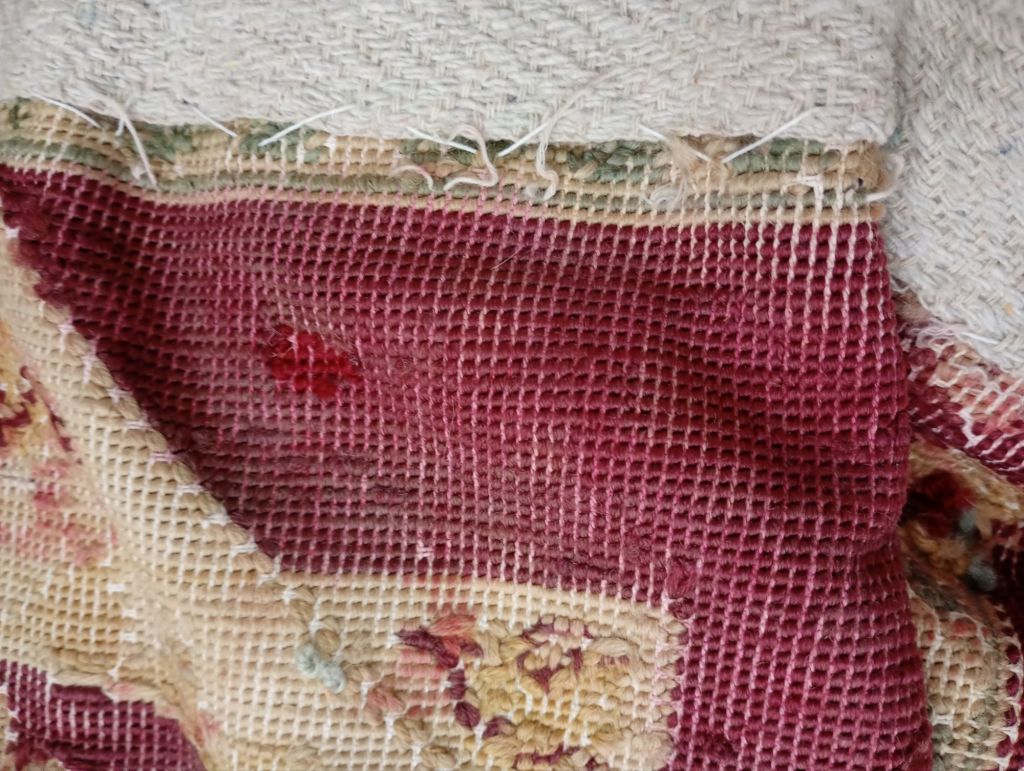
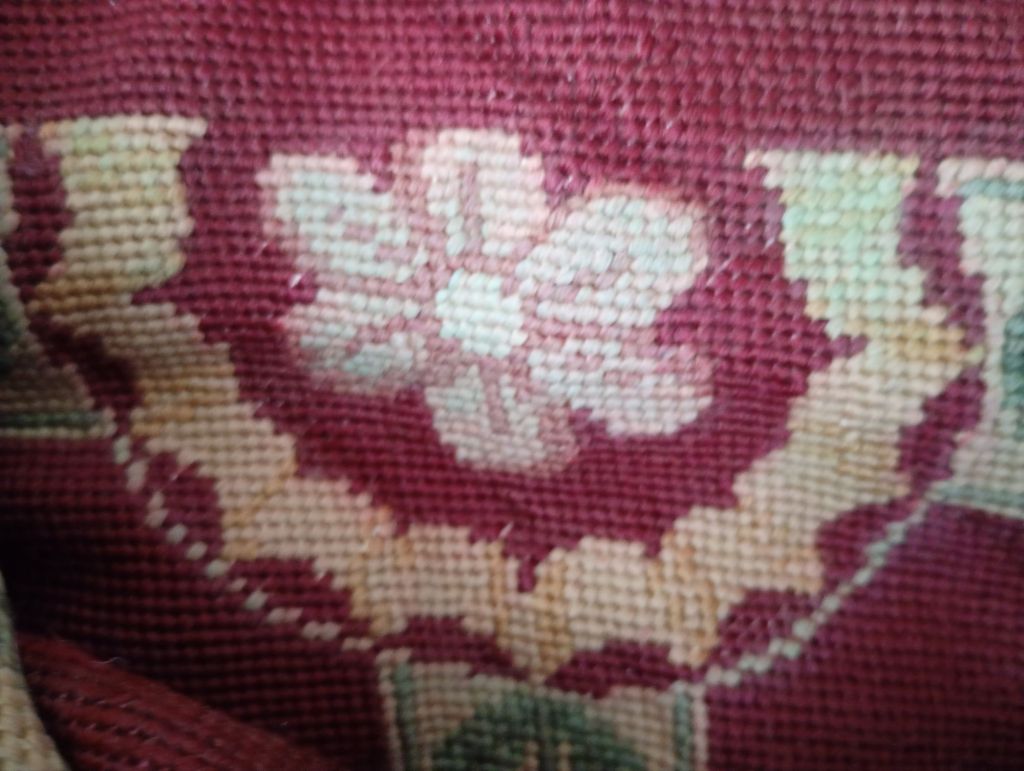
Preliminary forensic analysis of ACHR-INT-002 initially indicated a potential fungal (mildew) infestation. However, closer macroscopic inspection confirms a more significant structural degradation: the canvas foundation is overstretched and eroding due to an inherent mismatch between the linear density of the wool ply and the canvas count. This technical oversight during production has compromised the asset’s structural permanence.
II. Forensic Technical Observations
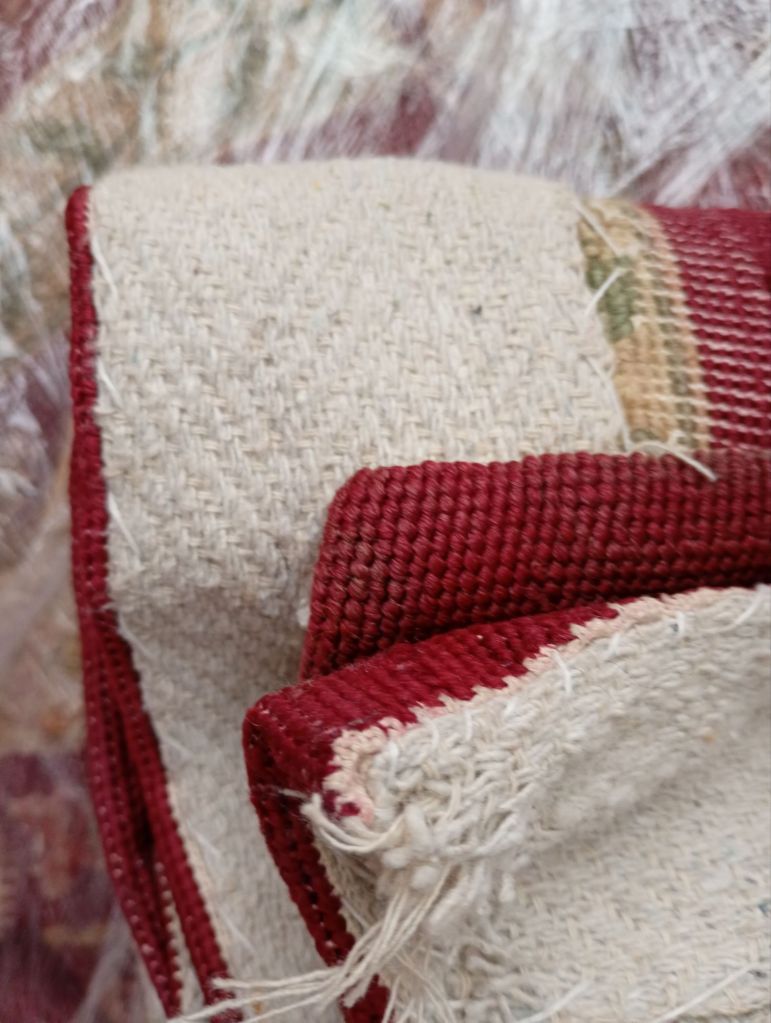
- Canvas Erosion and Over-extension: The foundation demonstrates advanced mechanical fatigue. The excessive weight and friction of the heavy-gauge wool ply, when forced through a finer canvas lattice, has led to the gradual disintegration of the substrate threads.
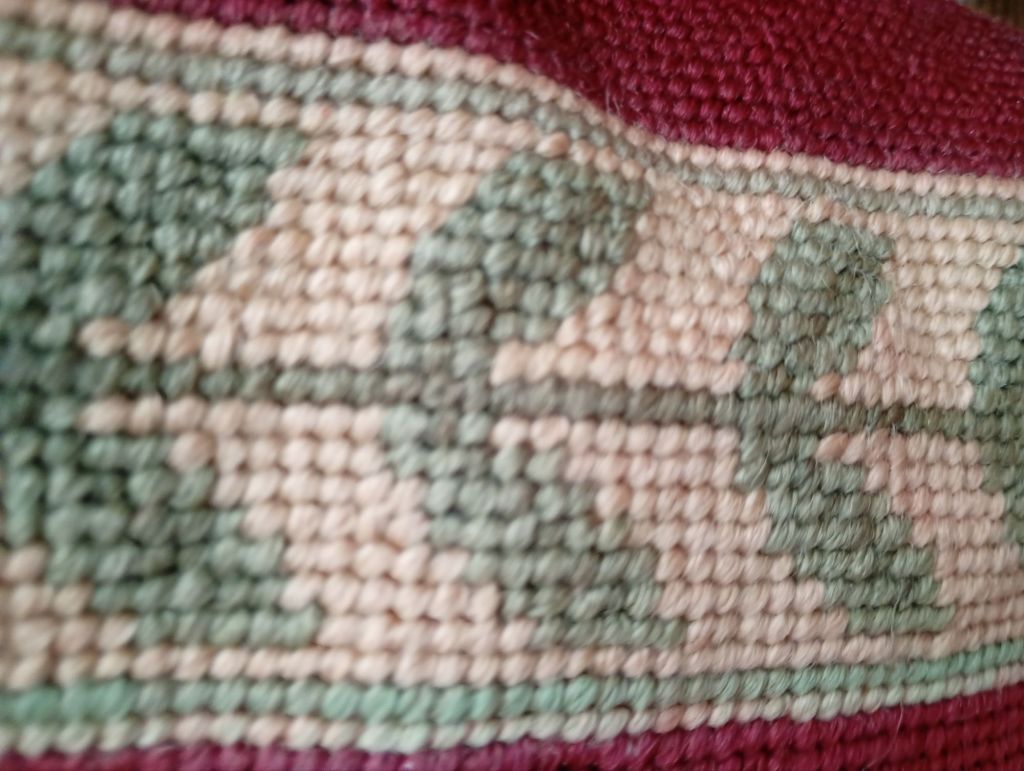
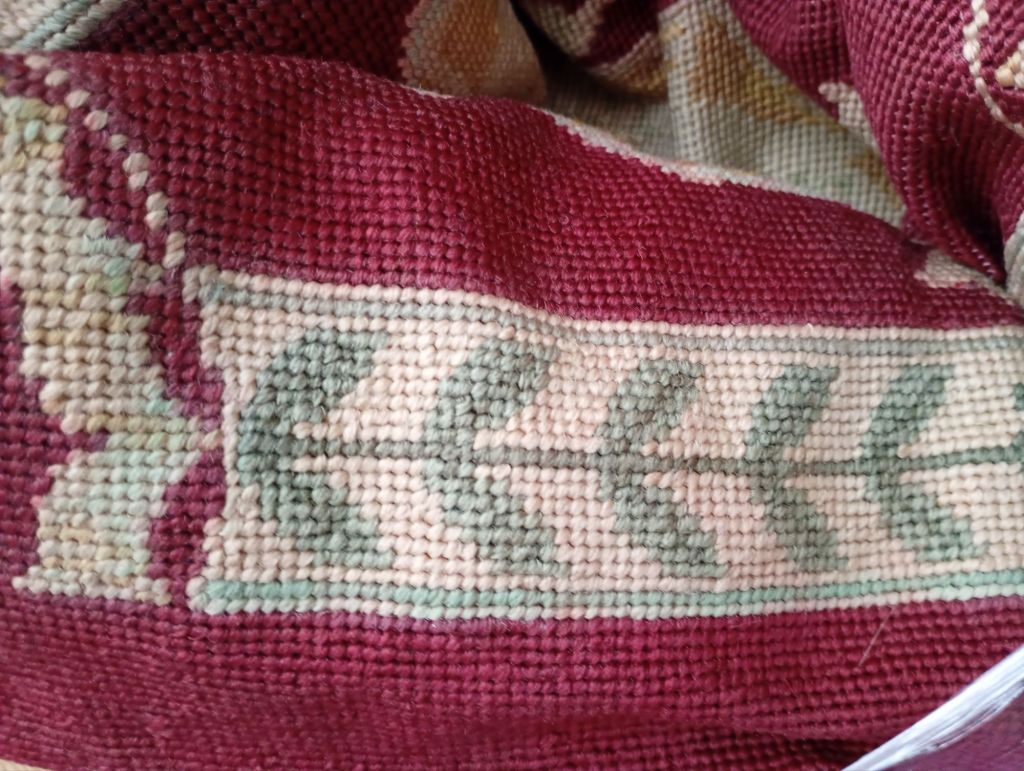
- Ply-to-Count Disparity: The wool ply utilized is disproportionately thick for the identified canvas count. This has resulted in Compacted Stitches, which place undue lateral stress on the foundation, leading to the observed “overstretched” state that prevents standard restoration procedures.
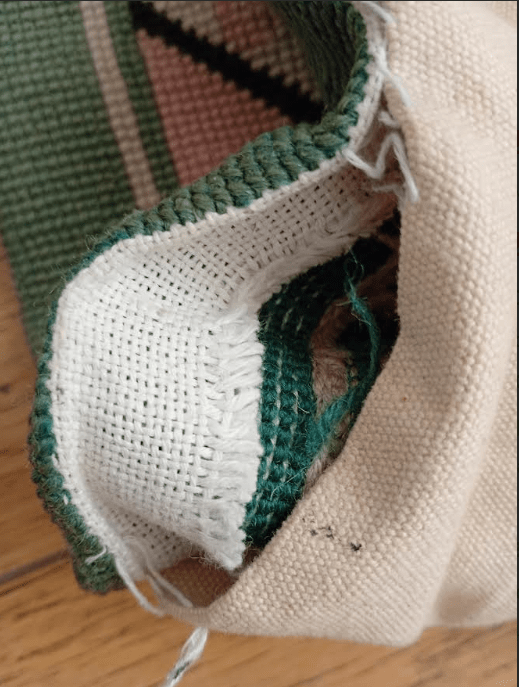
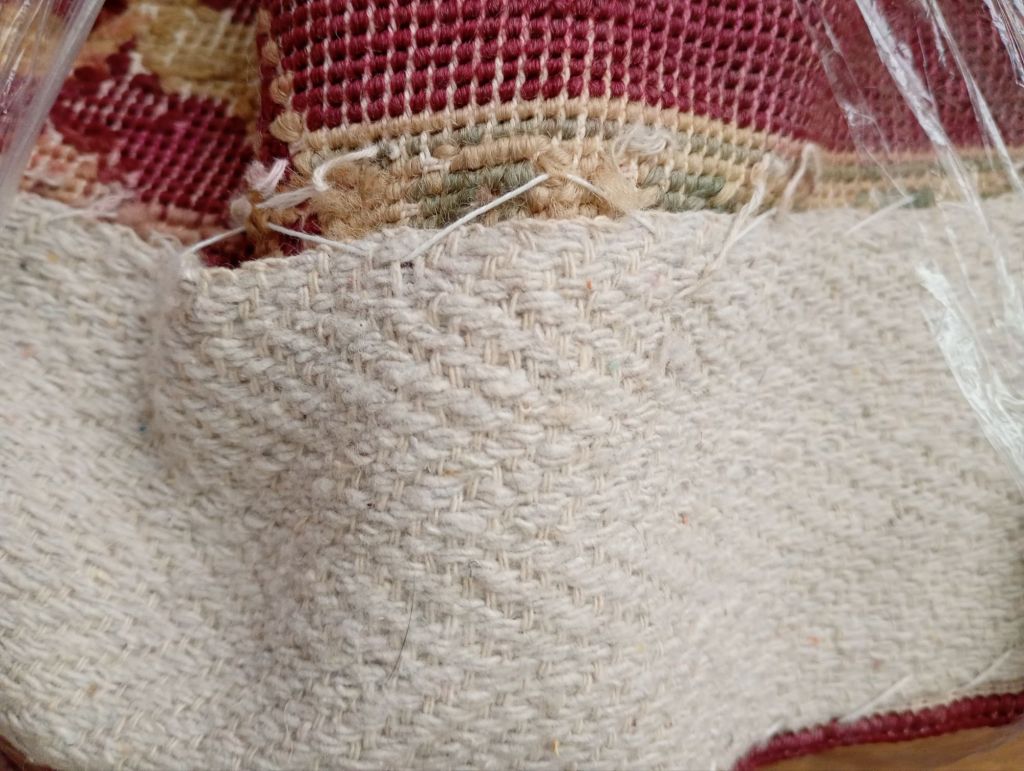
- Backing Analysis: The reverse shows a secondary, coarse textile layer that appears to be failing as a supportive membrane, further exposing the erosion of the primary needlepoint lattice.
III. Condition Analysis & Contaminant Identification
- Localized Solid Contaminant: A single, dried powdery spot has been identified. This localized contaminant is likely an oxidized domestic residue rather than biological mildew.
- Structural Fragility: Due to the erosion of the primary canvas, the rug is deemed too fragile for standard wet-cleaning or intensive mechanical agitation, as the foundation can no longer sustain high-tensile loads.
IV. Proposed Conservation & Display Protocol
To safeguard the remains of ACHR-INT-002, Ariane Crafts has dictated a Minimal Intervention Strategy:
- Precision Spot Extraction: The dried powdery spot will be removed using the Eucalan lanolin-enriched solution and precision swabs to dissolve the residue without disturbing the surrounding compromised fibers.
- Decommissioning of Floor Use: Floor deployment is strictly prohibited due to canvas erosion.
- Vertical Preservation: The asset will be transitioned to a Museum-Grade Wall Display. An appropriate rug rail will be utilized to distribute the weight evenly across the entire upper margin, mitigating further gravitational stress on the overstretched foundation.
V. Concluding Statement
ACHR-INT-002 serves as a definitive case study in Material Misalignment. It highlights the necessity of the Principal Conservator’s forensic eye to differentiate between biological infestation and mechanical substrate failure. This asset will remain in the archive as a primary example of how improper ply-selection can lead to the “nightmarish” structural collapse typical of certain mid-century and diaspora executions.
ACHR-INT-005 4×6 ft
Ariane Crafts, All Rights Reserved
ARCHIVAL ACCESSION & PRE-CONSERVATION CONDITION REPORT
Asset Reference: ACHR-INT-005
Secure UUID: 853e9c6a-5943-4775-b8fa-f6fc785ca106
Object Typology: Damask-Pattern Floral Needlepoint Rug
Dimensions: 4ft x 6ft (approx. 122cm x 183cm)
Date of Accession: September 2025
Curatorial Authority: Ariane Crafts, Principal Conservator
ACHR-INT-005 4×6 ft
ariane crafts, all rights reserved
I. Executive Summary of Object Observation
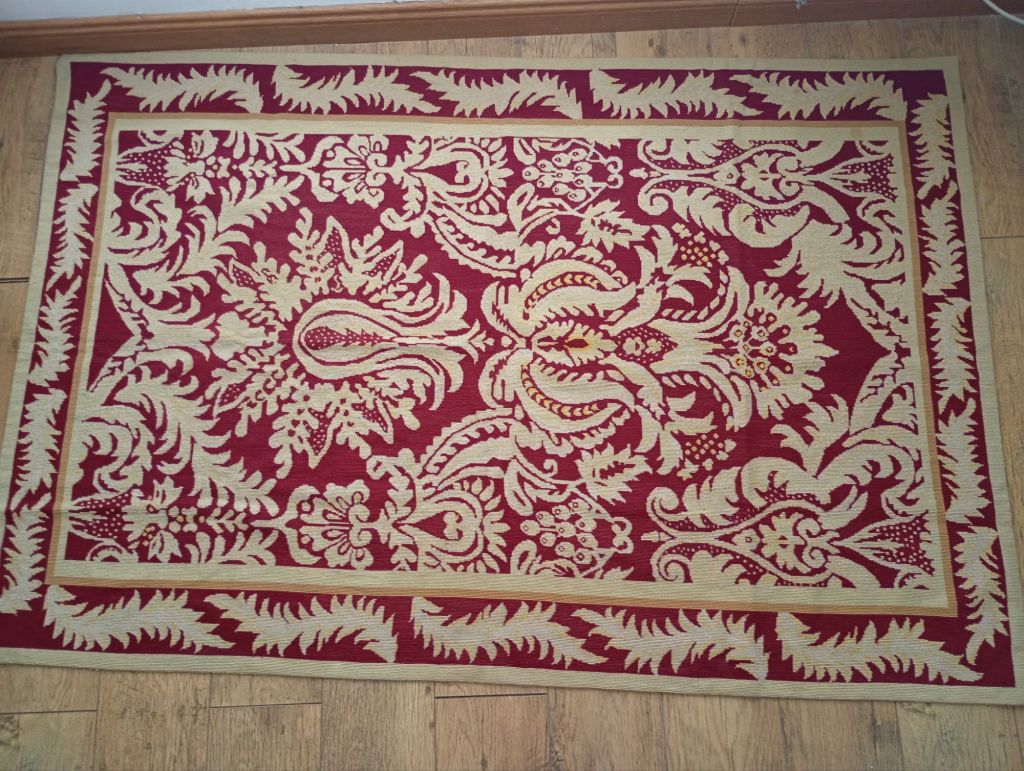
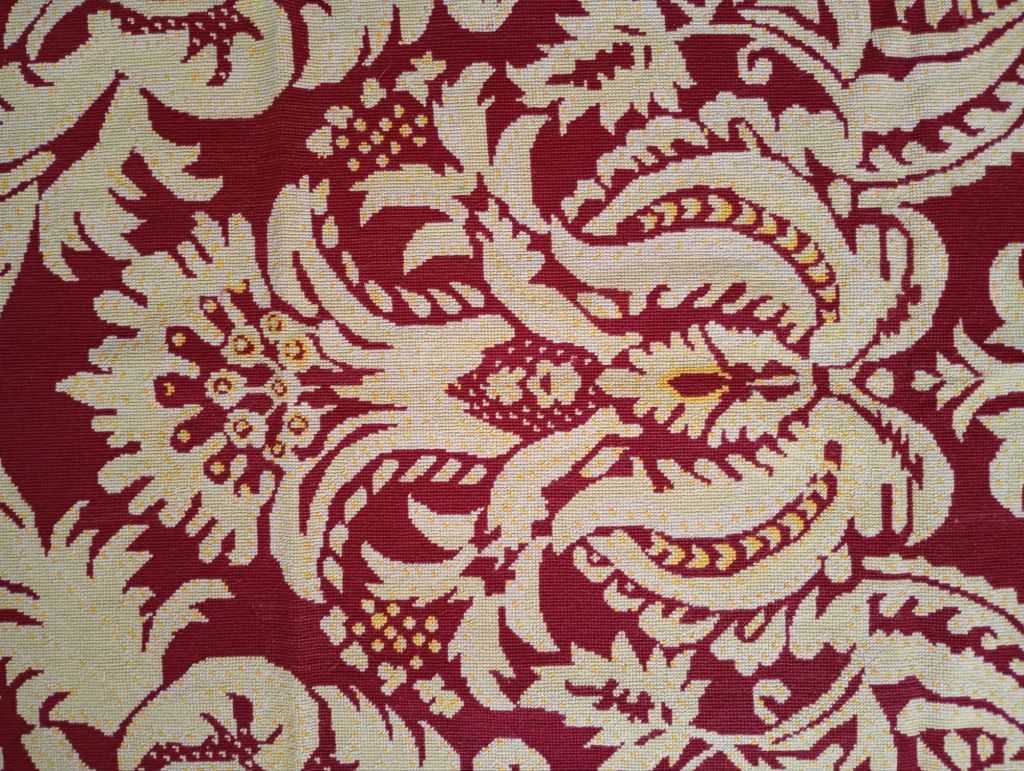
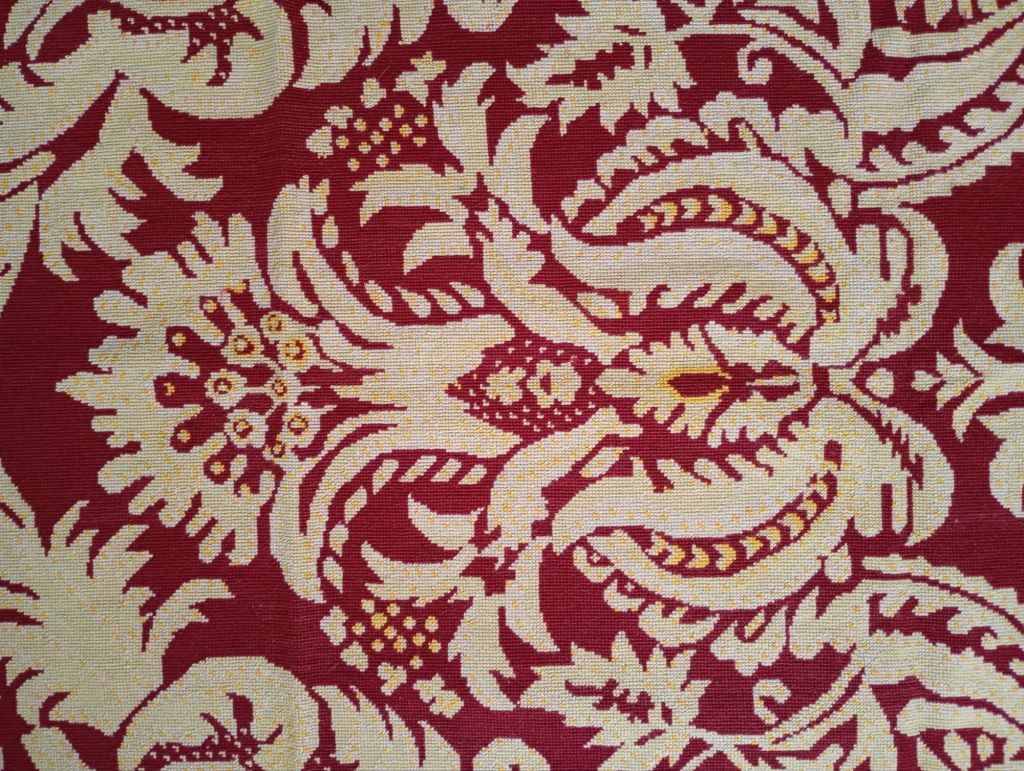
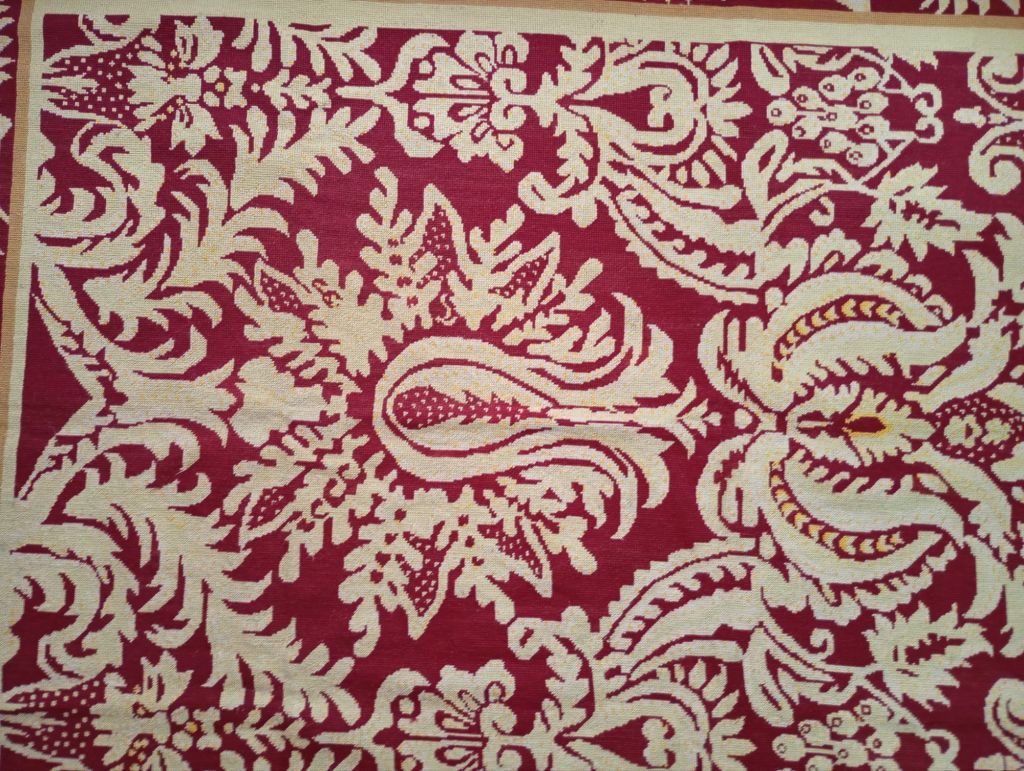
Unlike the “Technical Friction” identified in larger diaspora pieces, ACHR-INT-005 exhibits a high-order Technical Sovereignty. The asset is in an immaculate condition, demonstrating a refined mastery of pattern architecture and colorway distribution that strongly resembles traditional Hungarian needlework archetypes. The clarity of the damask-inspired floral motifs suggests a single, highly skilled practitioner or a professionally supervised institutional workshop.
ACHR-INT-005 4×6 ft
ariane crafts, all rights reserved
II. Forensic Technical Observations
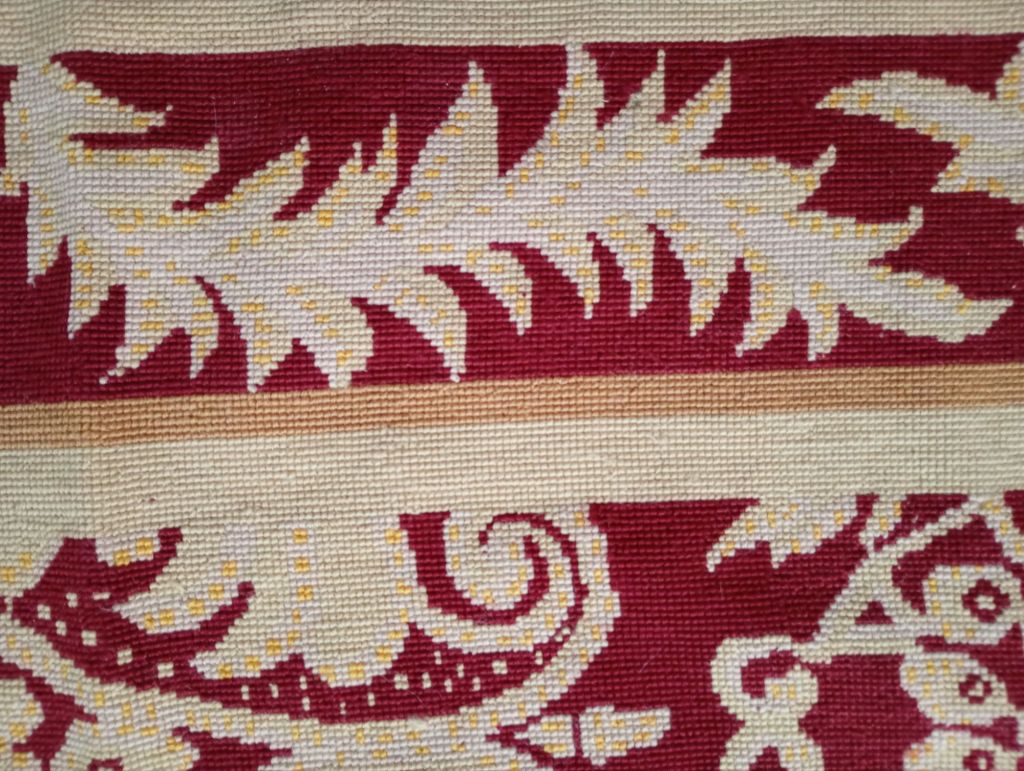
- Pattern Architecture and Symmetry: The rug features a sophisticated Damask-pattern with deep red fields and cream/gold floral motifs. The symmetry and precision of the floral “fleur-de-lis” and acanthus leaf variations are consistent throughout the 4×6 ft span.
- Stitch Uniformity: Macroscopic analysis confirms Institutional-grade Stitch Discipline. Every tapestry stitch maintains a unidirectional 45-degree angle, creating a uniform light-refraction surface that avoids the “checkered” distortion seen in multi-hand productions.
- Material Integrity: The wool ply used is perfectly calibrated to the canvas count, ensuring structural stability without the over-extension or foundation erosion observed in ACHR-INT-002.
ACHR-INT-005 4×6 ft
ariane crafts, all rights reserved
III. Condition Analysis
- Preservation Status: The asset is deemed to be in Immaculate Condition. There is no evidence of the lipophilic contaminants (grease) or significant particulate embedding found in the larger assets.
- Dye Stability: The saturation of the crimson red and the crispness of the cream highlights remain vibrant, suggesting high-quality traditional dyeing processes and limited UV exposure.
ACHR-INT-005 4×6 ft
ariane crafts, all rights reserved
IV. Proposed Conservation & Display Protocol
Given the exceptional state of preservation, Ariane Crafts dictates a Preventative Conservation approach:
- Low-Aspiration De-soiling: A preventative, micro-suction cleaning to remove any latent atmospheric particulates from the surface pile.
- Archival Accessioning: Immediate entry into the ACHR as a “Primary Masterwork Example” for comparative study against 1960s British industrial failures.
- Display Strategy: Due to its “immaculate” aesthetic and material strength, this piece is suitable for either protected floor use or horizontal display to highlight the Mathematics of its Construction.
V. Concluding Statement
ACHR-INT-005 serves as the Curatorial Benchmark for the archive. Its resemblance to Hungarian textile traditions and its flawless execution prove that needlepoint within the South Asian diaspora could reach levels of technical excellence that rival European institutional standards. It stands as a profound testament to the Gestural Transmission of high-level craftsmanship across borders.
ACHR-INT-003 5×6 ft
Ariane crafts, all rights reserved
ARCHIVAL ACCESSION & PRE-CONSERVATION CONDITION REPORT
Asset Reference: ACHR-INT-003
Secure UUID: f7dbdcfe-5589-41f9-8a34-3195d9d230fe
Object Typology: Cross-stitch Kilim on Bika Foundation
Dimensions: 5ft x 6ft (approx. 152cm x 183cm)
Date of Accession: September 2025
Curatorial Authority: Ariane Crafts, Principal Conservator
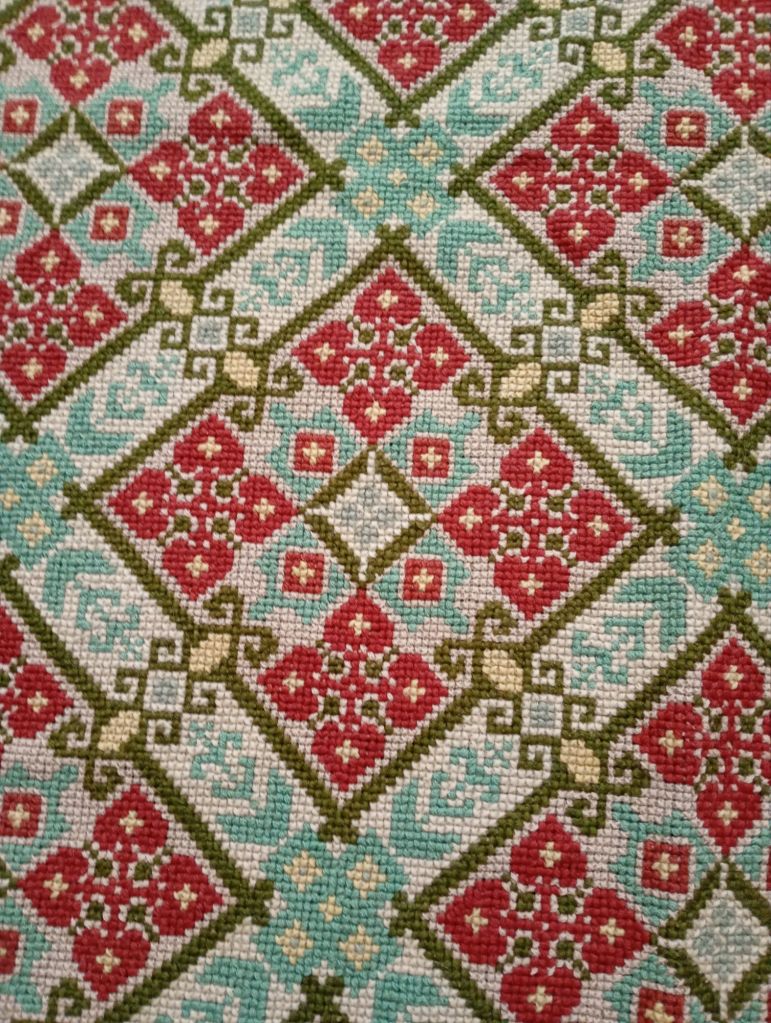
ACHR-INT-003 5×6 ft
ariane crafts, all rights reserved
I. Executive Summary of Object Observation
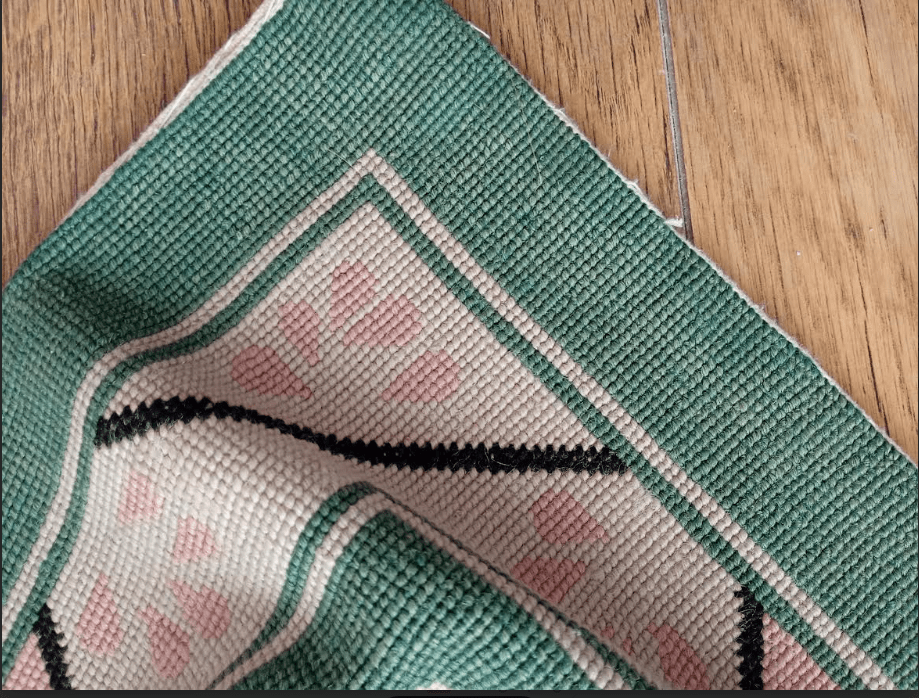
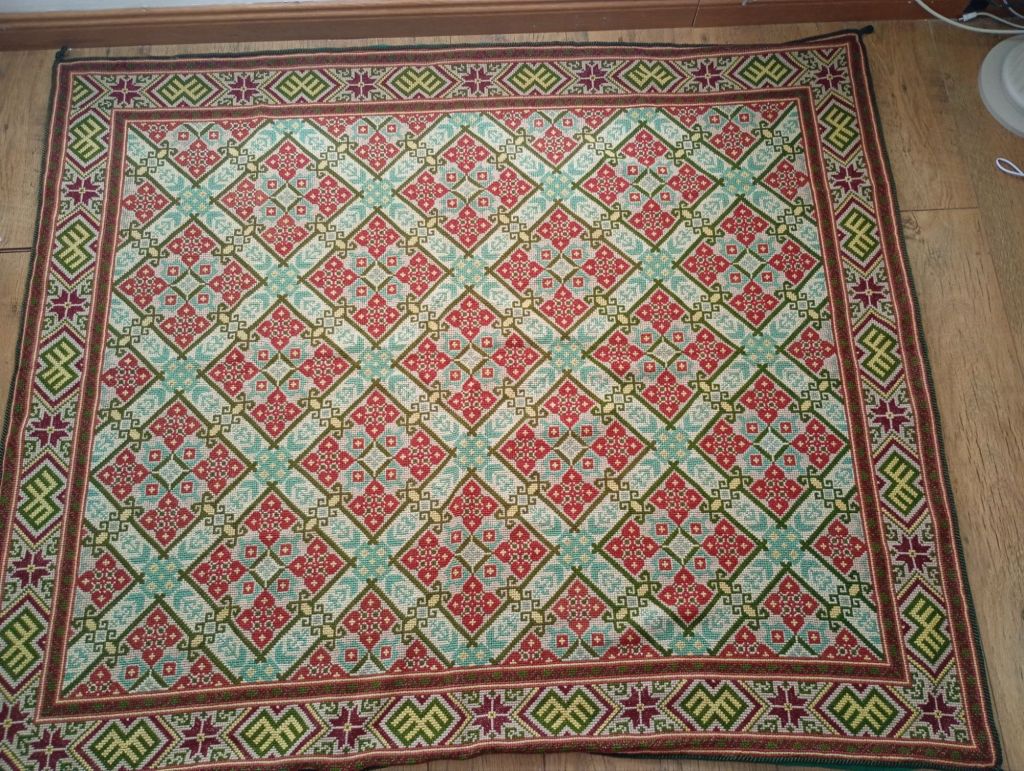
ACHR-INT-003 is a culturally significant textile featuring a complex array of Nordic and Eastern European symbology, suggesting a point of origin in Central Asia or Northern Europe. The asset is executed in cross-stitch on a 7-count Bika fabric foundation. In stark contrast to the mid-century British outliers, this piece exhibits exceptional material integrity and professional finish, including a high-quality satin backing.
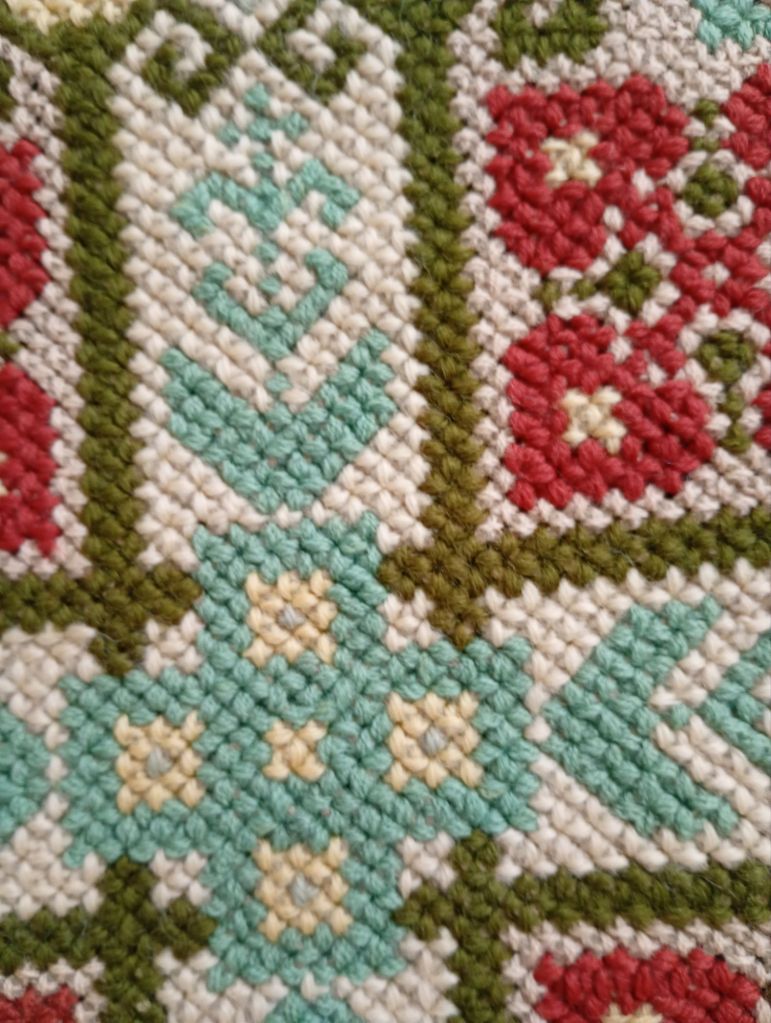
ACHR-INT-003 5×6 ft
ariane crafts, all rights reserved
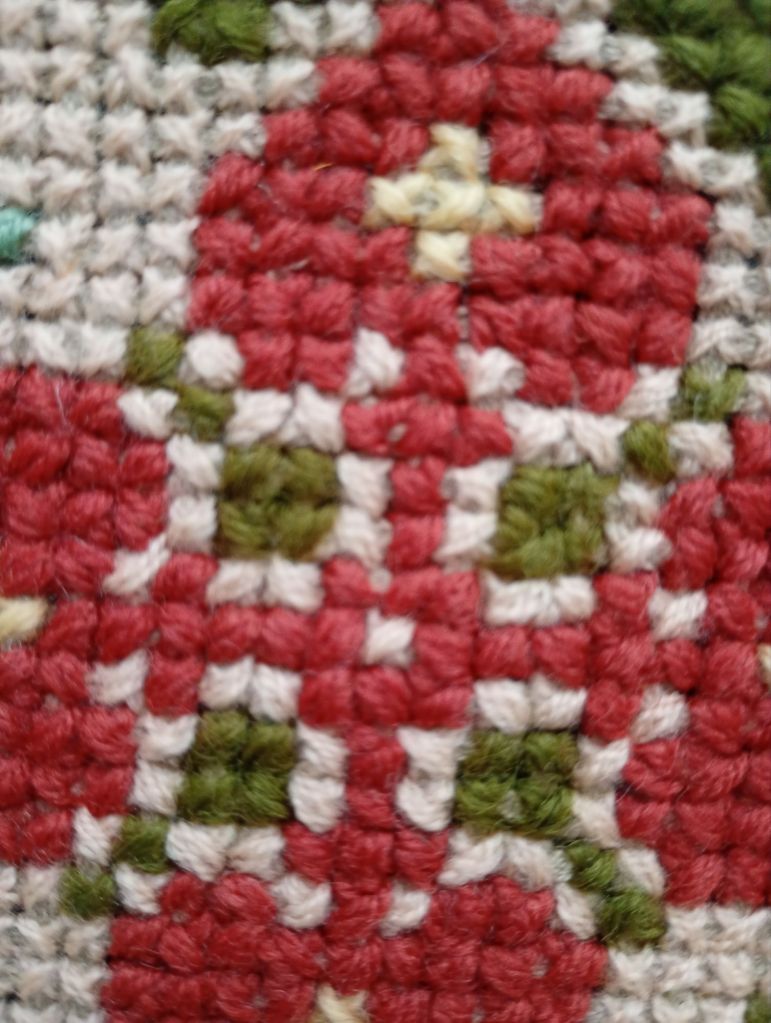
ACHR-INT-003 5×6 ft
ariane crafts, all rights reserved
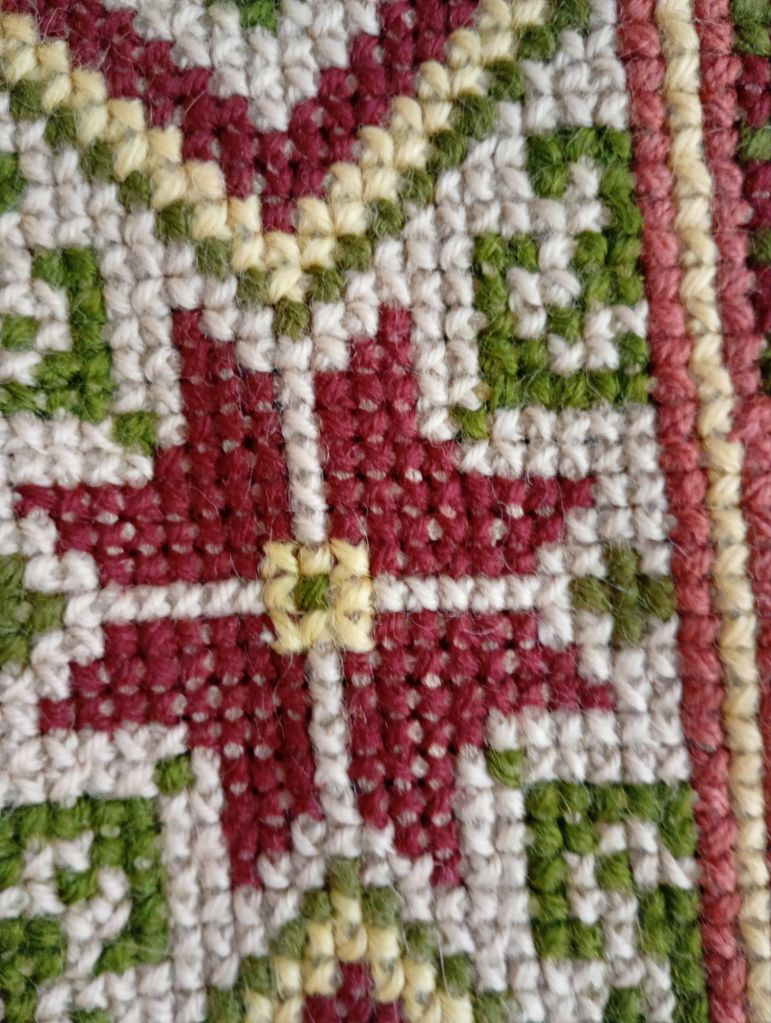
ACHR-INT-003 5×6 ft
ariane crafts, all rights reserved
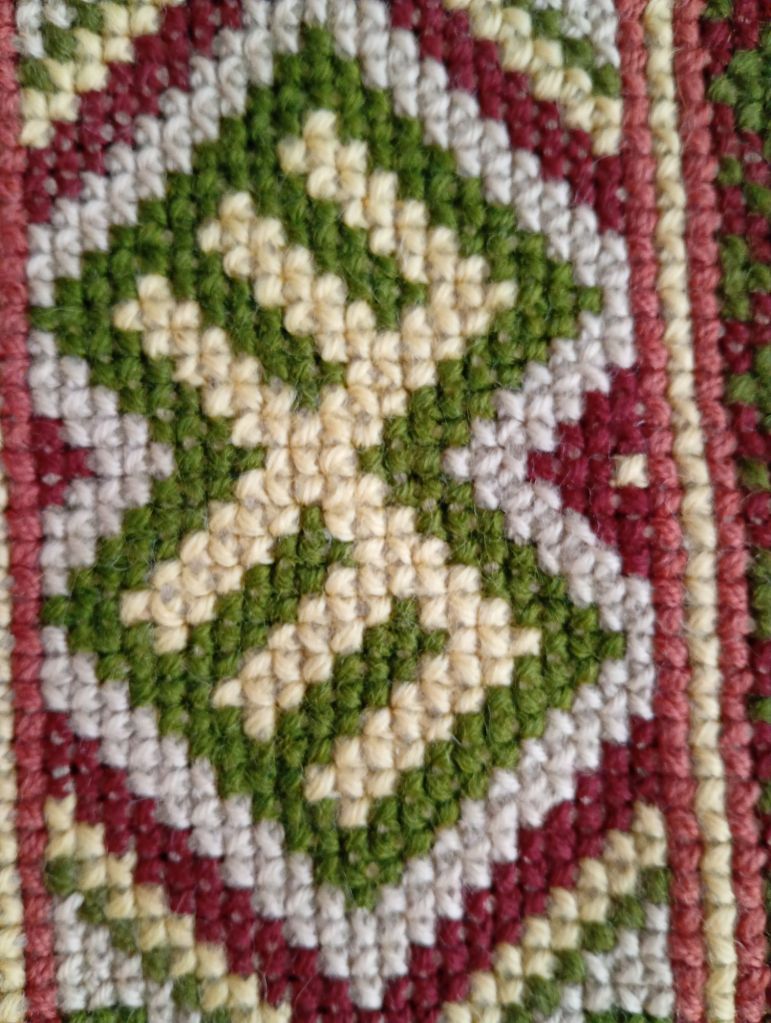
ACHR-INT-003 5×6 ft
ariane crafts, all rights reserved
II. Forensic Technical Observations
- Symbology and Ethno-Influence: The pattern architecture utilizes a dense grid of geometric lozenges containing traditional star and floral motifs common in Scandinavian and Slavic folk traditions. The use of mirrored “S” and cruciform symbols indicates a deep ethnographic lineage in heritage-protected needlework.
- Stitch Precision and Foundation: Macroscopic analysis confirms a high degree of Stitch Uniformity across the 7-count foundation. The tension management is superior, resulting in a perfectly orthogonal 5×6 ft field without the structural skewing typical of multi-hand production.
- Backing and Finish: The asset is finished with a vibrant teal satin backing, which remains in an immaculate state of attachment. This supportive membrane has prevented the foundation erosion and over-stretching observed in lower-grade diaspora rugs.
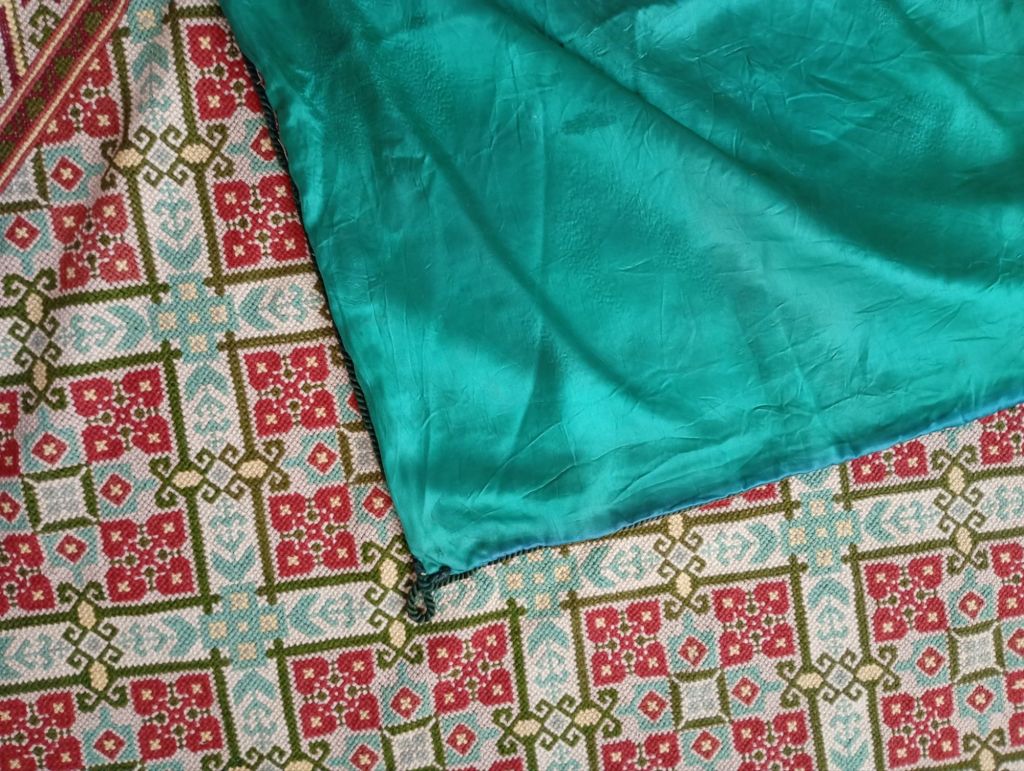
ACHR-INT-003 5×6 ft
ariane crafts, all rights reserved
III. Condition Analysis
- Material Integrity: The wool ply and the Bika foundation are perfectly matched, maintaining the “Mathematics of Construction” without mechanical fatigue.
- Preservation Status: The asset requires no further conservation action. The colors remain stable, and the fibers exhibit no evidence of the lipophilic oxidation identified in ACHR-INT-001 or 002.
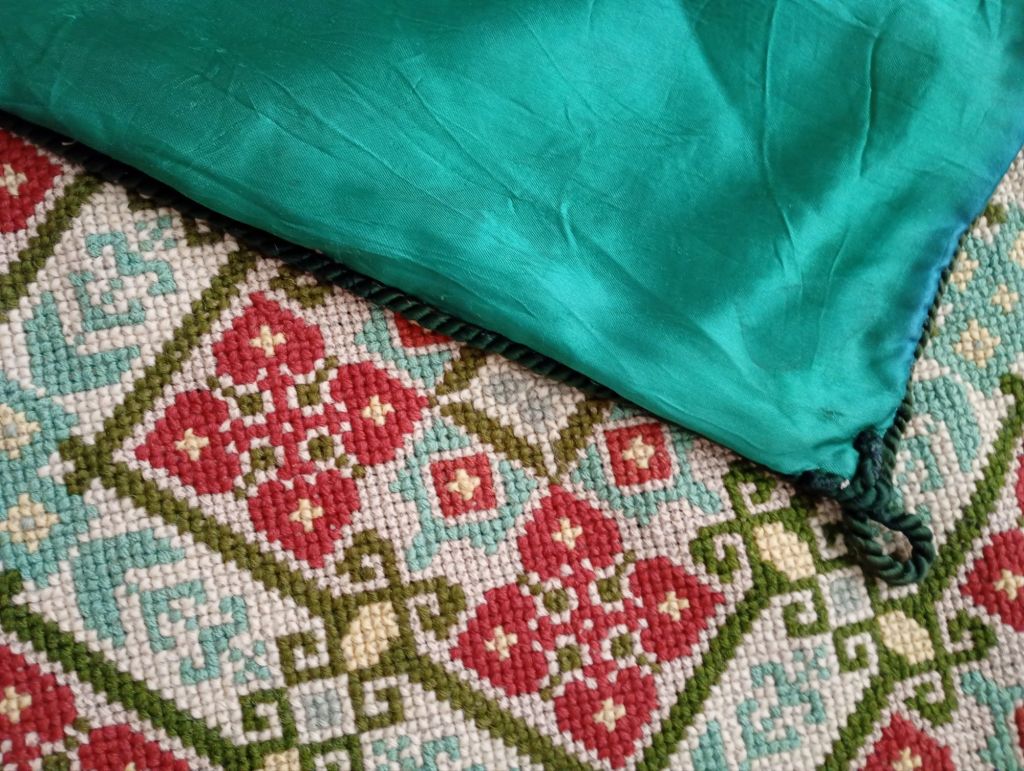
ACHR-INT-003 5×6 ft
ariane crafts, all rights reserved
IV. Proposed Conservation & Display Protocol
Given its current status as a stable heritage asset, Ariane Crafts prescribes:
- Vertical Display: The asset will be mounted on a wall using a Museum-Grade rug rail to minimize gravitational load on the satin backing.
- Safeguarding Strategy: This piece is entered into the ACHR as a primary “Material Control” asset to be used for comparison against the structural collapse of industrial 1960s British textiles.
V. Concluding Statement
ACHR-INT-003 represents the pinnacle of Indigenous-Transnational Hybridity. Its preservation is a testament to the stability provided by appropriate ply-to-count selection and high-quality finishing materials. It remains a central pillar of the Ariane Crafts research into the Gestural Transmission of Northern European and Central Asian textile archetypes.
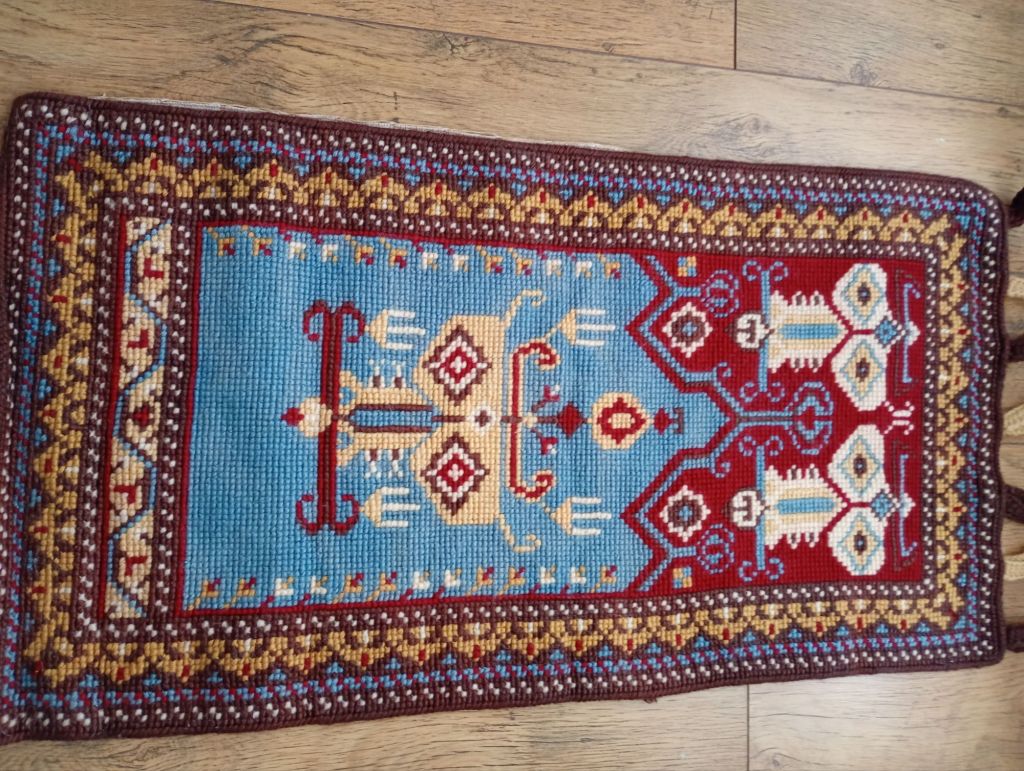
ACHR-INT-005 4×6 ft
ariane crafts, all rights reserved
ARCHIVAL ACCESSION & PRE-CONSERVATION CONDITION REPORT
Asset Reference: ACHR-INT-004
Secure UUID: 75b9bc7e-5293-42ac-84aa-9483fd0bfd6e
Object Typology: Miniature Patterned Needlepoint Rug
Dimensions: 2ft x 3ft (approx. 61cm x 91cm)
Date of Accession: September 2025
Curatorial Authority: Ariane Crafts, Principal Conservator
ACHR-INT-005 4×6 ft
ariane crafts, all rights reserved
I. Executive Summary of Object Observation
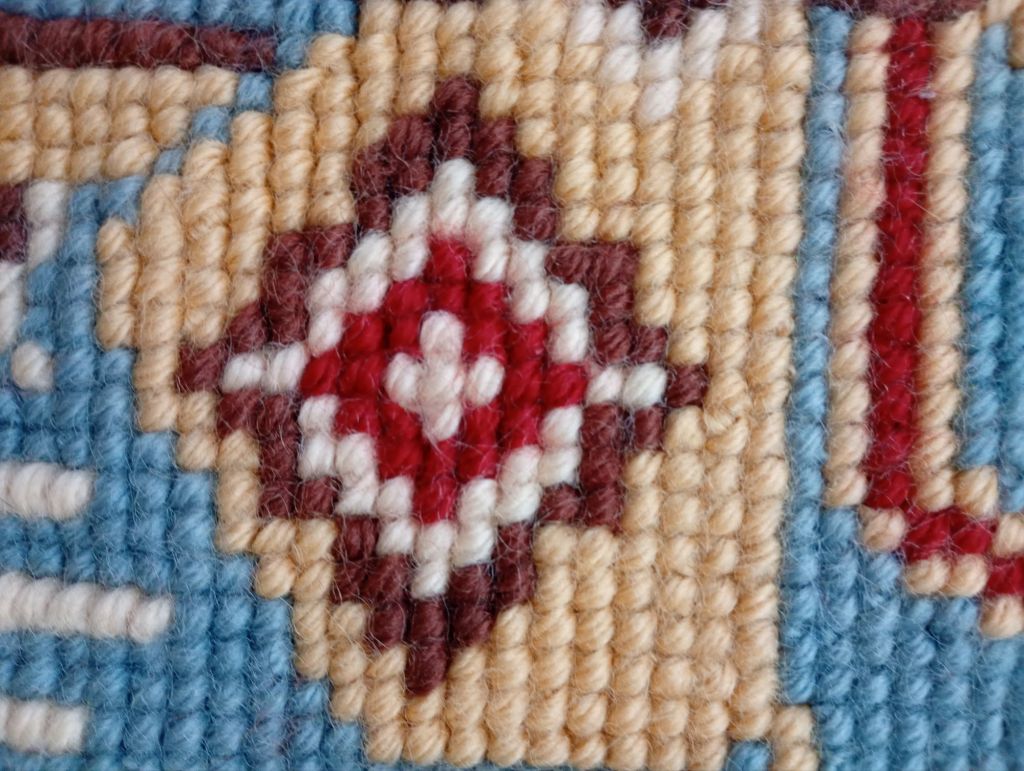
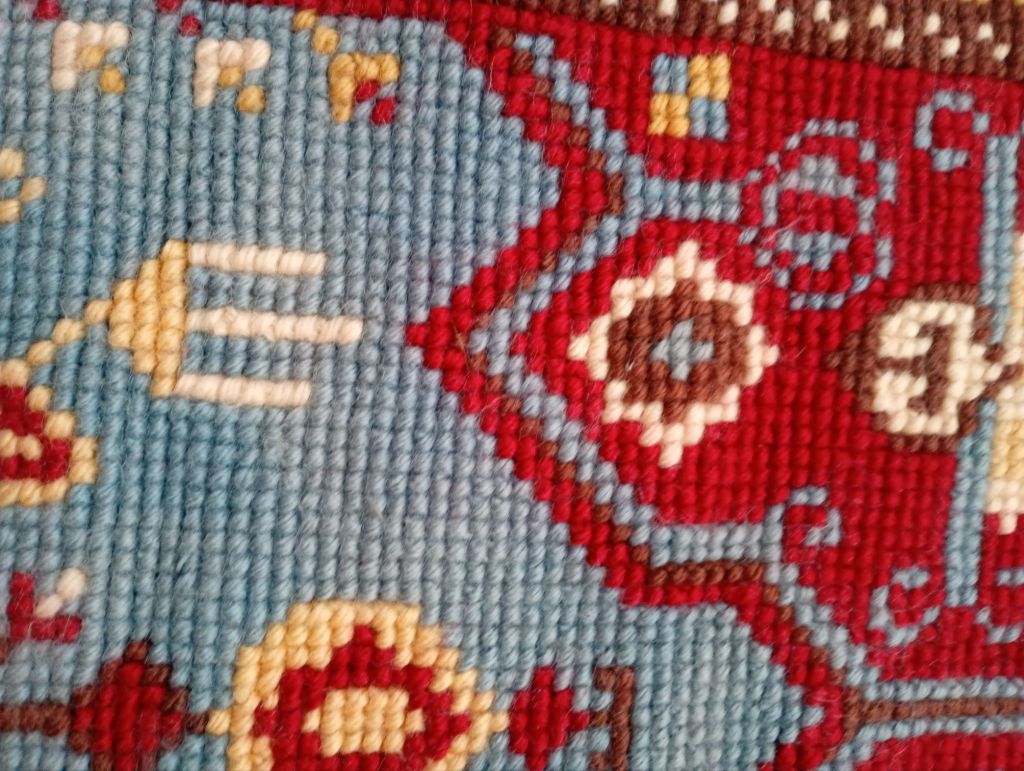
ACHR-INT-004 is a high-density needlepoint execution featuring a vibrant azure field with complex central and peripheral motifs. In contrast to the “nightmarish” structural collapse observed in mid-century British industrial yarns, this asset demonstrates superior Artisanal Durability. Preliminary forensic analysis indicates a stable state of preservation with minimal structural distortion or material fatigue.
II. Forensic Technical Observations
- High-Density Stitchwork: Macroscopic inspection reveals a superior Stitch-to-Substrate Ratio. The practitioner has managed high-density tension across the 2×3 ft span, resulting in a firm, non-unruly surface that maintains its Orthogonal Precision.
- Motif Geometry: The central heraldic-style motif and border lozenges are executed with high technical clarity. Unlike the multi-hand tension anomalies seen in larger diaspora pieces, the Stitch Geometry here is uniform, indicating a focused, singular execution.
- Foundation and Border Integrity: The perimeter of the asset shows no evidence of the canvas erosion seen in URN-002. The foundation appears robust enough to support the weight of the high-mass wool ply without over-stretching.
ACHR-INT-005 4×6 ft
ariane crafts, all rights reserved
III. Condition Analysis
- Preservation Status: The asset is currently stable and requires no immediate conservation intervention.
- Chemical Stability: The azure, crimson, and ochre dyes remain vibrant, showing no signs of the lipophilic oxidation or acidic “darkening” typical of poor-quality industrial yarns.
IV. Proposed Conservation & Display Protocol
Following the rigorous standards of Ariane Crafts, the following protocol is prescribed:
- Staged Intervention: No further action is required until the onset of full British Summer Time. At this juncture, the asset will undergo a revision cleaning strictly aligned with UK heritage standards to maintain fibre hydration and surface luminosity.
- Vertical Safeguarding: Until the scheduled cleaning, the asset will be stored or displayed vertically to prevent particulate embedding.
V. Concluding Statement
ACHR-INT-004 stands as a “Technical Miniature” within the Sovereign Shield of Ariane Crafts. Its material integrity and successful execution serve as primary evidence that appropriately scaled diaspora needlepoint can achieve a Material Permanence that rivals antique traditions and far exceeds the failing industrial standards of the 1960s.
ARCHIVAL ACCESSION & PRE-CONSERVATION CONDITION REPORT
Asset Reference: ACHR-INT-006
Secure UUID: e9d7c99b-5ea0-473a-b8ca-c9570e80d0bc
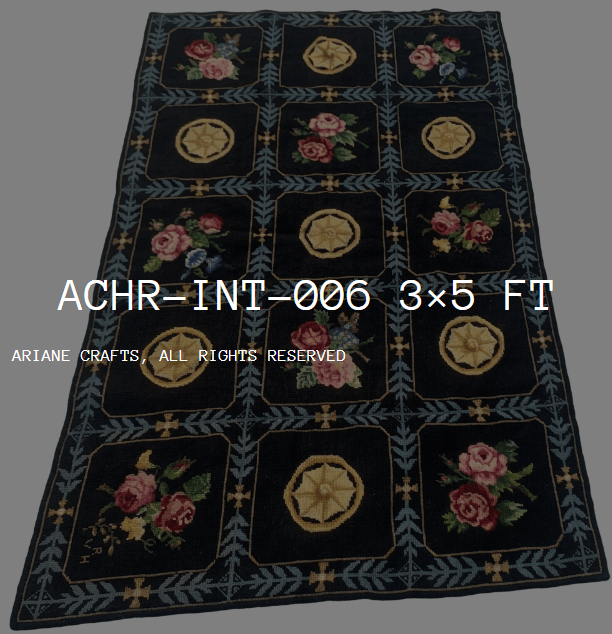
Object Typology: Floral-on-Black Modular Needlepoint Rug
Dimensions: 3ft x 5ft (approx. 91cm x 152cm)
Date of Accession: September 2025
Curatorial Authority: Ariane Crafts, Principal Conservator
I. Executive Summary of Object Observation
ACHR-INT-006 is a complex construction consisting of 15 individual needlepoint panel kits systematically sewn together to form a unified 3×5 ft field. Preliminary forensic analysis confirms that the foundation is composed of unbleached Gobelin canvas. Despite the potential risks associated with high-contrast floral-on-black palettes, the asset exhibits no critical dye migration, indicating a high degree of chemical stability in the original industrial or artisanal dyeing process.
II. Forensic Technical Observations
- Modular Construction: The rug is not a single-weave execution but a Composite Assembly. This method requires precise alignment of the 15 panels to maintain the overall pattern continuity. The joins between the kits demonstrate a high level of technical proficiency, though they contribute to the overall need for structural re-alignment.
- Substrate Analysis (Unbleached Gobelin): The use of unbleached Gobelin canvas provides a robust, high-integrity foundation. The canvas is currently in immaculate condition, showing none of the erosion or over-stretching identified in assets with inappropriate ply-to-count ratios.
- Chemical Stability: Macroscopic inspection confirms the absence of “bleeding” or migration from the vibrant floral pigments into the surrounding black background—a common failure point in lower-grade diaspora textiles.
III. Condition Analysis
- Surface Integrity: The tapestry is free of domestic stains or lipophilic oxidation. The wool pile remains hydrated and visually crisp.
- Structural Requirement: Despite the immaculate state of the canvas, the asset requires professional restretching. The modular nature of the 15 sewn kits has introduced minor planar irregularities that must be corrected to ensure the rug’s long-term geometric stability.
IV. Proposed Conservation Protocol
Following the rigorous seasonal standards of Ariane Crafts, the following protocol is prescribed:
- Staged Restretching: This intervention is deferred until high British Summer Time. The specific environmental conditions of peak summer are required to manage the drying time conditioning, which is essential for the future longevity of the modular seams and the Gobelin foundation.
- UK Conservation Standards: The restretching will follow established UK procedures for high-mass composite textiles, ensuring even tension distribution across all 15 panel junctions.
V. Concluding Statement
ACHR-INT-006 serves as a vital case study in Modular Textile Engineering. Its immaculate condition and lack of dye migration provide a “Chemical Success” benchmark for the archive. By deferring treatment to the appropriate seasonal window, Ariane Crafts demonstrates the Patient Stewardship required for high-level heritage preservation.
ACHR-INT-007
ariane crafts, all rights reserved
Archival Accession and Pre-Conservation Condition Report: Textile Object ACHR-INT-007
Institutional Accession and Administrative Overview
- Asset Reference: ACHR-INT-007
- Secure UUID:
b299cd55-f614-4f17-8c88-363a48baf070 - Object Typology: Modular Needlepoint Carpet (The Clematis Carpet)
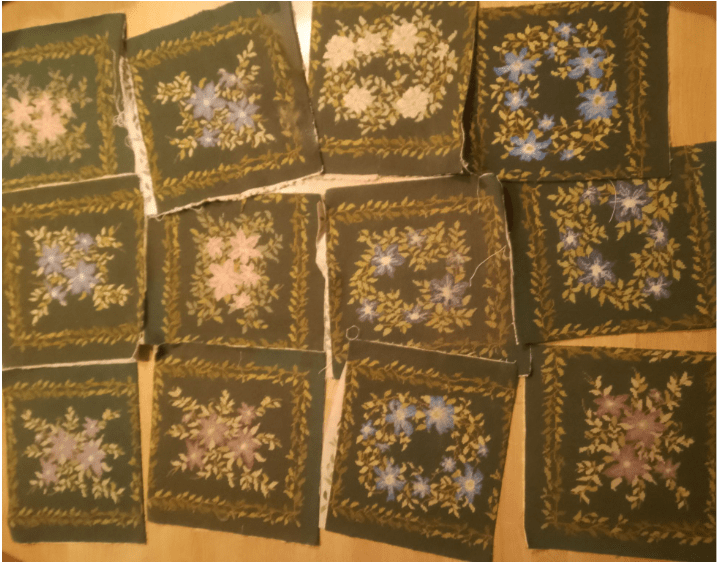
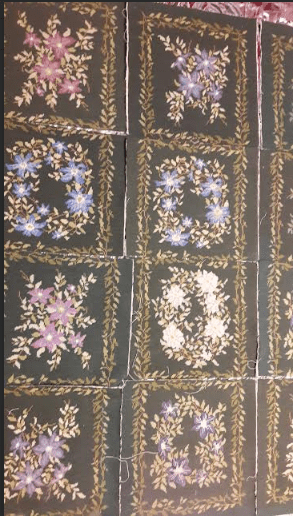
- Dimensions: 12 fragmented panels (approx. 40×40 cm each)
- Date of Accession: September 2025
- Curatorial Authority: Ariane Crafts, Principal Conservator
I. Executive Summary of Object Observation
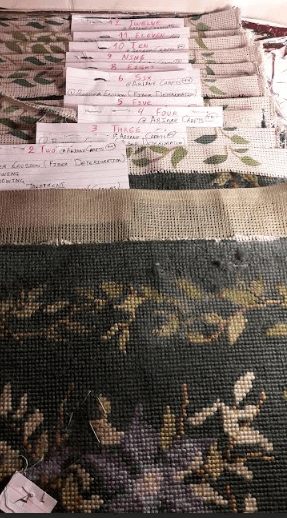
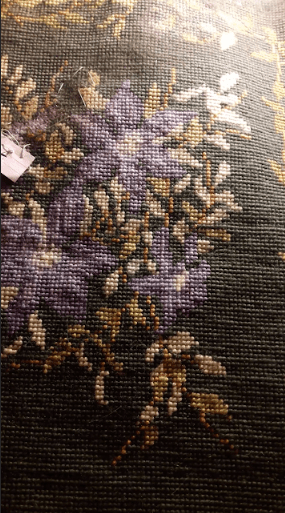
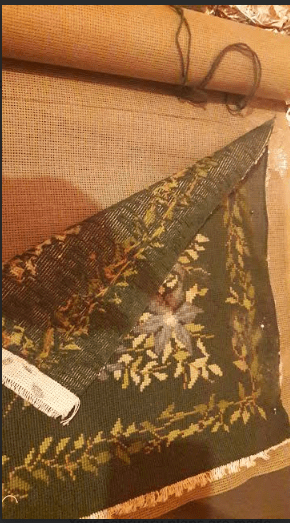
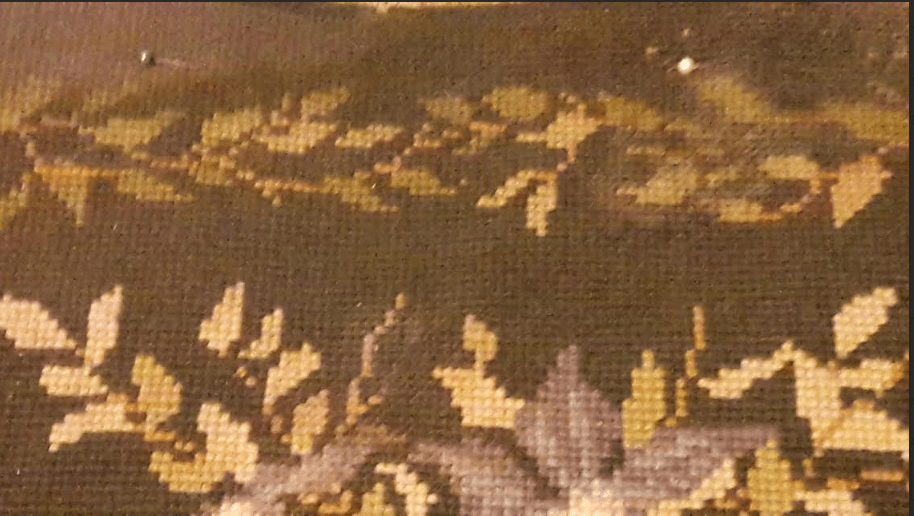
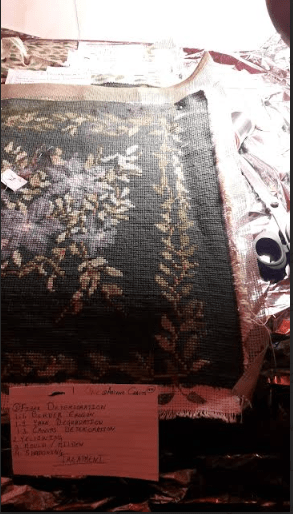
The subject asset is a 1968 “Clematis Carpet,” an exclusive design sold by the Woman’s Journal. While once a magnificent example of domestic craftsmanship, it is currently in a state of severe technical and material collapse. Forensic analysis identifies this asset as a “nightmarish” outlier due to the poor integrity of its 1960s industrial yarns and significant foundation damage
ACHR-INT-007
ariane crafts, all rights reserved
II. Forensic Technical Observations
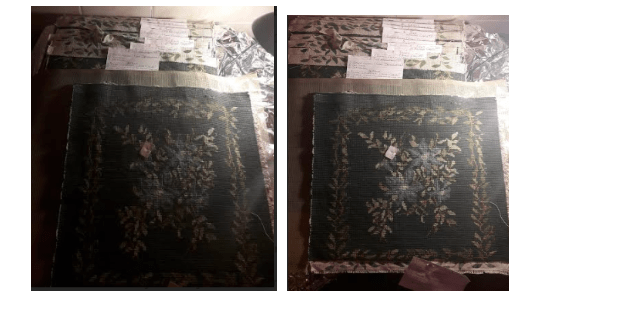
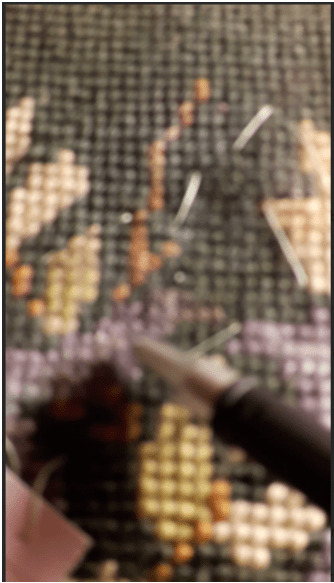
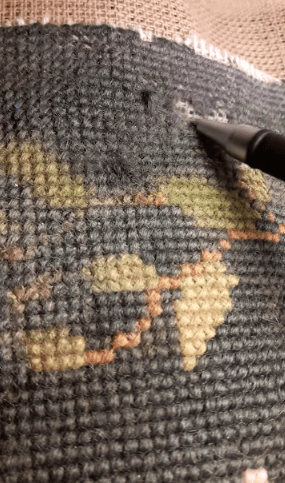
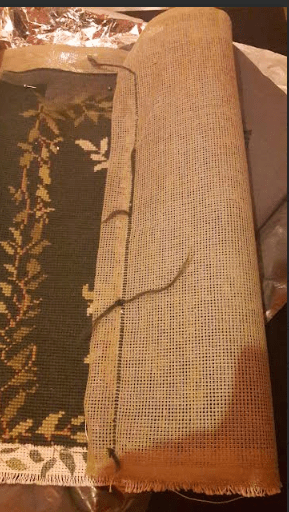
- Material Fragmentation: The carpet is no longer a cohesive unit but consists of 12 fragile tapestry panels. The original Gobelin canvas has been brutally compromised by reckless mechanical intervention, specifically the use of scissors to rip the panels apart.
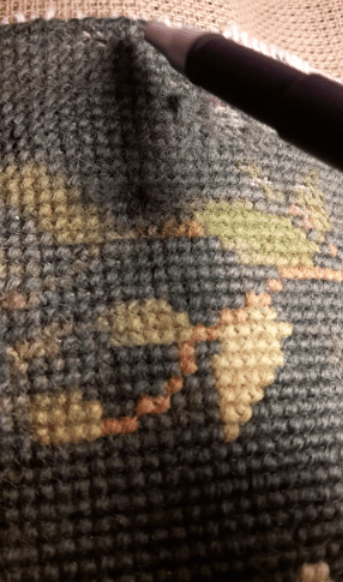
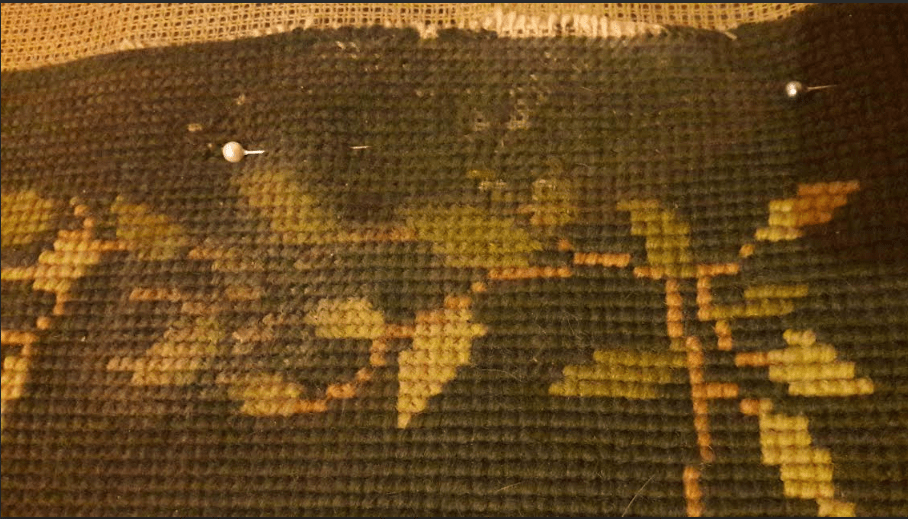
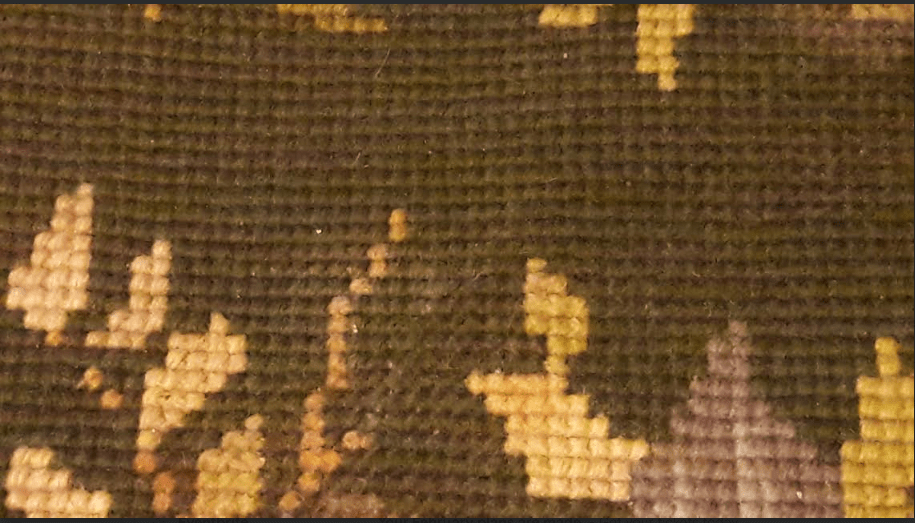
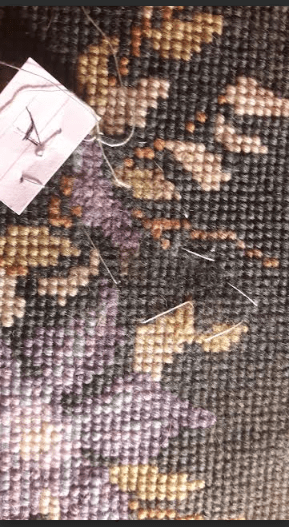
- Yarn Fatigue and Brittleness: The yarn is so brittle that it degrades immediately upon contact with tools. This confirms the “nightmarish” quality of 1960s British wools, which lack the durability of earlier Asian traditions.
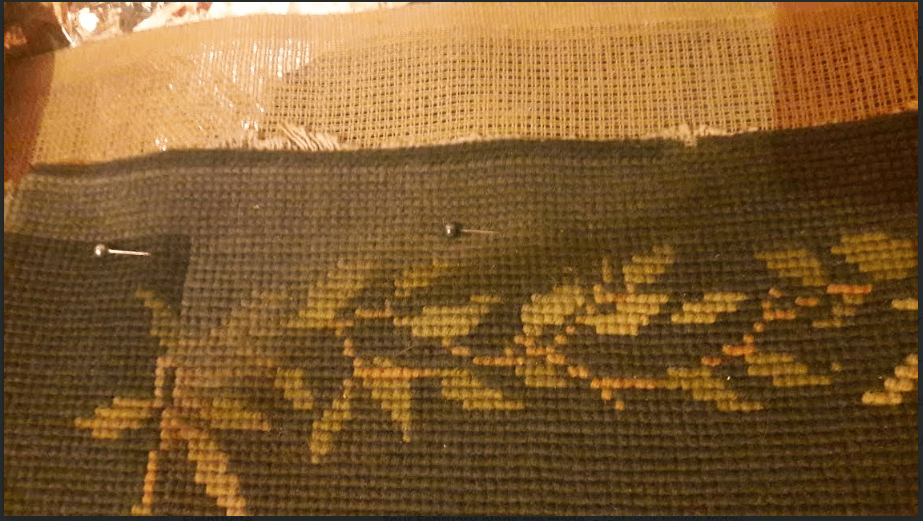
- Botched Reparations: Unskilled attempts at restoration using inappropriate knitting yarn—of a different ply, texture, and weight—have further distorted the material character.
ACHR-INT-007
ariane crafts, all rights reserved
III. Condition Analysis & Contaminant Identification
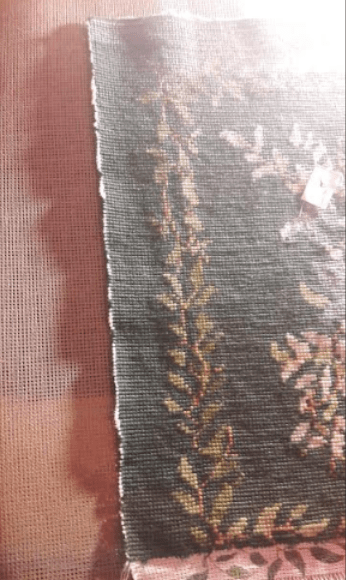
- Mechanical Erosion: The edges and centres of the canvas show severe erosion caused by lack of care and unskilled cleaning attempts.
- Environmental Degradation: Sunlight exposure has induced irreversible colour shifts, resulting in disparate tones across the panels.
- Biological Contamination: Evidence of dark mould and mildew spots was identified. These were chemically targeted using methyl salicylate to stabilise the bacteria and add hardness to the compromised fibres.
ACHR-INT-007
ariane crafts, all rights reserved
To remediate the catastrophic material failure and botched historic repairs, Ariane Crafts dictates the following rigorous master-level interventions as detailed in the formal Case Study documented via youtube:
- Surgical Needle Correction & Yarn Removal: A complete removal of all previous “unskilled” needle interventions. This includes the painstaking extraction of inappropriate knitting yarns and the correction of distorted stitch paths that have compromised the original Gobelin architecture.
- Structural Re-weaving & Fibre Integration: Following the removal of the failing 1960s industrial yarn, i will perform localized re-weaving to stabilize the “brittle” voids, ensuring the new wool ply is chemically and mechanically compatible with the original unbleached canvas.
- Fragmented Panel Stabilization: The 12 independent panels—brutally separated by previous owners—will be stabilized individually before being prepared for a collective structural alignment.
ACHR-INT-007
ariane crafts, all rights reserved
4. Hygroscopic Management (Seasonal Execution): As noted in our general schedule, the physical re-stretching and final drying conditioning are strictly deferred to the height of the British Summer. This ensures that the evaporation rates allow for the maximum “set” of the corrected fibres, preventing the structural “snap-back” common in low-integrity 1960s wools.
ACHR-INT-007
ariane crafts, all rights reserved
ACHR-INT-007
ariane crafts, all rights reserved
ACHR-INT-007
ariane crafts, all rights reserved
ACHR-INT-007
ariane crafts, all rights reserved
ACHR-INT-007
ariane crafts, all rights reserved
ACHR-INT-007
ariane crafts, all rights reserved
ACHR-INT-007
ariane crafts, all rights reserved
ACHR-INT-007
ariane crafts, all rights reserved
ACHR-INT-007
ariane crafts, all rights reserved
ACHR-INT-007
ariane crafts, all rights reserved
ACHR-INT-007
ariane crafts, all rights reserved
ACHR-INT-007
ariane crafts, all rights reserved
V. Concluding Statement
This restoration and conservation process is very indicative of the quality and purity of the yarn when examined with the international acquisitions we are accessing under this category.
Follow our case studies video documentation Ariane Crafts – YouTube
ARIANE CRAFTS, ALL RIGHTS RESERVED
 ARIANE CRAFTS