Materiality, Rigor, and Unconventional Media in Contemporary Textile Practice
Dear Readers and Followers,
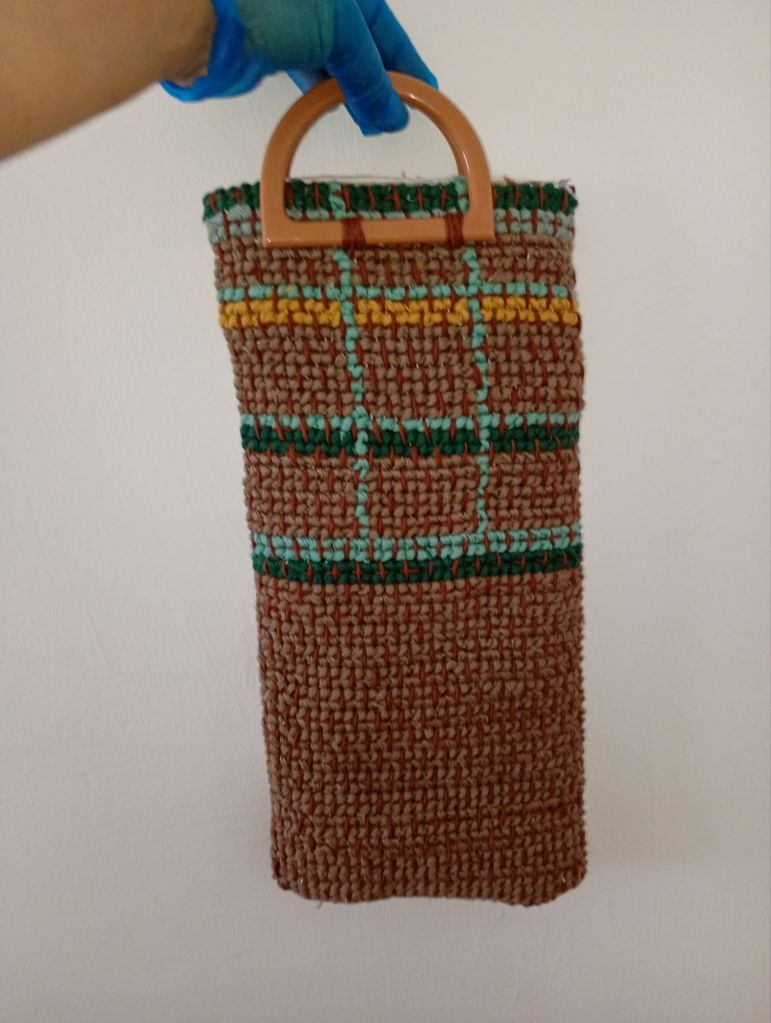
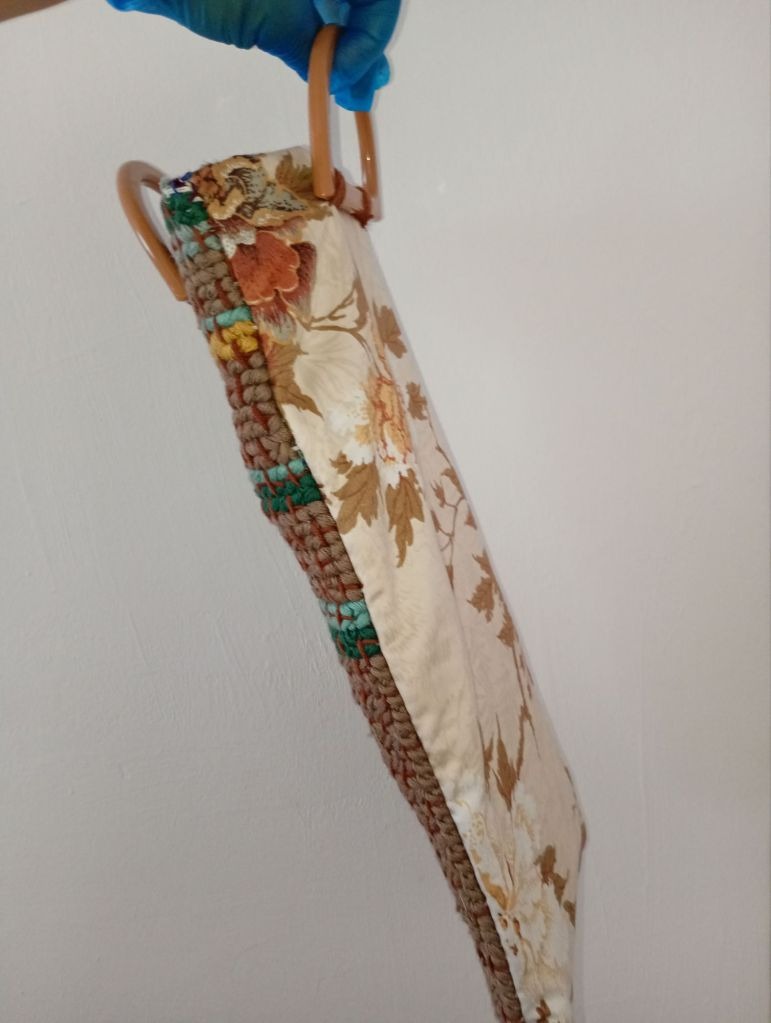
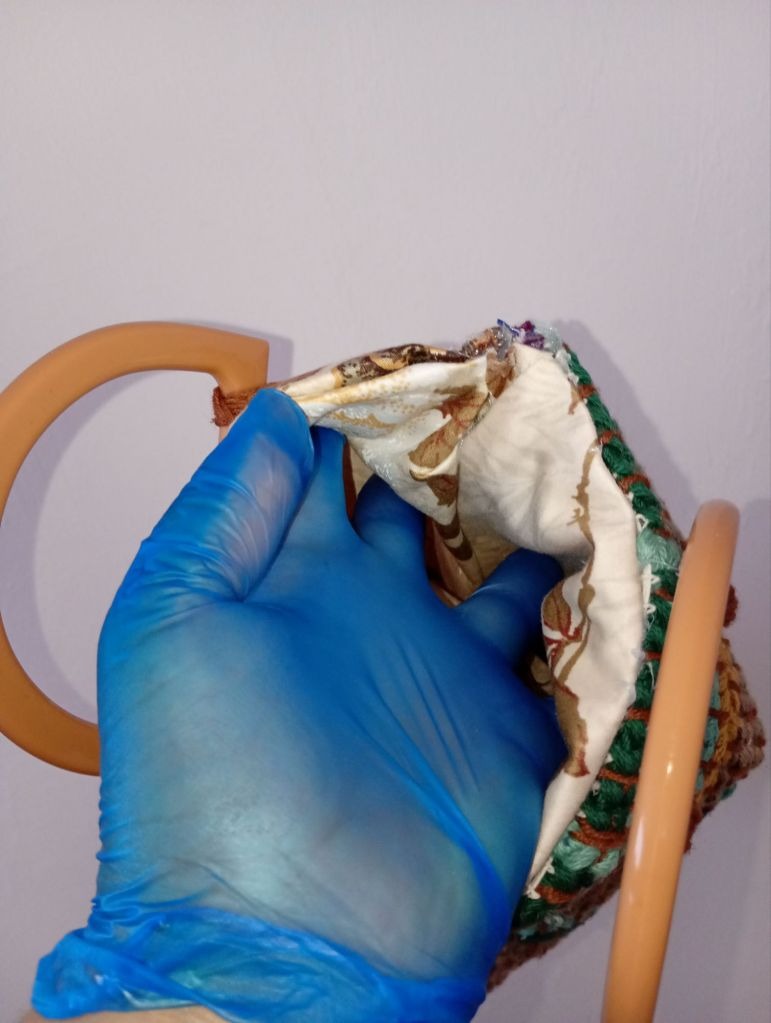
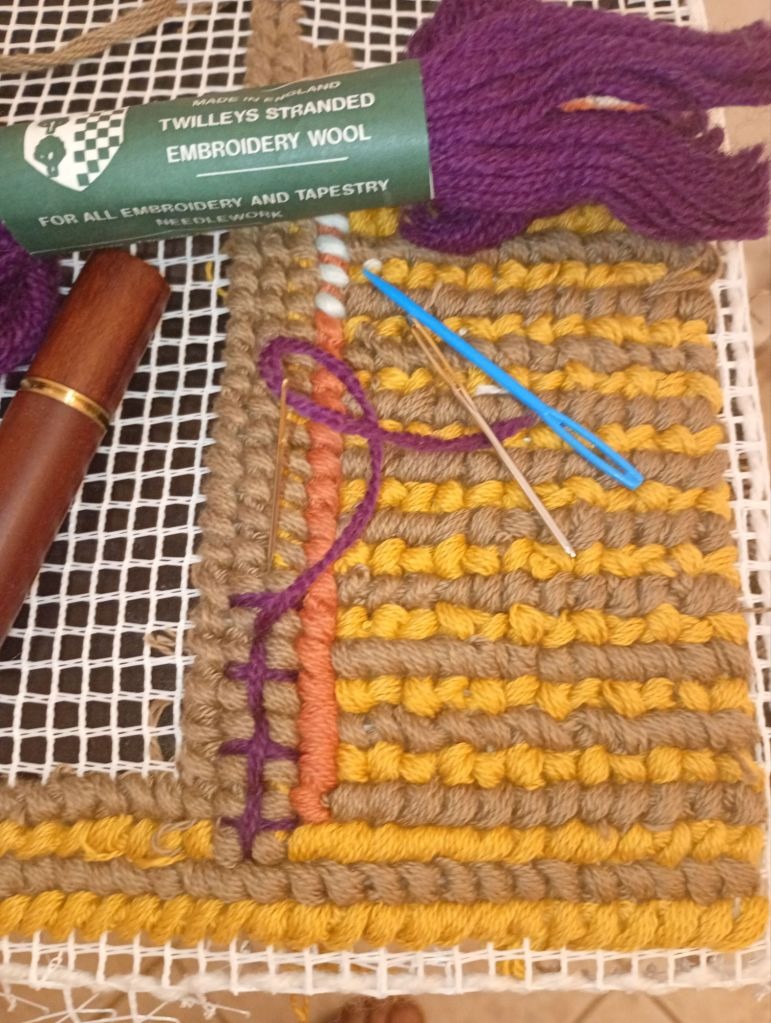
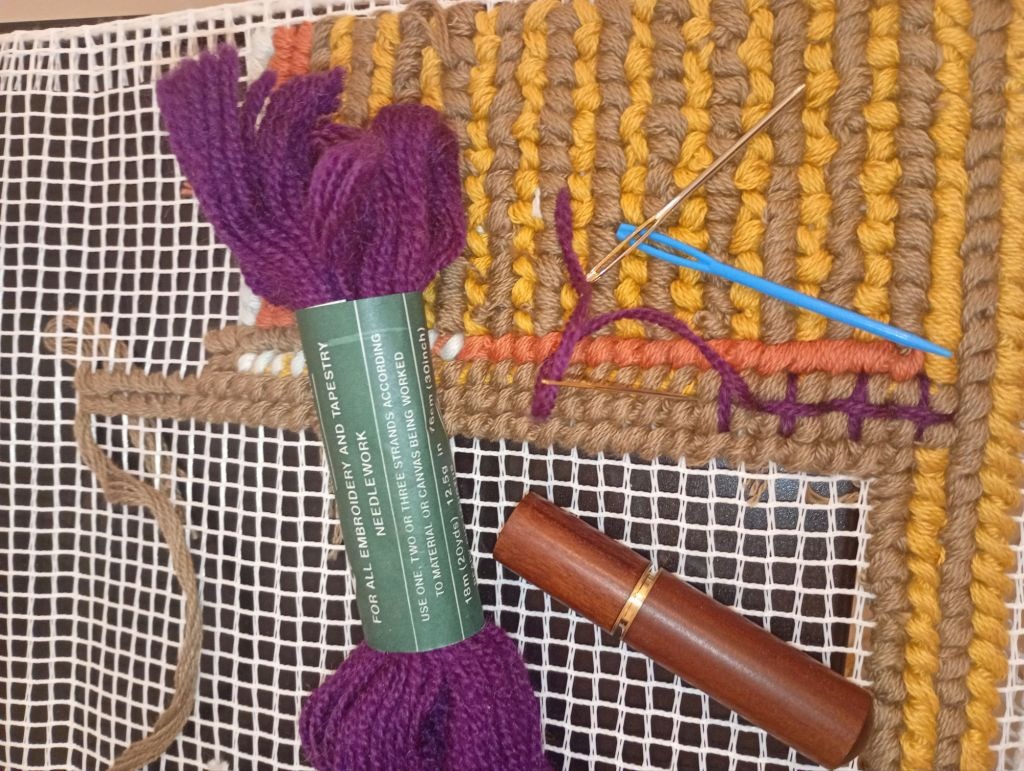
Please find appended below photographic documentation of an unconventional line of inquiry that I have pursued over the past few years: specifically, the application of DMC macramé cord onto 7-count and 3-count canvas support media.
The conventional applications for these respective canvas meshes have traditionally comprised huck embroidery, cross-stitch, punch needle, and, in the case of the latter, rug-making employing wool yarn.
DMC macramé yarn is fundamentally a cording composed of multiple cotton filaments loosely joined and twisted together; as such, it is entirely unsuited to standard embroidery, but rather intended for manipulated tension using a crochet hook or a large macramé needle.
In constructing these handbags using an unconventional medium on a higher-count grid, one must constantly dress and align the cord, given that macramé yarn inherently exhibits variable strand lengths and reacts unevenly to applied tension and draft. In other words, the uniform tension achievable and mastered through embroidery floss or tapestry wool remains elusive when employing macramé—a markedly unruly cord designed for robust applications such as heavy crochet or macramé home furnishings.
When I selected DMC XL macramé cord for the Georgia Summer handbags on 5-count Sudanese canvas, a degree of subtle management over the cord was still attainable. However, utilizing 3-count mono canvas for fabric locker hooking affords virtually no control over the behavior of the yarn. Despite utilizing identical hands, techniques, and three specific needles tailored to distinct functions—one to build volume, another to modulate tension, and a third for embroidery—the resultant tapestry demonstrates a fundamentally distinct presentation as a finished artifact.
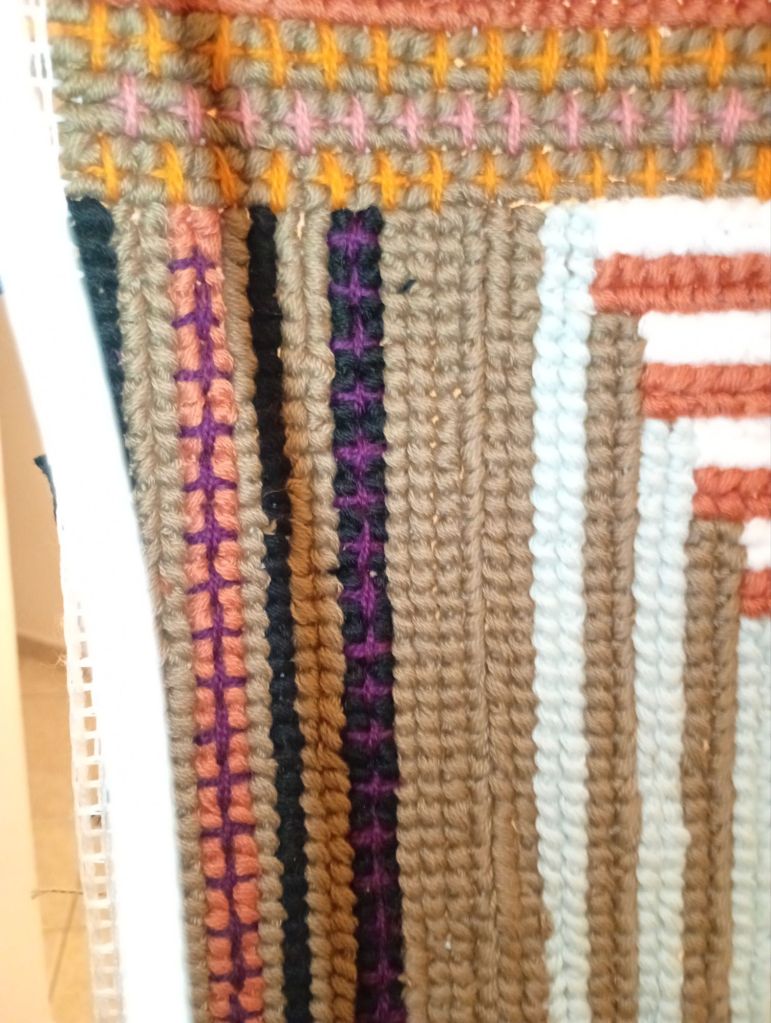
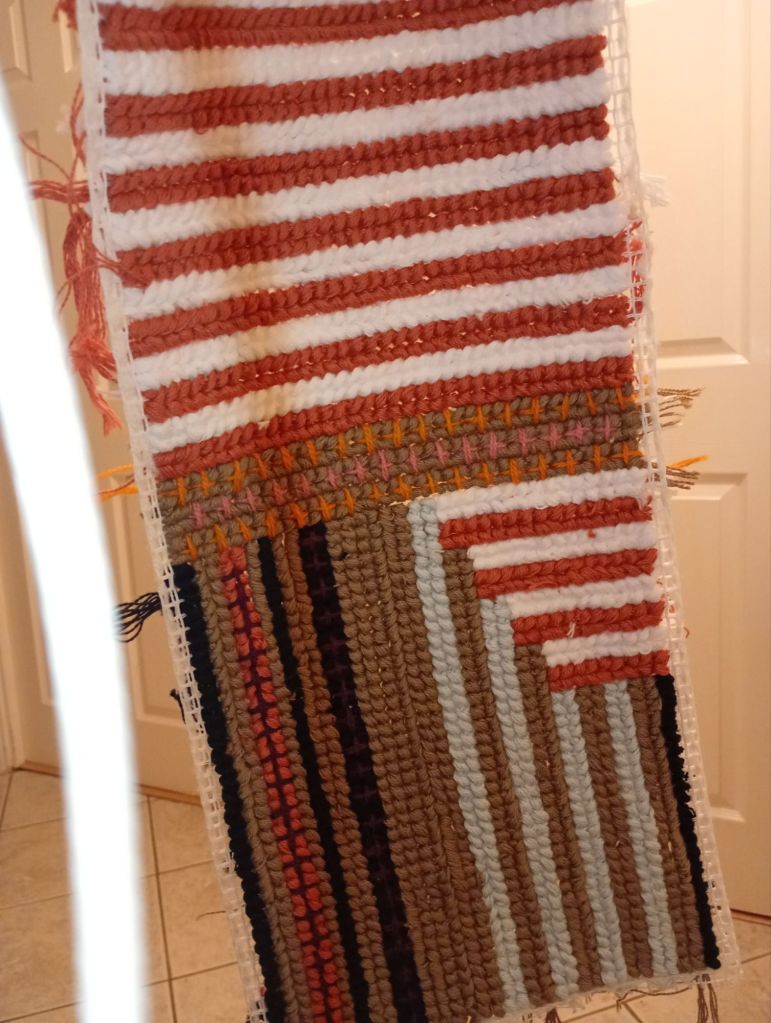
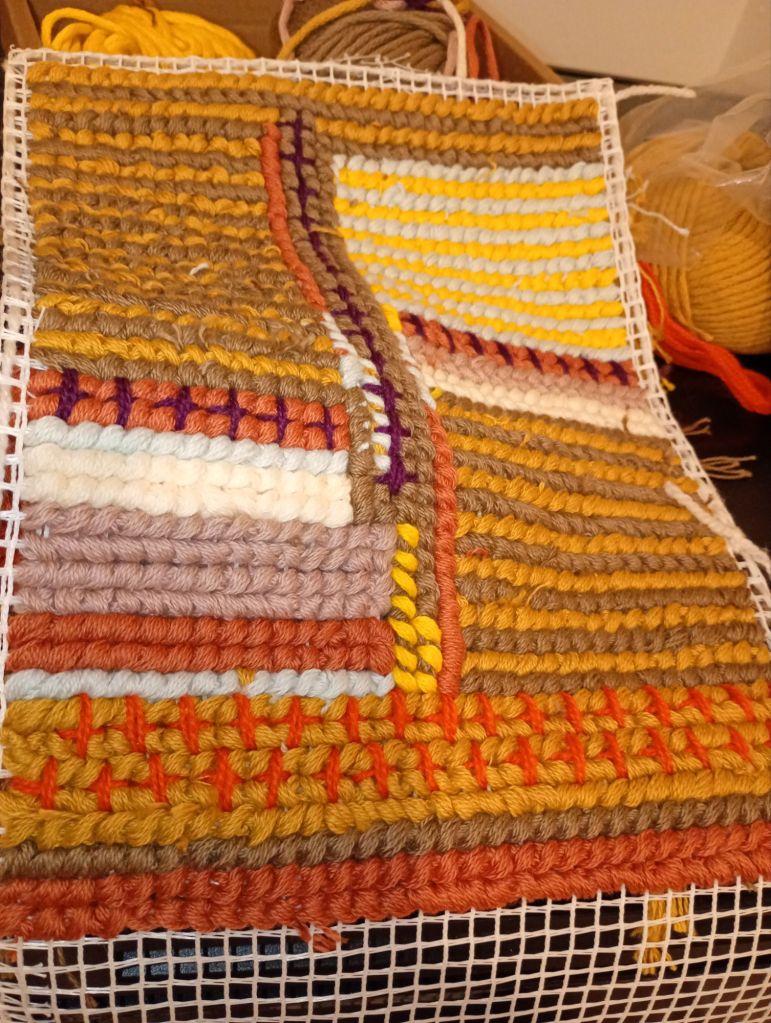
As observed, the macramé cord acquires a seeded, textured quality, presenting an uneven aesthetic that is only governed when constrained beneath embroidery threads. This occurs because the embroidery needle simultaneously tidies the underlying macramé foundation while filling each canvas grid cell, thereby introducing post-execution tension across the canvas surface.
Indeed, this establishes a permanent state of tension. While one cannot govern individual stitch tension in the manner permitted by embroidery floss or wool yarn, constricting the spatial footprint of the macramé cord imparts structural uniformity and fixes each stitch in place.
I submit the following photographic evidence for your consideration:
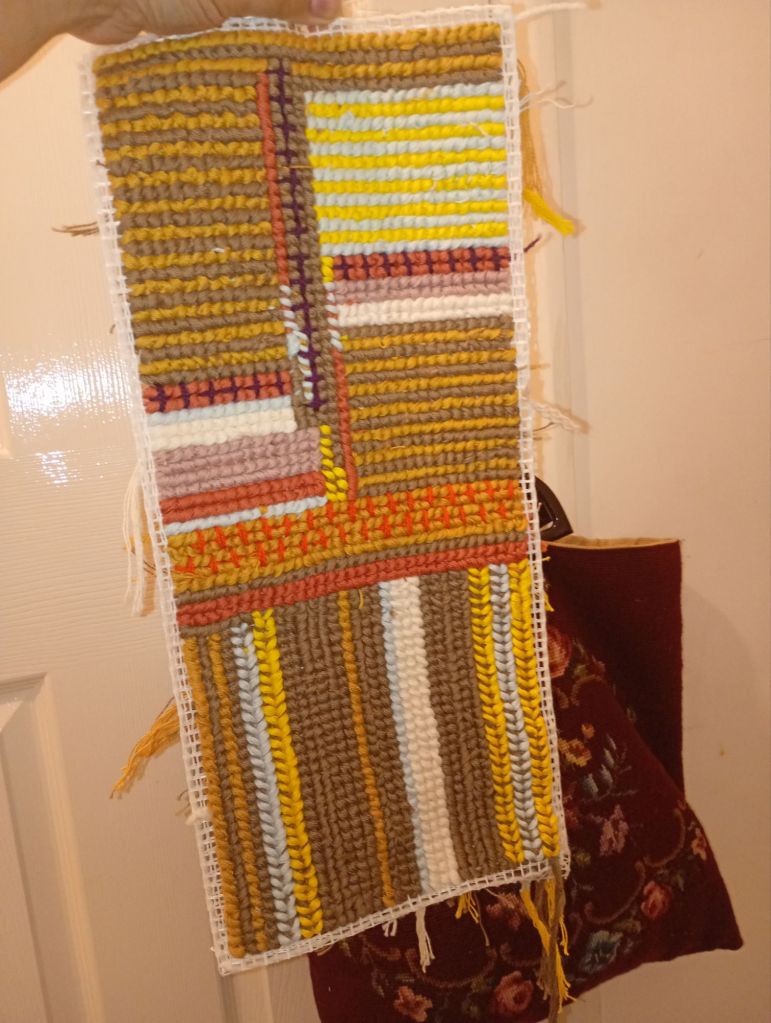
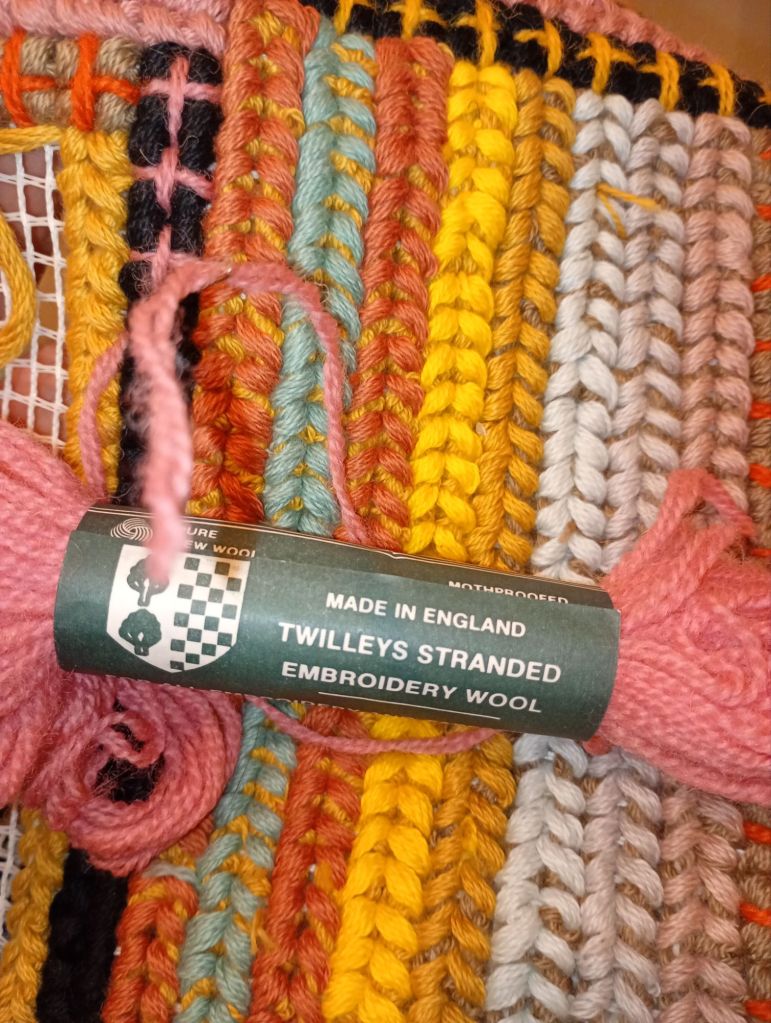
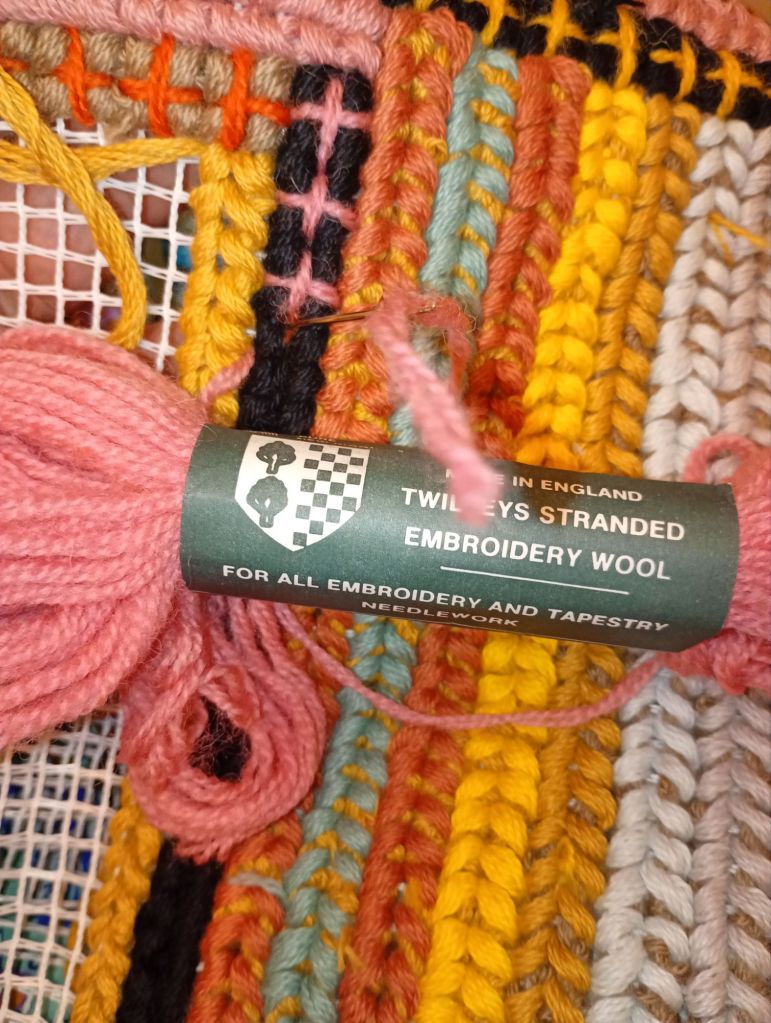
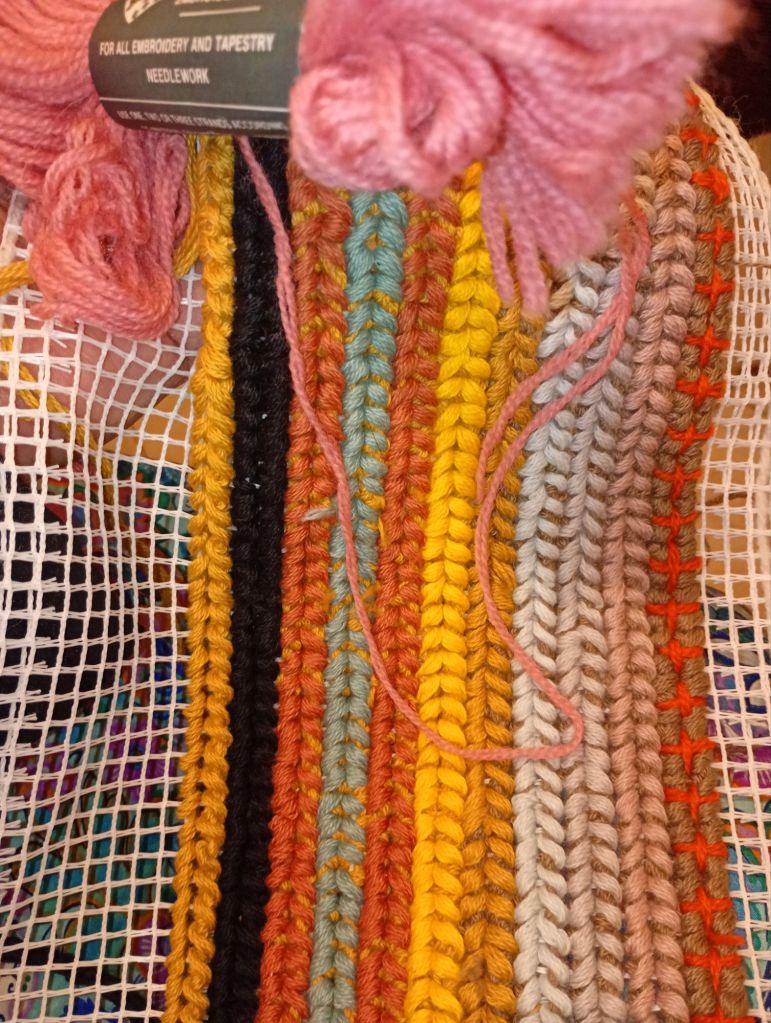
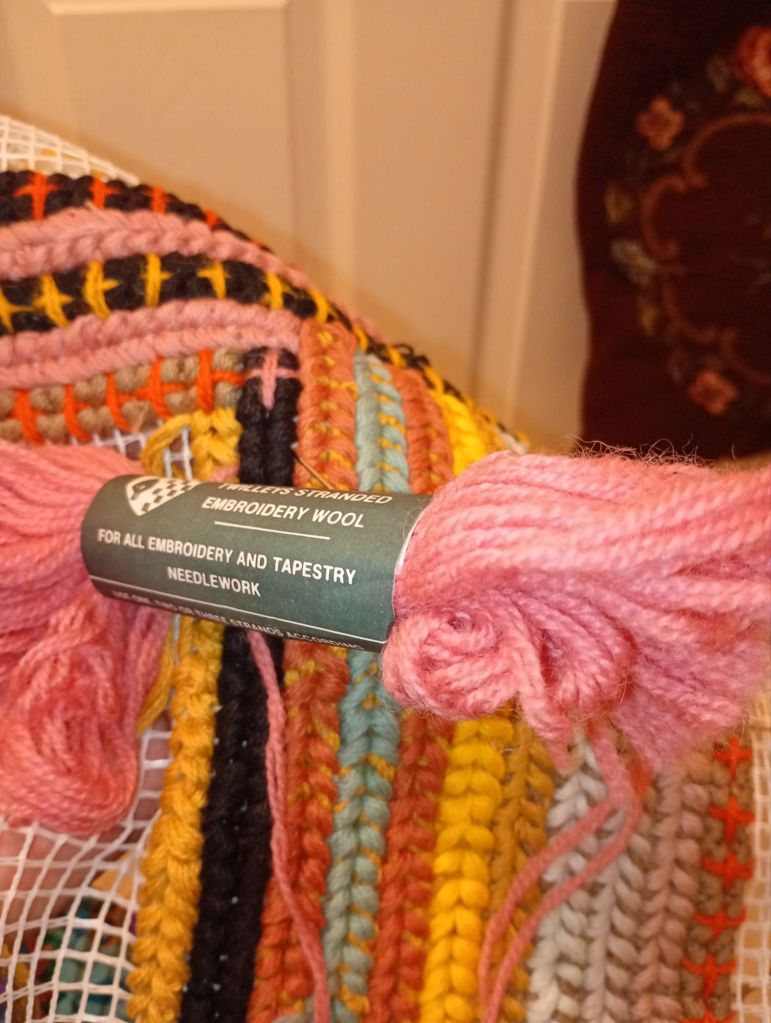
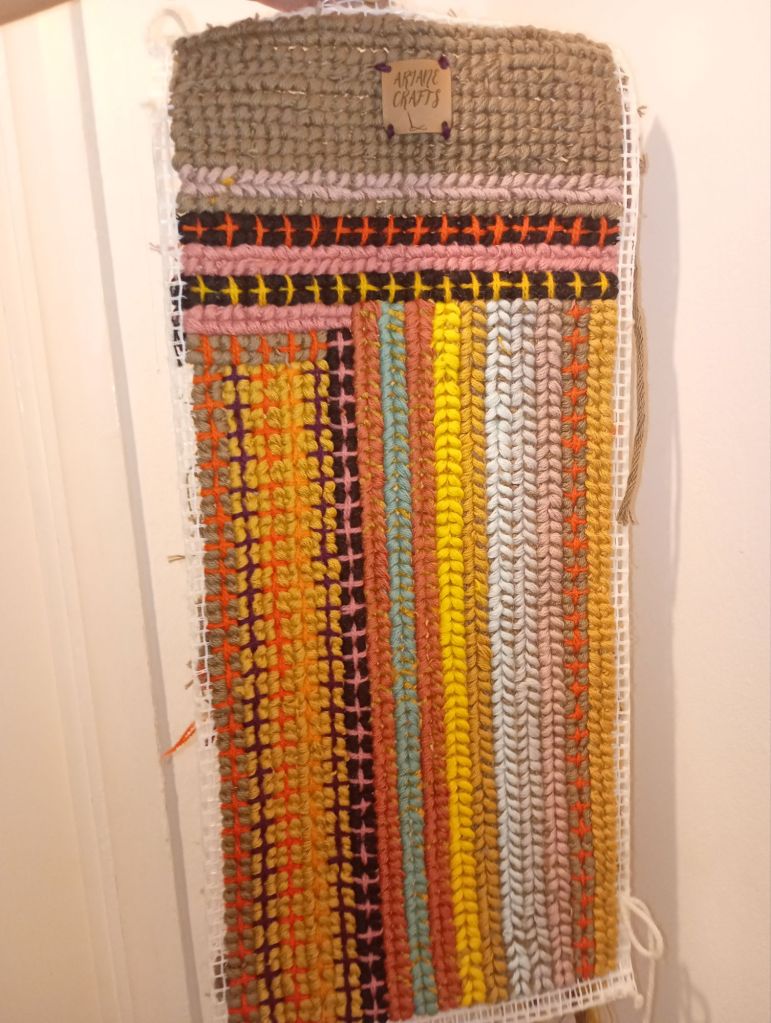
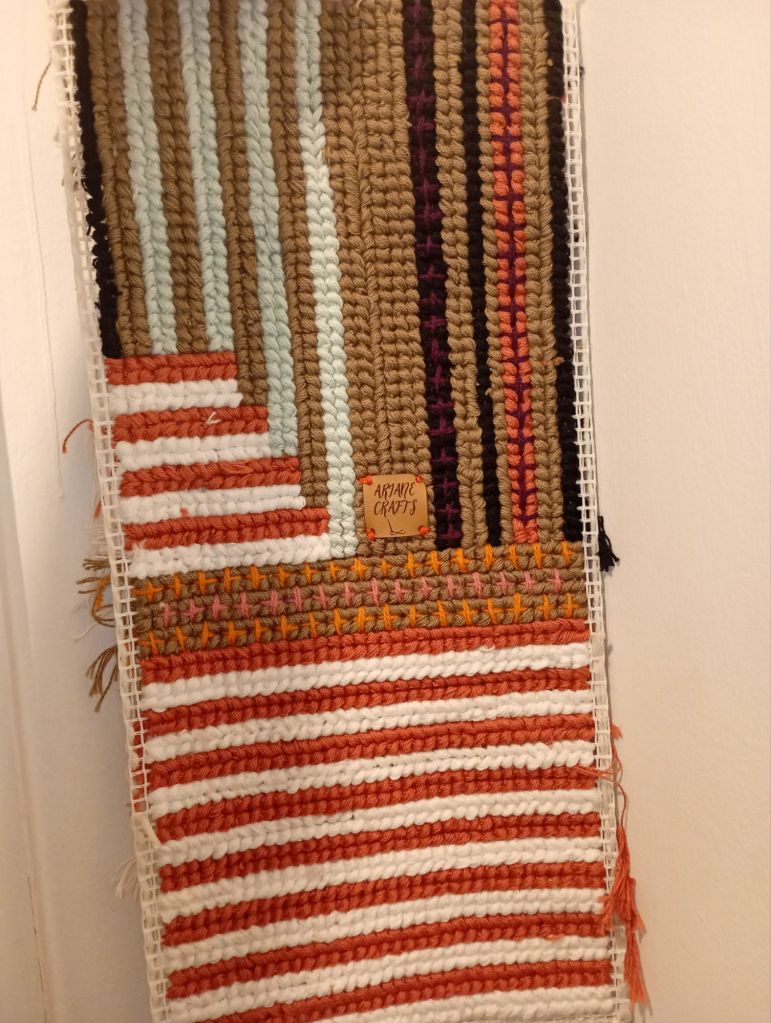
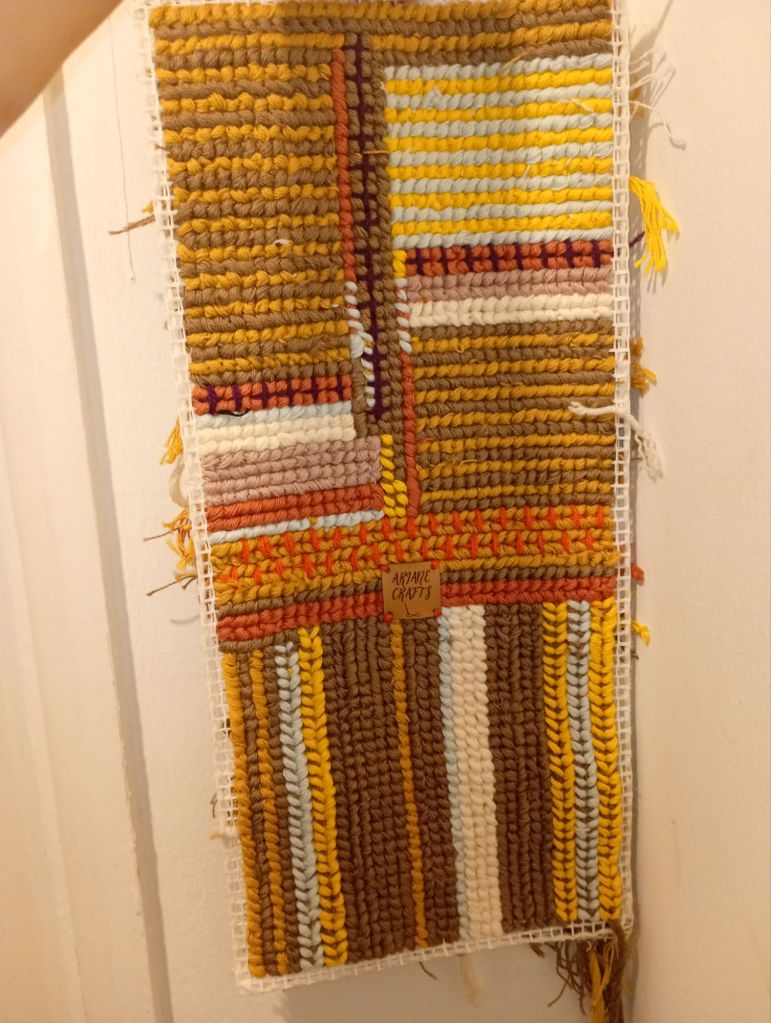
Furthermore, one may query whether it is legitimate—without claiming institutional authority—to introduce a critique of experimental embroidery and needlework from an alternative perspective: evaluating not merely the aesthetic variance of stitches caused by shifting canvas counts, but also the materiality of the media employed.
Is it justified, given that my experimentation does not serve purely artistic ends, to deem perceived aesthetic deficiencies as an inherent, permanent characteristic of experimental needlework?
If not, an examination of the above work reveals the incorporation of a tartan motif—nuanced and partially integrated into the handbag design, yet distinctly present.
However, it is not rendered via fine wool weaving; rather, it subsists as an evocative gesture reminiscent of cultural adaptation and heritage.
This structural element, within the unpredictable nature of the macramé cord, appears chaotic, expressing disorder and recalcitrance; nevertheless, it remains lint-free, resilient to wear, and substantially more durable than traditional pure wools, whether fine Scottish weaves or English Twilleys tapestry wool.
Yet, in a contemporary landscape dominated by fast fashion, what degree of durability and moth resistance must a handmade vessel for carrying umbrellas or flute cases exhibit before it is categorized not as traditional or standard, but as experimental and subversive toward oppressive aesthetic canons?
Ten, twenty, or thirty years?
How many fabric locker-hooked items required production before fabric locker hooking attained recognition as an established cultural heritage practice, boasting a more entrenched presence across Commonwealth nations than its wool-yarn counterpart?
Did this emerge through a formal community of practice, or via the pragmatic adoption of economical utility items for domestic purposes that subsequently evolved into communal artistic expressions?
If one asserts the latter, how does one categorize the global commercial market for 3-count rug canvas originating from China?
Conversely, if one posits the former, how are we to categorize the millions of crocheted artifacts produced worldwide?
And in the absence of a definitive consensus, how do we classify celebrated textile artists whose experimental embroidery and needlework command thousands of pounds within elite London auction houses and galleries?
Where resides the element of cultural practice across these disparate examples?
It resides manifestly in the act of execution itself.
It resides in execution because weaving on a loom using sheep’s wool in Scotland shares identical mechanics with loom-weaving using plant fibers in Asia.
Needle embroidery and crewel work maintain structural universality across geographic boundaries.
Needle weaving on Aida cloth, wherein the needle interacts dynamically with the canvas to simulate warp and weft interplay, fundamentally constitutes weaving.
Cross-stitch remains cross-stitch regardless of context.
French cross-stitch, historically localized to France, has largely fallen out of practice.
Long gone are the days when French handweavers executed a primary row of cross-stitch followed by a second, subsequently severing the cross to achieve a tufted pile effect for rugs.
Observe the introduction of an identifiable historic paradigm: pre-Napoleonic French cross-stitch utilized in rug manufacture.
Can one definitively prove its exclusive French provenance? What if Chinese artisans assert prior usage, corroborated by ancient textile artifacts and validated by international archaeological review?
Does a technique remain a living cultural practice if it is either extinct (no longer actively executed) or demonstrated to have originated elsewhere?
No, it cannot; to claim otherwise would constitute cultural appropriation of the highest order, particularly given the historic geopolitical relations between Britain and China during the imperial era.
Consequently, cultural practices center on what is actively disseminated and practiced at the creative level, rather than what merely survives the test of time. When I choose to reduce the mesh count for the Georgia Summer handbags from 5-count Sudanese canvas to 3-count fabric locker hooking canvas, traditional constraints are effectively abandoned.
To my mind, cultural practice inherently encompasses the inherited norms and technical discipline governing the creation of an object in alignment with precedent.
Thus, a 3-count canvas is strictly suited to a dedicated body of fabric locker hooking. Conversely, a 5-count Sudanese canvas allows for the synthesis of locker hooking and needlework using unconventional materials like macramé cord; the hallmarks of quality—even tension and neatness on both obverse and reverse—are not innate to the latter unless auxiliary implements (needles) and supplementary yarns (embroidery floss and tapestry wool) are deployed to artificially simulate acceptable traditional standards.
In conclusion, while I lack the institutional authority to pass judgment on experimental embroidery and needlework practices fetching thousands of pounds in commercial London galleries, I may certainly question whether it is equitable to exclude traditional rigor from a thoroughly capitalistic art market where novelty is valued on its own merits, regardless of enduring technical longevity.
Please feel free to leave your comments below.
Thank you for reading,
Ariane Crafts

