
In January 2026, it was beyond my imagining that May would commence with considerations regarding the substitution of basic materials, now that market supply chains no longer guaranteed alignment with demand. Instead, my attention was captivated by the esteemed names and corresponding signatures on my course certificate, which was awarded by the Sustainable Development Academy and brokered through EdX. This was not the first course I had completed in recent years pertaining to sustainable development. Indeed, in October 2024, I had successfully received my completion certificate for ‘Making Design Circular – 10 weeks Course,’ awarded by Making Design Circular and funded by the European Union. Nevertheless, I was profoundly struck by how those three names and their respective institutions represented authority and leadership in sustaining living heritage while ensuring the Sustainable Development Goals were met according to the most rigorous international institutional standards.
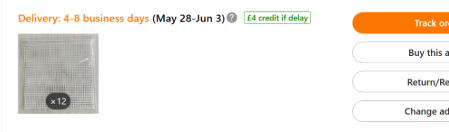
Now, my conceptualisation of ‘living heritage’ is abruptly constrained by the reality that Zweigart’s alternative producers of 3.75 count canvas have virtually disappeared, their offerings reduced to Temu’s ‘mesh canvas kits,’ with rare Amazon.co.uk and eBay sellers providing remnants of 50 x 50 cm or 60 x 100 cm. I can no longer reliably secure a 25-metre roll as was previously possible. Furthermore, the remnants recently available on Amazon quickly sold out after I placed multiple orders simply to acquire six pieces of 1.25 x 1 metre.
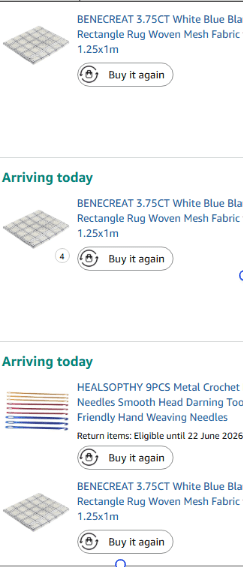
The concept of sustainability—defined as that which relates to our environment, our history, the foundational conditions for maintaining our heritage, and what sustains us, our nature—has unexpectedly acquired a new meaning. It is now narrowly focused on the question: ‘Is it sustainable to maintain a craft that is trivialised to Dunelm’s ‘tufted rugs’ which resemble locker hooking but are fundamentally distinct?’ Is this practice sustainable without either rationalising the scarcity of materials or changing the medium? Or must we now concede that locker hooking will be executed from a desk, designed using Adobe Acrobat, and subsequently manufactured and dispatched from China?
I resolved to address material scarcity through substitution, yet my primary concern was quality. Once I accepted that scarcity precedes non-existence, my central focus shifted to sourcing base materials, even those of demonstrably lower quality. Both alternative canvases exhibit a lower count than the original canvas with which I designed and executed the Georgia Summer collection. However, this count is precisely the appropriate one for designing and executing locker hooking handbags using only fabric strips. I bold the word ‘only’ for emphasis. I am sourcing materials with the correct count to align with how locker hooking has evolved to incorporate the exclusive use of fabric strips. If I were to integrate mixed media, such as wool on canvas, I would require the smaller and finer locker hooking needle (which originated in England) and a higher count canvas, as is evident in my XL handbags. Crucially, the canvas used for the Georgia Summer handbag is currently unobtainable—neither on Amazon nor in specialist craft stores.
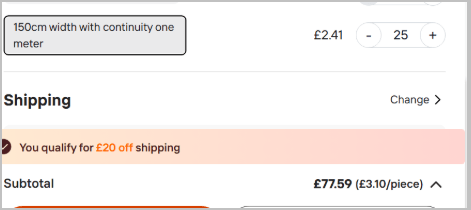
Revisiting the issue of lower quality, I examined Temu’s wholesale platform, Alibaba, and was surprised to discover that the canvas is selling remarkably well globally, though marketed under the hobby name ‘latch hook canvas.’ International customers can purchase small remnants: 4-12 Ct Small Sizes Diy Crochet Canvas Carpet Needlework Fabric For Rug – Buy Cotton Canvas Fabric For Rug,Diy Crochet Canvas Carpet,Needlework Fabric For Rug Product on Alibaba.com
and rolls: Blank Rug Hooking Canvas,Latch Hook Rug Making Carpet,Tapestry Diy Kit Tool For Embroidery Crafts Decoration Hooking Mesh – Buy Hooking Mesh,Blank Rug Hooking Canvas,Latch Hook Rug Making Carpet Product on Alibaba.com.
This demonstrates the material and tool intersection between needlework crafts: the popularised hooking canvas that historically and commercially superseded locker hooking still permits a locker hooker to source the identical material for the contemporary colonial adaptation utilising fabric strips. However, this material is unsuitable for wool locker hooking. As the needle evolved from the locker hook to the latch hook (an evolution driven by market demand for a new instrument, causing the decline of the old), the canvas count became smaller to accommodate the larger needle. This evolution rightly saved crafters considerable time, leading to wool locker hooking being viewed as fastidious and uneconomical.
Nonetheless, due to factors such as colonial pauperism, the unaffordability of wool and limitations in colonial supply chain infrastructure, and the sustainability and recycling inherent in old fabrics, the use of fabric strips became a viable and fashionable transition—allowing pleated rugs to be executed via locker hooking fabric loops. The means for this colonial use remain extant and make it feasible for this practice to be executed today for leisure and artistic pursuit.
What, then, is my role, given that the use of fabric strips with locker hooking needles is a waning craft? I contend that it is, above all, to incorporate techniques from both material varieties (mediums and tools: specifically, the use of fabrics with a smaller canvas count and a locker hooking needle, and the use of wool with a higher canvas count and the finest English-origin locker hooking needle) into the creation of items that retain the utilitarian nature of both varieties. This must be achieved while celebrating easily identifiable, discoverable, and relatable patterns that define a specific era and culture. Am I referring to the culture of practice? No, that is what I have already delineated in the preceding paragraphs. I am referring to iconic expressions of primitive, natural elements that remain a defining characteristic of locker hooking.
While other British and American primitive colonial textile crafts often depict animal and human nature in a simplified, primitive manner, the patterns in both varieties of locker hooking are typically restricted to shapes, flowers, or vegetation. The colours also play a differentiating role. This is not merely a discussion of basic colour choices dictated by fashion waste; we are addressing colour combinations that signify specific meanings, such as warmth (e.g., dark brown and dark orange), whereas Mediterranean cultures, for instance, might employ dark grey with light pink. The unique combination of colours and shapes makes both varieties instantly identifiable to older generations.
Therefore, as a textile art practitioner, I must also ensure that for those unfamiliar with our practiced varieties of locker hooking, the handbags are discoverable, identifiable, and relatable to individuals from all cultural backgrounds. This identifiability ensures continuity amidst the plethora of artistic methods for creation using materials sourced from international platforms like Alibaba and Temu, since arts and crafts are globally accessible. This is precisely why our heritage practice is more critical than ever—irrespective of the current absence of a dedicated supply chain and materials specifically sourced for locker hookers. We are now practicing with the aim of inspiring others to engage (discoverability), thereby establishing the practice as culturally and normatively identifiable, while simultaneously preserving the textile iconography that the incipient and colonial practice of locker hooking inherently holds.
Ariane Crafts

