- enriched with several technical photos
- aceession ACHR-PE-GTI-004
- secure uuid cd4a1399-7303-45dc-94c6-d9e6f34ec9
- Pictorial archive: Application of Colour and Materials Theory to exemplify trans-Atlantic migration of technical intelligence
- research paper presentation for the preservation and transmission of british and anglo american textile history and cultural practices
dear readers and followers,
The Georgian era, a complex epoch of cultural refinement spanning the eighteenth and early nineteenth centuries, established a textile language characterized by an intricate synthesis of classical restraint and burgeoning global opulence. Within the metropolitan centres of the British Empire, textiles were not merely peripheral accoutrements of domestic life but were central to a semiotic system that articulated status, intellectual pedigree, and participation in the nascent global economy. The Georgian interior was predicated upon the principles of proportion and balance, yet it utilized fabrics as a vibrant counterpoint to architectural rigidity, introducing warmth, texture, and a profound sense of theatre into the domestic sphere(1).
During this period, the display of wealth was intrinsically linked to the saturation and complexity of the textiles employed. The most expensive dyestuffs were required to produce the deep crimsons, royal blues, and golden ochres that clad the walls of state apartments. This predilection for bold colour was not merely an aesthetic choice but a calculated demonstration of a family’s access to international trade routes(2)
Material Stratification in the Eighteenth Century
The Georgian textile vocabulary was dominated by several key fabrics, each possessing distinct technical characteristics and socio-economic connotations. Damask, a reversible figured fabric named after the trading city of Damascus, became a staple of the era. Its technical brilliance lay in the contrast between the matt figure and the lustrous satin background, a structure that exploited the play of light from large sash windows to create a dynamic interior environment. Similarly, cut velvets, often referred to by the generic term “Genoa,” were prized for their textured pile designs and were frequently imported from Italian centres such as Venice and Genoa to furnish the grandest country houses(3)
| Fabric Type | Composition and Weave | Primary Application |
| Silk Damask | Reversible weave; matt pattern against shiny satin ground. | Wall hangings and formal upholstery in state rooms. |
| Genoa Velvet | Textured pile designs; often cut or ciselé velvet. | High-status furniture covering and ceremonial drapery. |
| Caffoy | A durable blend of silk, linen, and wool with a cut-pile finish. | Heavy-duty upholstery in high-traffic drawing rooms. |
| Penistone Cloth | Coarse woollen fabric produced in the Yorkshire Pennines. | Utilitarian clothing and sheltering for labouring populations. |
The technical sophistication of these materials was matched by the artisanal methods used to embellish them. Hand-embroidery, utilizing silk threads and metallic purls, was a common pursuit among the female aristocracy, serving as a public testament to their leisure and refinement. This culture of fine needlework would eventually provide the technical foundation for the domestic craft kits of the twentieth century, as the methods of the professional atelier were simplified for the home enthusiast(4)
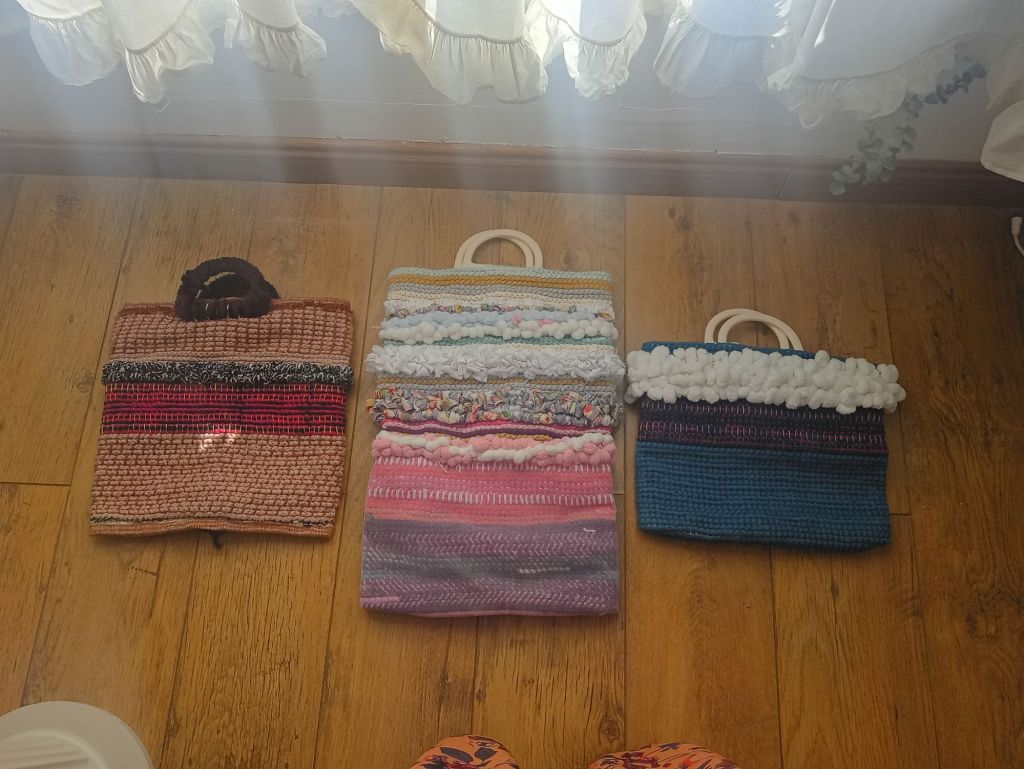
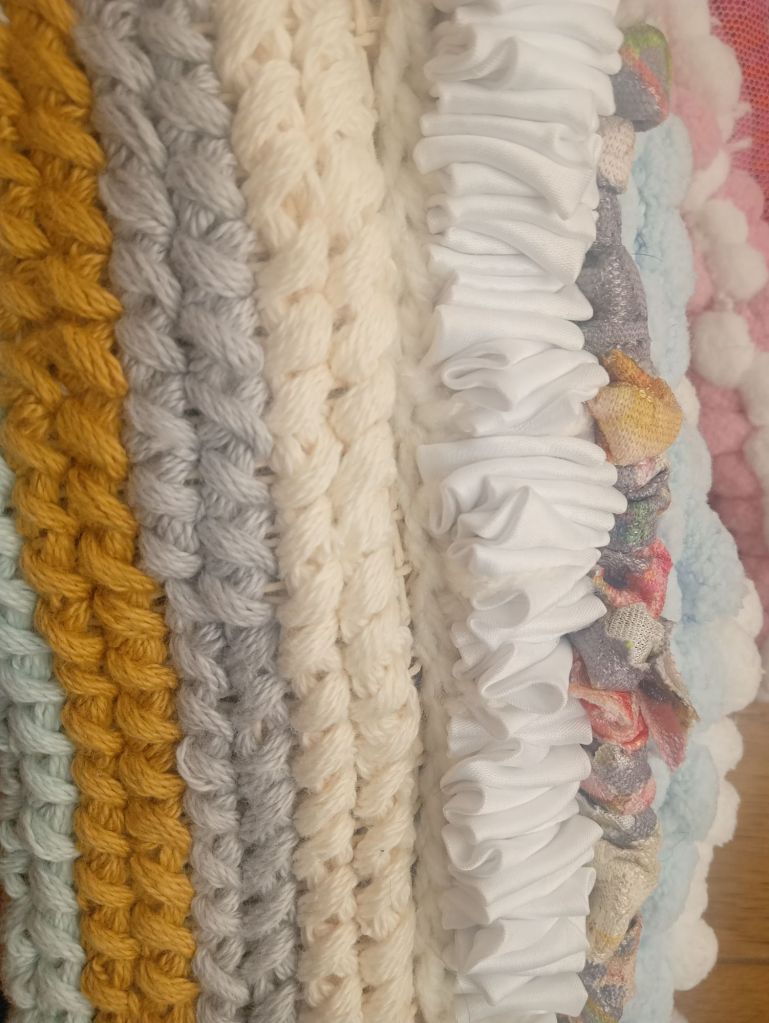
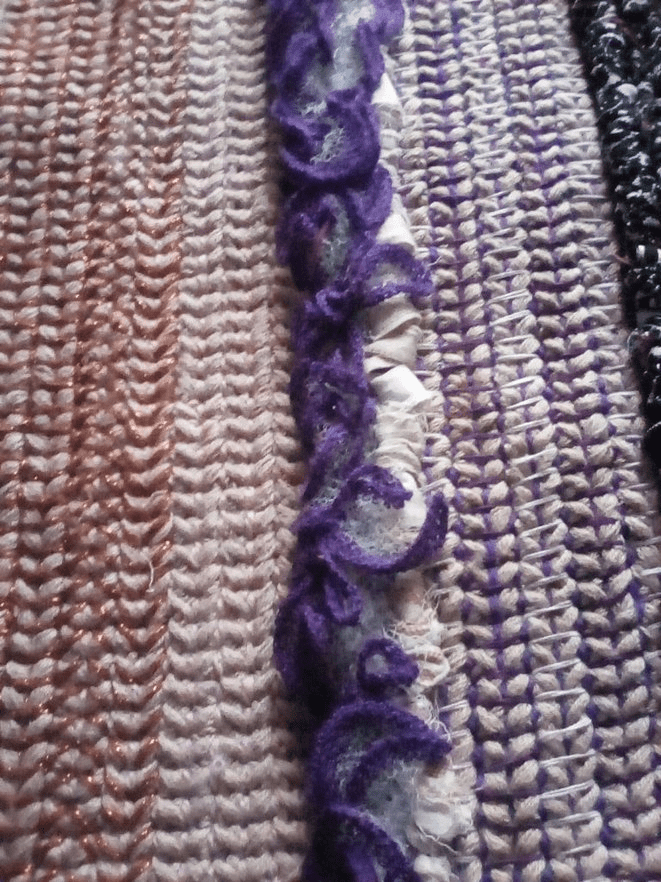
The first picture from left to right exemplifies the Georgian influence in terms of dark brown and golden brass colours, the choice of chenille, 2. the use of shirring and fabric use instead of yarn for locker hooking , the use of the finest fabrics such as silk white and the use of bridal netting to incorporate luxury and opulence, just like the shirred table mats aimed at exhibiting during Georgian times. 3. the combination of dark blue, black and ivory white pom pom yarn in sort of a fragment like one finds in British textile archives.
The Material Diaspora: Chenille, Silk, and the Foundations of Netting
As the British Empire expanded its reach into the Commonwealth territories of Australia, North America, and the Caribbean, the materials of the Georgian era underwent a process of translation and adaptation. This diaspora was not a monolithic transfer of styles but a complex negotiation between metropolitan ideals and colonial realities.
The Evolution of Chenille and Arasene
Chenille, a term derived from the French word for “caterpillar,” emerged in the eighteenth century as a fuzzy, decorative yarn used primarily in high-end embroidery and the fabrication of elaborate tassels. In Georgian documentation, it was frequently identified as “arasene,” a specific type of wool or silk chenille thread used to create a velvet-like texture in floral motifs on handbags and waistcoats. As this material migrated to the colonies, its application shifted from the purely decorative to the structural(6).
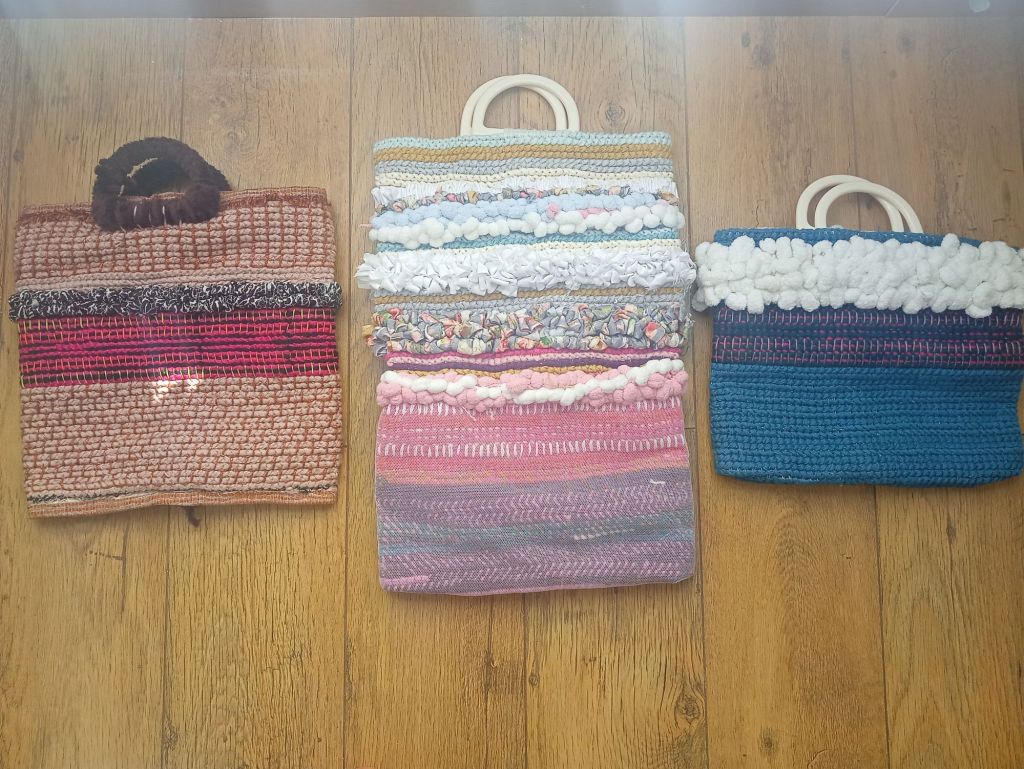
To understand the sophisticated offerings of a brand like Ariane Crafts, one must examine the specific technical methodologies that elevate textile work from a mere hobby to a professional discipline. Coptic stitching and locker hooking represent two such methodologies, each with a profound historical and structural significance.
In North America and Australia, the plush, resilient nature of chenille made it a favoured material for domestic comforts in harsh environments. By the twentieth century, the “chenille” technique had been industrialised, but the underlying aesthetic—a pile-based softness that emulated the luxury of Georgian velvet—remained a constant. This transition from the delicate arasene of an eighteenth-century “miser’s purse” to the robust chenille yarns of colonial bedding and rugs illustrates the democratisation of textile luxury(7).
Silk: Refining the Global Commodity
Silk remained the quintessential luxury fibre throughout the migration period. The refining of raw silk for the global market involved arduous technical processes, including “silk throwing” to twist the threads and “degumming” to remove the sericin—a natural gum that obscured the fibre’s inherent sheen and prevented dye penetration. In the American colonies, particularly at estates such as Mount Vernon, the production of silk and wool was a sign of self-sufficiency and high social standing(8).
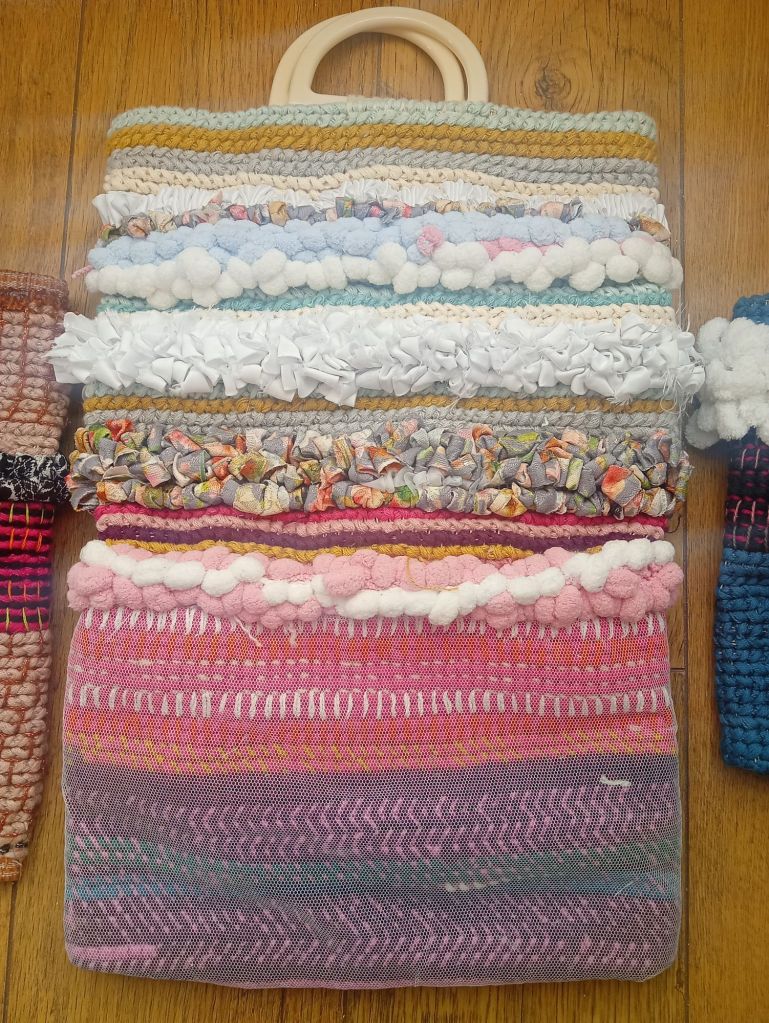
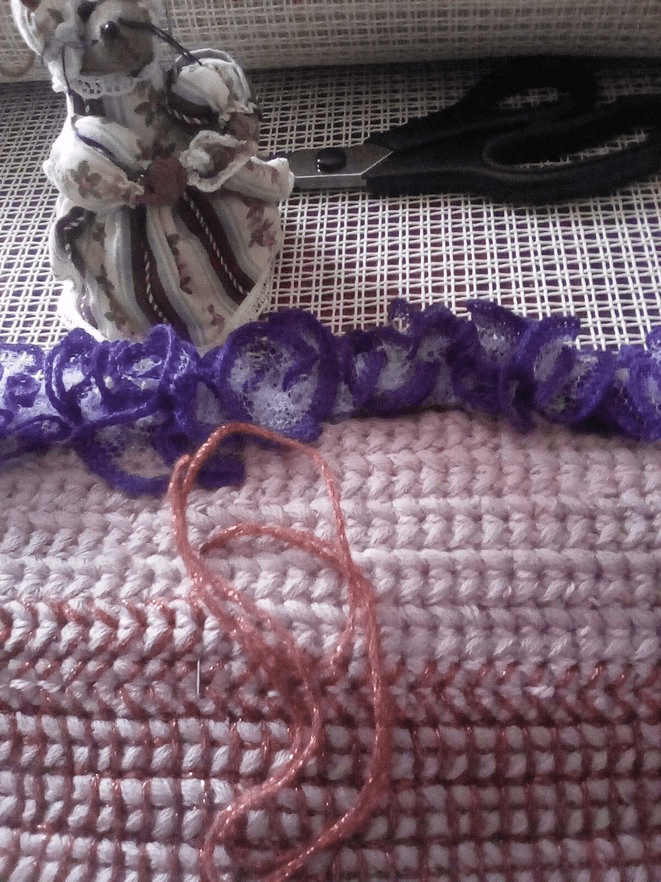
bridal netting at the bottom, ariane crafts, all rights reserved
Bridal Netting and the Mesh Architecture
The use of netting as a structural foundation for embroidery was a hallmark of Georgian artisanal practice. Hand-knotted silk mesh was frequently used as a substrate for beading and “punto riccio” (curl-like) stitching in the creation of sophisticated evening accessories. This technical requirement for a stable, transparent grid would eventually evolve into the “bridal netting” of the Victorian and Edwardian eras, and ultimately into the standardised canvas used for latch-hooking and locker-hooking(9).
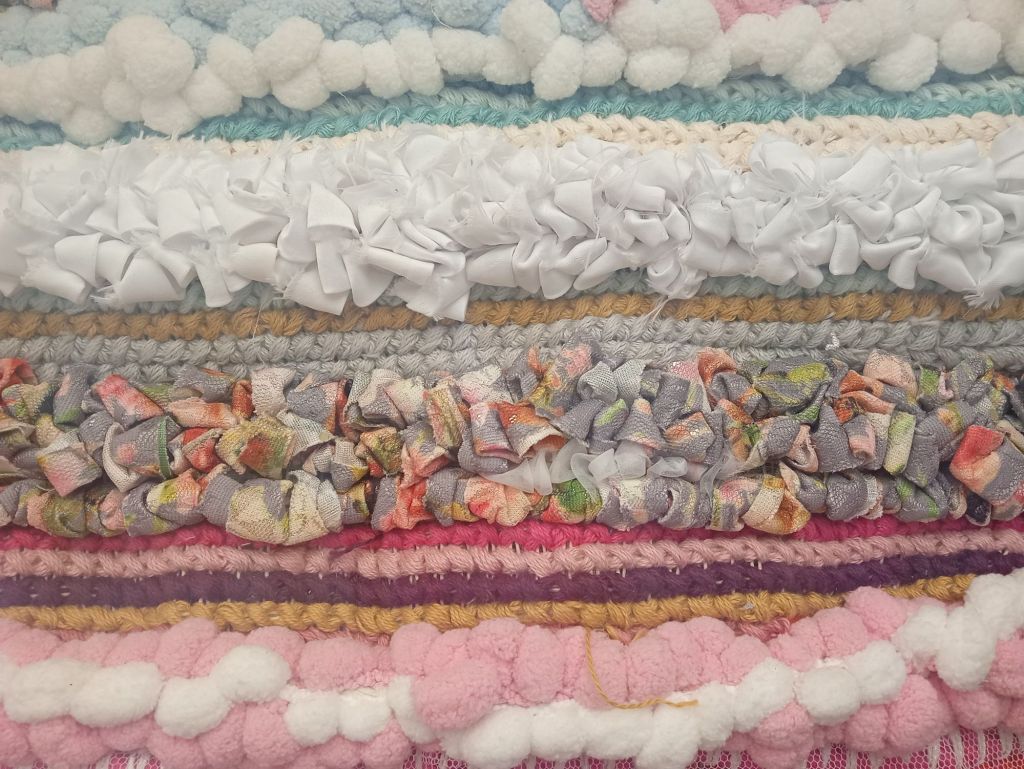
silk and fine tapestry fabrics interwined . the combination of these two fabrics stand in constract with the white satin locker hooking at the top
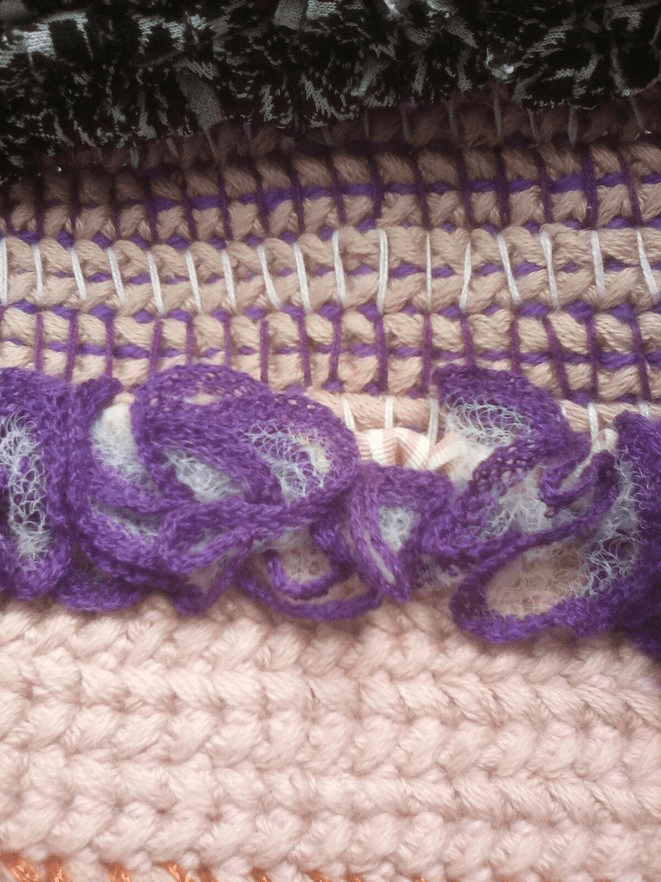
mesh, ariane crafts, all rights reserved
In the colonies, the availability of machine-made netting in the late nineteenth century sparked a resurgence in domestic netting crafts. This “mesh architecture” allowed for the creation of intricate, openwork textiles that provided ventilation in tropical climates like the Caribbean while maintaining the decorative complexity of English lace(10).
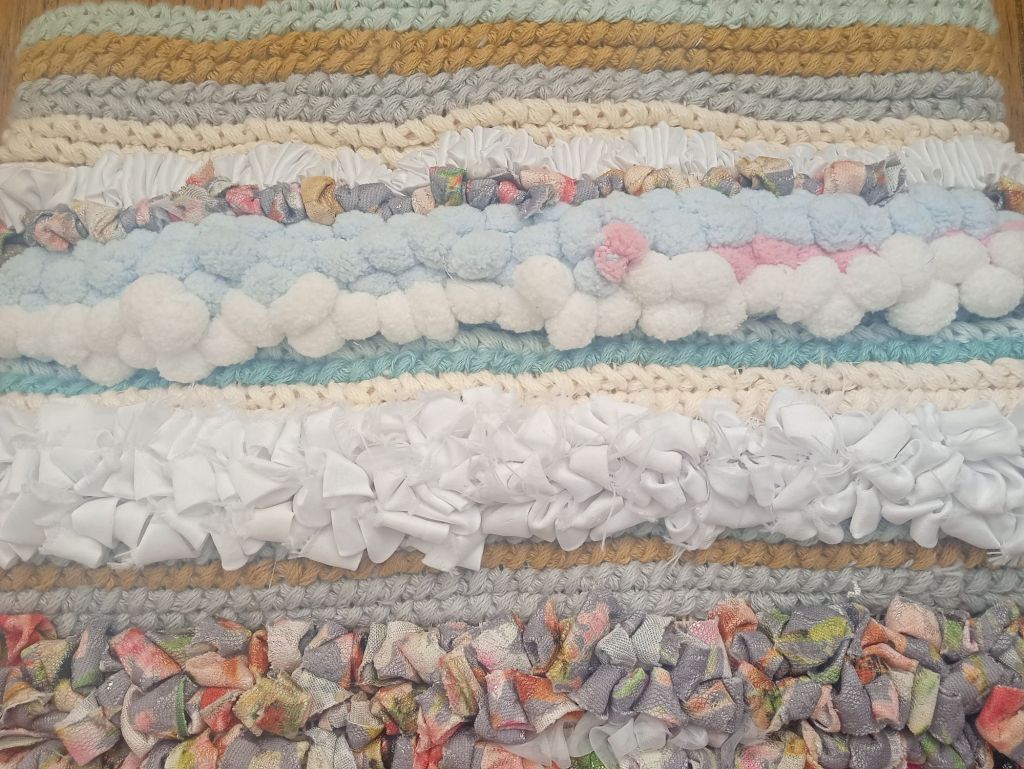
ariane crafts, all rights reserved
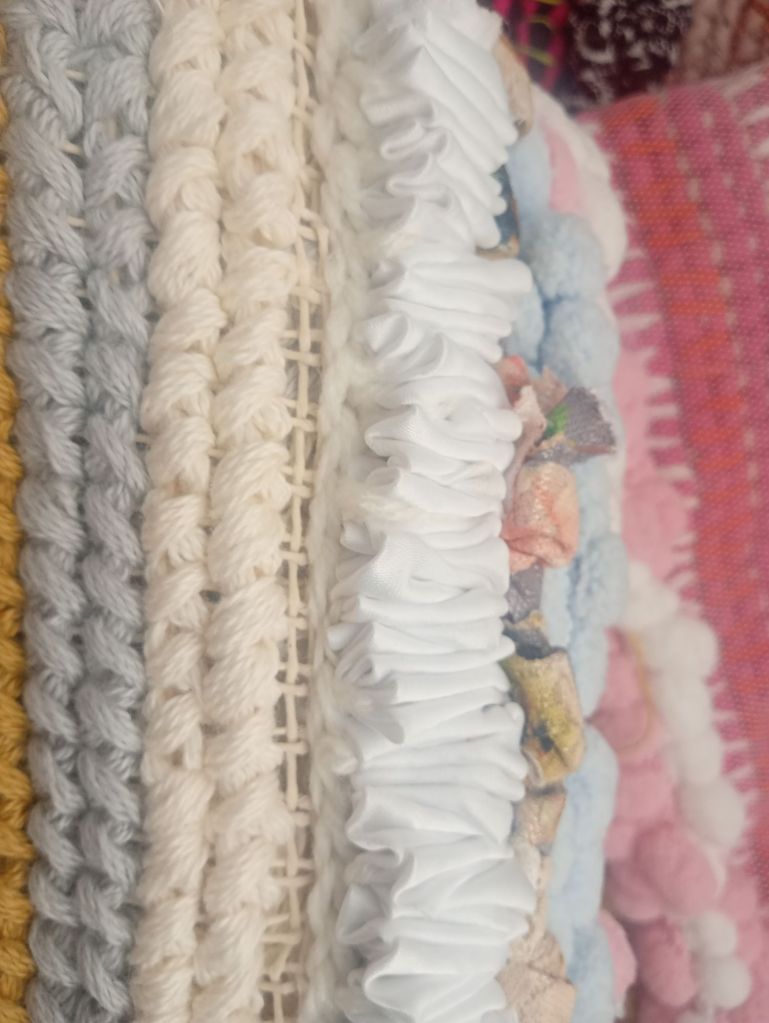
The Coptic Binding Process
The Coptic stitch
georgian Hand-embroidery, utilizing silk threads and metallic purls, was a common pursuit among the female aristocracy,
ariane crafts, all rights reserved
ariane crafts, all rights reserved
ariane crafts, all rights reserved
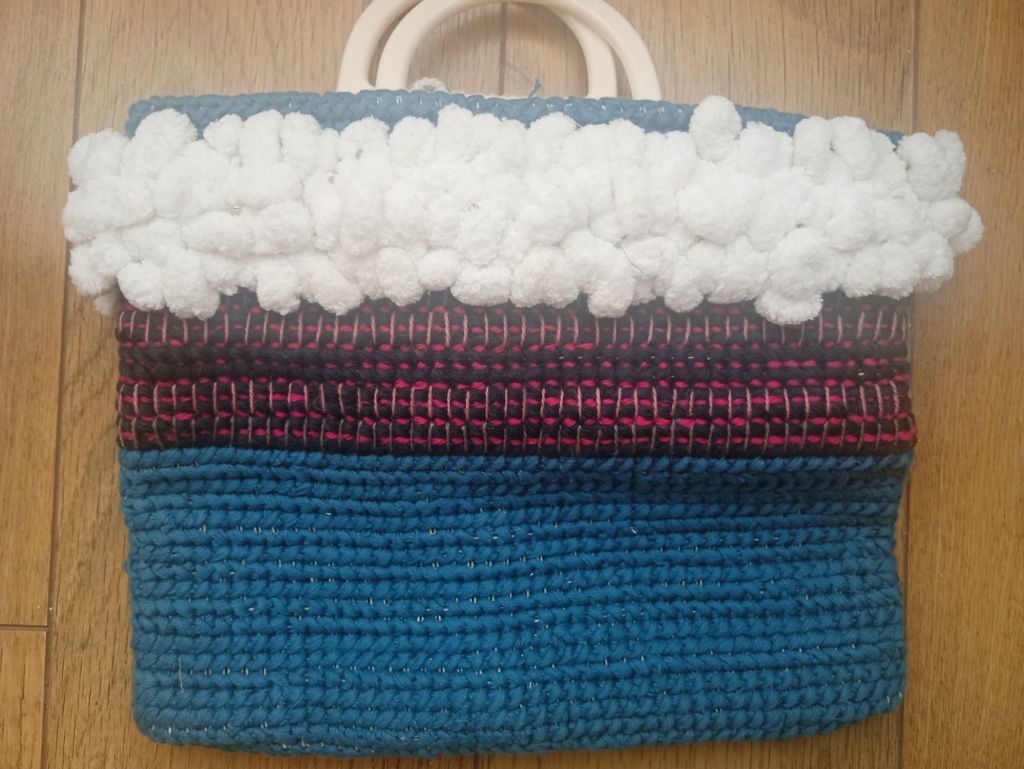
dark royal blue
The North American and Australian Frontiers: Pioneer Adaptation
The migration of textile influences to North America
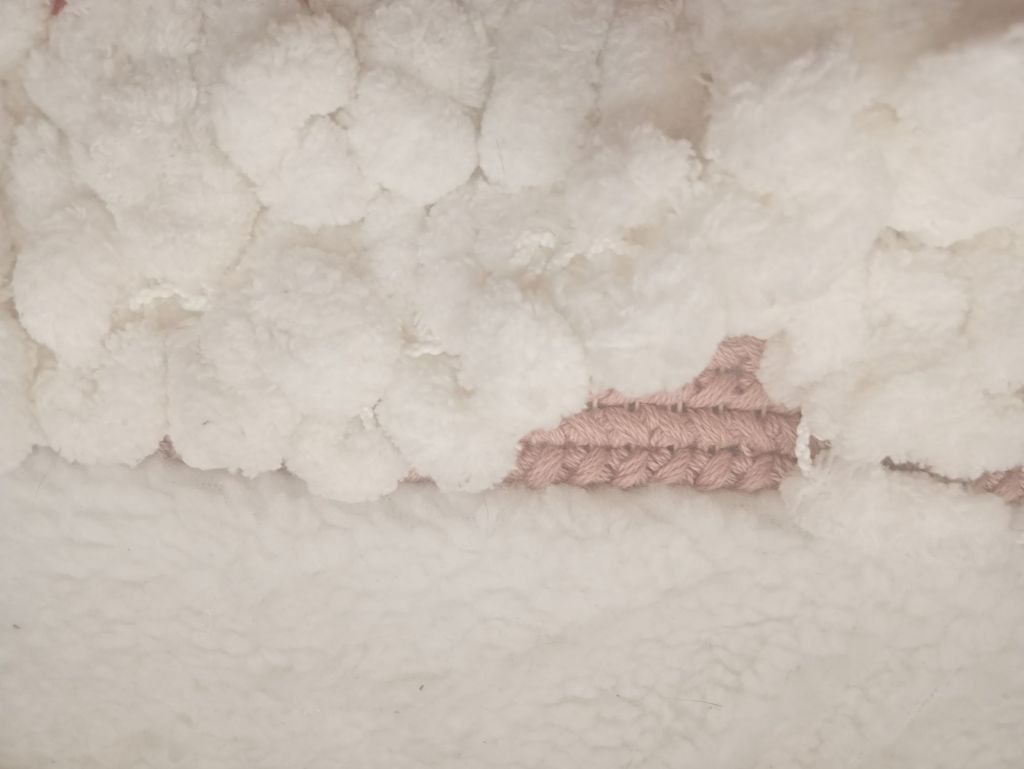
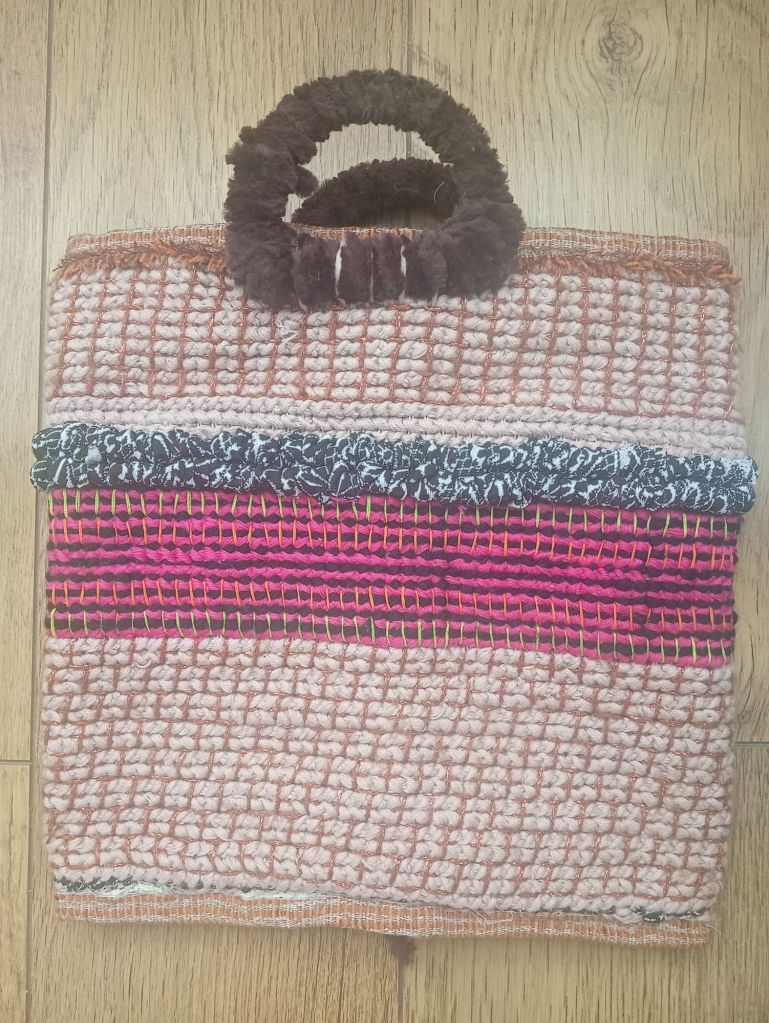
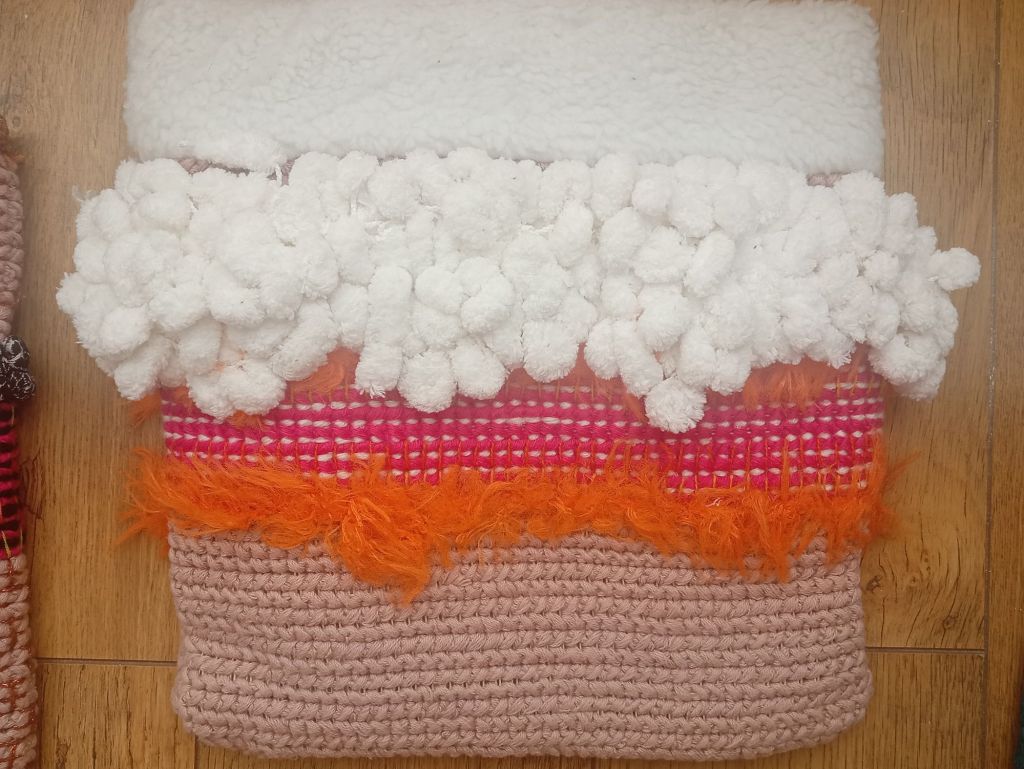
north american pioneer handbags influence visible in the animal skin or fur bordering the top of the handbag.
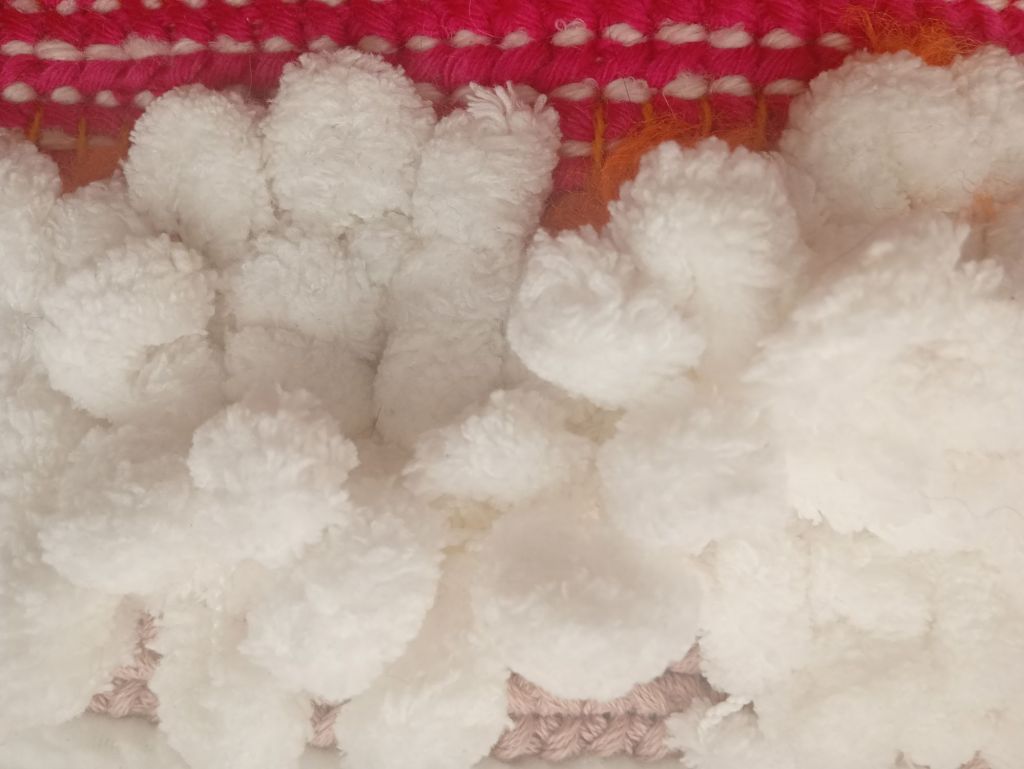
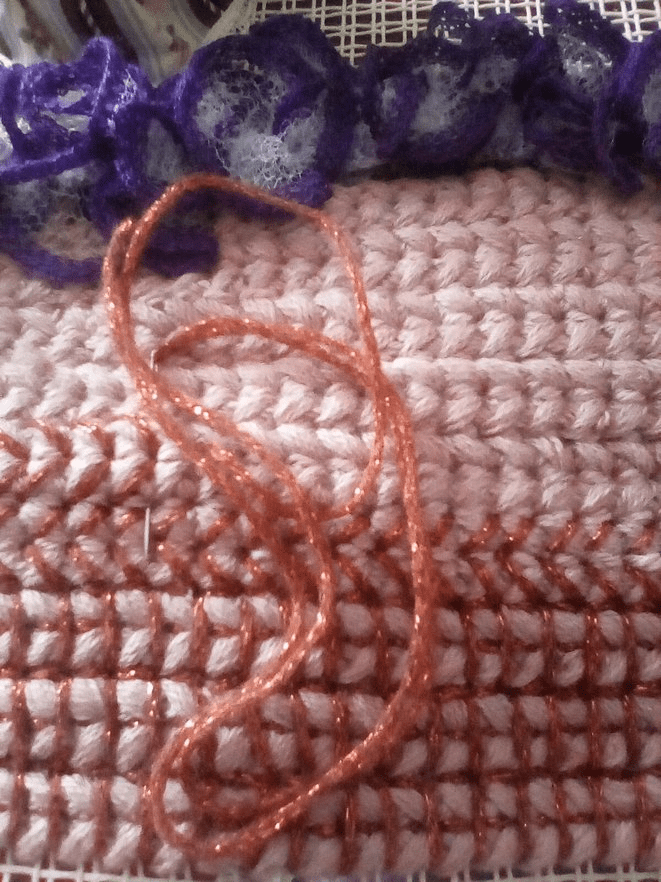
front of crochet on canvas
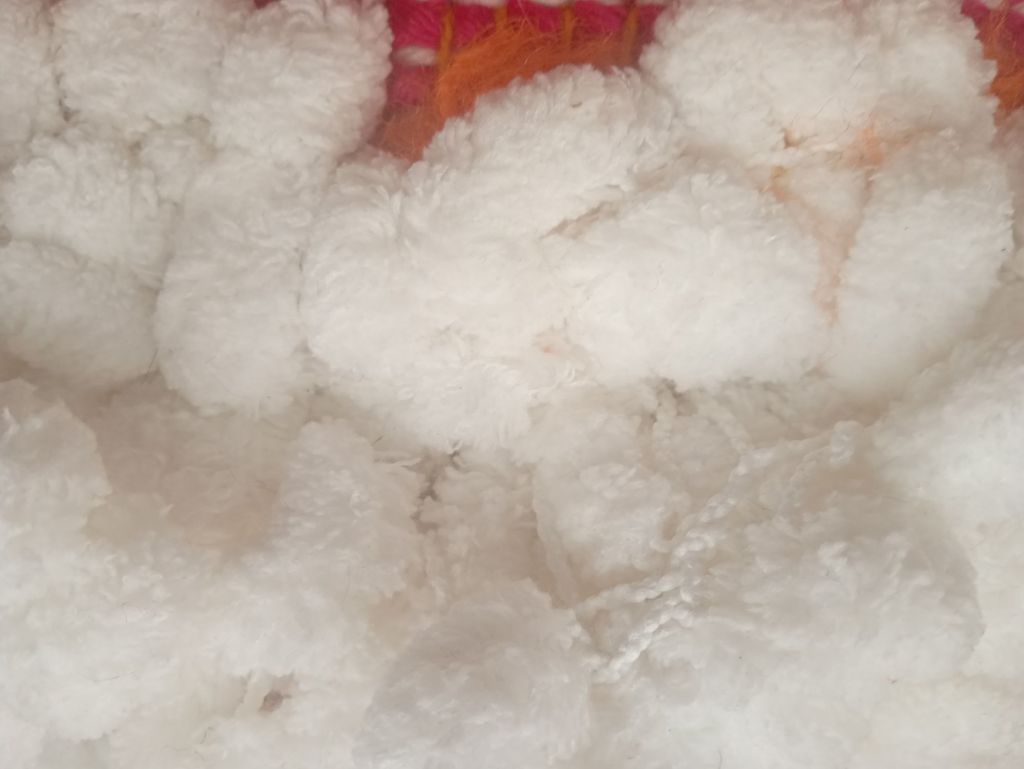
back of crochet on canvas
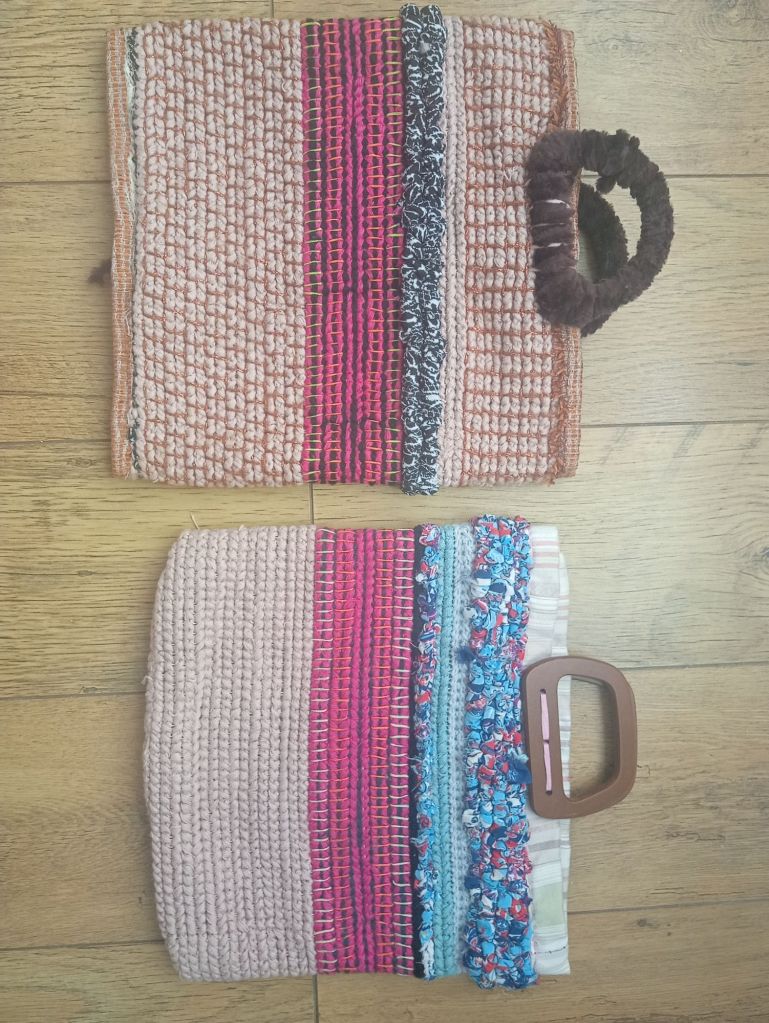
the fabric patterns used by australian locker hooking artisans . ariane crafts handbags – all rights reserved-
The Caribbean Synthesis: Madras, Creolisation, and Orange Undertones
The Caribbean serves as perhaps the most poignant example of how Georgian textile influences were recontextualised within a complex socio-political landscape. The region’s textile history is dominated by the use of orange(10).
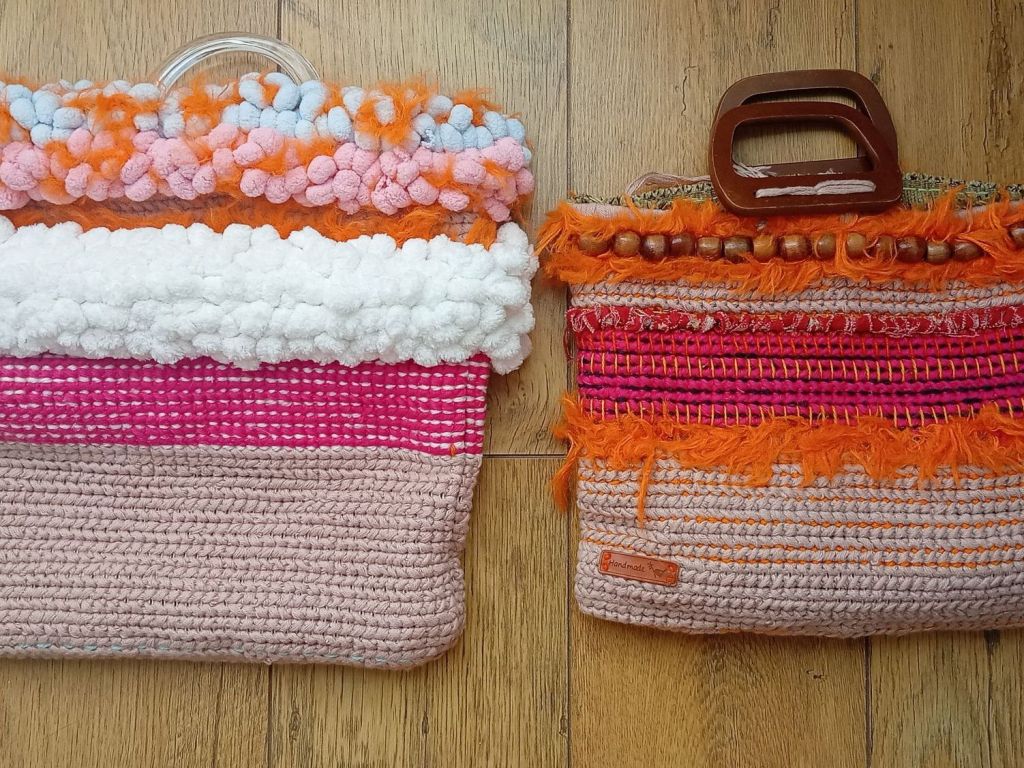
colour theory of the caribbean textile palette : orange undertones. ariane crafts handbags. all rights reserved
Color Theory: The Psychology of Orange and Amber
The Caribbean textile palette is defined by its radiance, with a specific emphasis on what modern theorists describe as “orange undertones.” This aesthetic preference is deeply rooted in the history of natural dyes and the psychological impact of the amber spectrum. Amber, a hue situated between yellow and orange, is associated with warmth, vitality, and social cohesion—qualities that were prized in the communal cultures of the Caribbean(11)
Historical dyeing practices in the region utilized local and imported plant sources, such as madder (Rubia tinctoria) and indigo (Isatis tinctoria), to produce a range of “ruddy” tones. These colors were particularly effective when set against the skin tones of the Afro-Caribbean population, as the “orange undertones” provided a vibrant contrast that enhanced the wearer’s features—a principle of color theory that remains a cornerstone of contemporary fashion and beauty trends in the region(12).
The use of amber and orange also possessed a symbolic dimension. In many ancient cultures, amber was regarded as a mystical substance, and its “warm golden glow” was believed to promote communication and openness. In the Caribbean context, these hues represented a defiance of the drab, utilitarian fabrics often imposed by the plantation system, such as the coarse “Penistone cloth” imported from Yorkshire( 13).
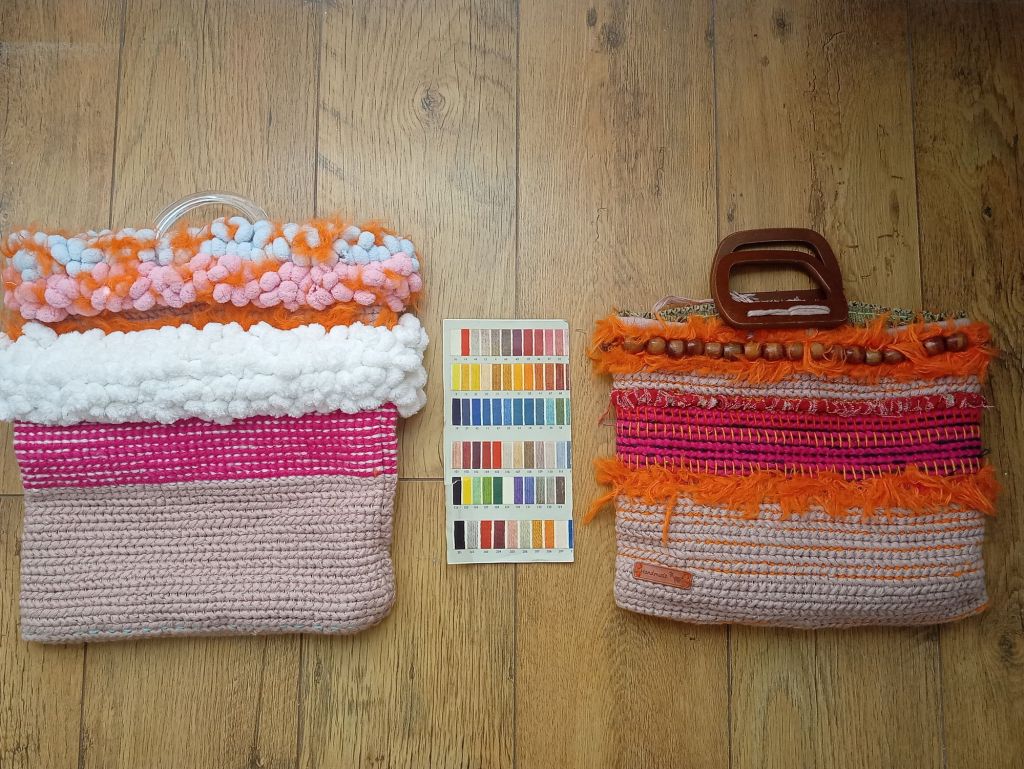
readicut colour palette, ariane crafts handbags, all rights reserved
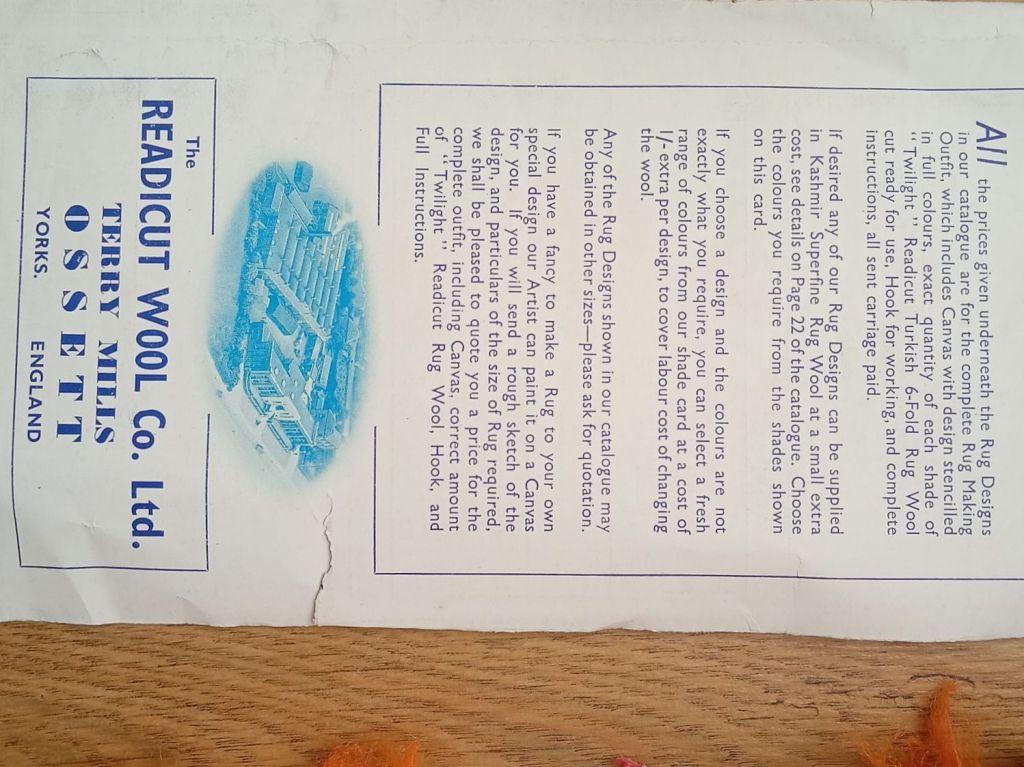
the readicut wool co. ltd., terry mills ossett, yorkshire, ariane crafts, all rights reserved
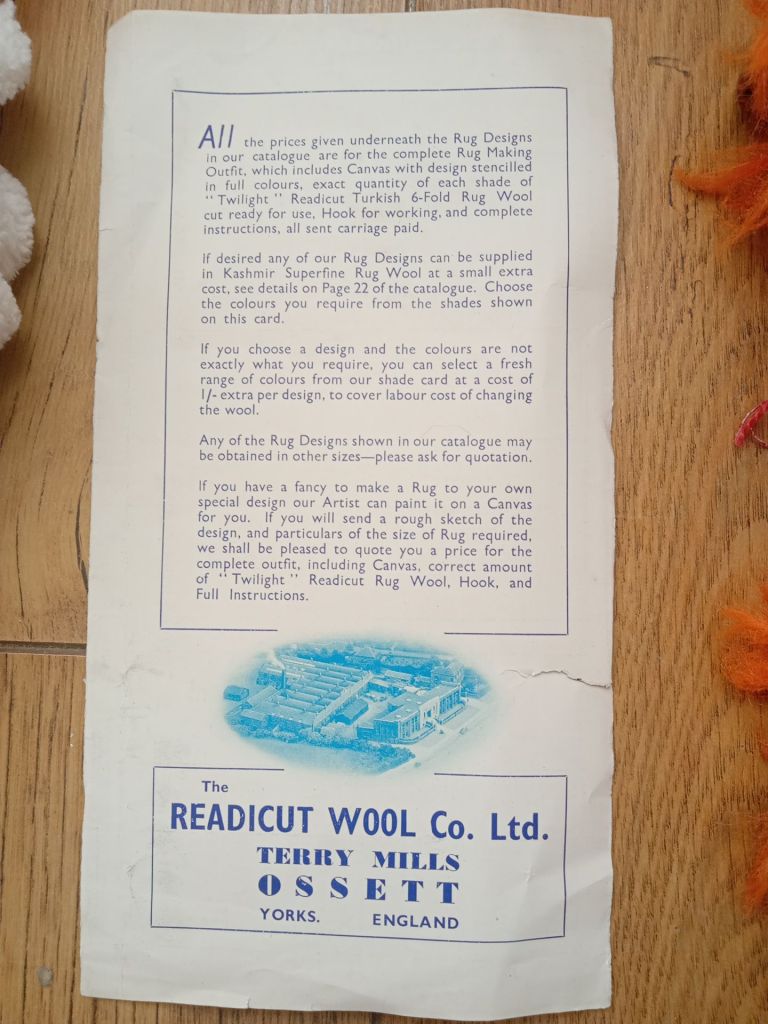
the readicut wool co. ltd., terry mills ossett, yorkshire, ariane crafts, all rights reserved
The North American and Australian Frontiers: Pioneer Adaptation
The migration of textile influences to North America and Australia was characterized by a shift toward utilitarianism and the preservation of resources. In these territories, the “rag rug” became the primary medium for the expression of Georgian and Victorian aesthetic ideals within a pioneer context (14).
The Evolution of Rug Hooking and Proddy
In North America, particularly along the eastern seaboard and Canada, early colonists recycled worn-out yarn and fabric strips into hooked rugs to furnish their homes. This craft, born of necessity, evolved into an art form as women began to incorporate pastoral scenes and floral patterns reminiscent of English upholstery. The “proddy” technique, where strips of fabric were pushed or pulled through a hessian backing to create a shaggy pile, was a direct descendant of the Yorkshire “thrum” rugs made from weaving mill cast-offs(15).
| Frontier Technique | Mechanism | Materials Used |
| Primitive Hooking | Loops of fabric pulled through burlap using a hand hook. | Recycled wool strips, 1/4 to 1/2 inch wide. |
| Proddy (Prodding) | Fabric strips poked through from the back of the canvas. | Coarse wool, mill off-casts, or recycled clothing. |
| Latch Hooking | Knotting short lengths of yarn through a mesh foundation. | Pre-cut wool or wool/acrylic mixes. |
| Locker Hooking | Loops locked in place with a hidden strand of twine. | Fabric strips, unspun wool roving, or thick yarn. |
Australia and the Resilience of Locker Hooking
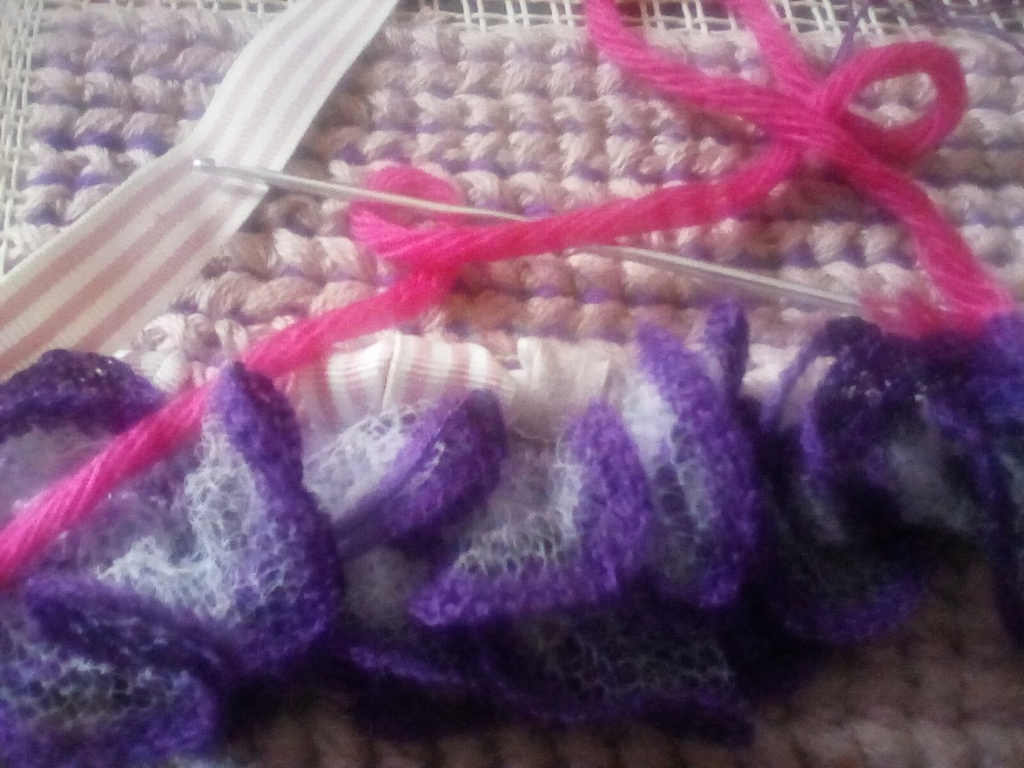
ariane crafts, all rights reserved
In Australia, the locker-hooking technique became particularly popular between 1920 and 1940. This method provided a more stable and durable pile than traditional hooking, as each loop was “locked” in place by a horizontal strand of wool or twine passed through the loops using a specialized hook with a needle eye. The use of “ditsy” fabric strips—small-scale floral prints—was a common way for Australian women to create colourful, patterned rugs that could withstand the dust and wear of rural life(14).
The Australian pioneer spirit is encapsulated in the way these rugs were used. Often placed loop-side down for everyday wear, they would be flipped over to reveal their decorative patterns when visitors arrived, a practical solution that mirrored the Georgian tradition of protecting fine furniture with slipcovers(15).
The Readicut Wool Co.: Industrialising the Artisanal
The early twentieth century marked a pivotal shift in the textile arts with the founding of the Readicut Wool Co. by Ralph Hirst in 1928. Based at Terry Mills in Ossett, Yorkshire, Readicut revolutionized the domestic craft market by introducing the concept of the “pre-cut” wool rug kit(16).
Innovation at Terry Mills
Prior to Hirst’s innovation, rug makers were required to purchase wool in skeins and manually cut each length, a process that was both time-consuming and prone to inconsistency. Hirst’s brilliance was in the mechanisation of this preparation. By supplying kits that included a printed canvas, a specialized latch hook, and precisely cut lengths of wool, Readicut democratised a craft that had previously been the domain of those with significant time to spare(17).
The company’s influence was vast, employing over 3,700 people at its peak and utilizing cutting-edge mail-order services to reach customers across the Commonwealth. Readicut’s products were synonymous with quality, offering “Twilight” (pure wool) and “Terry” (mixed fibre) yarns to suit different budgets. During World War II, the kits were even used by sailors and convalescing soldiers as a form of occupational therapy, further cementing the brand’s place in the national identity(18).
The Exacta Graph Color Theory
In the late 1970s, Readicut introduced the “Exacta Graph” method, a significant advancement in the technical delivery of craft kits. This system addressed the perennial problem of working under artificial light, which often distorted the perception of subtle wool shades. The Exacta Graph featured(19):
- Color-Matched Perforated Paper: A full-size chart where the printed colors exactly mirrored the wool provided(19).
- Numbered Grid Squares: Each square on the canvas corresponded to a numbered entry on a color chart, ensuring absolute fidelity to the design(19).
- Perforated Sections: Crafters could fold back or tear off finished rows, preventing them from losing their place in complex patterns(19).
This rigorous approach to color theory and pattern management reflected the Georgian obsession with precision and order, translated into a modern, industrial format.
Technical Artisanal Methods of ariane crafts: Coptic and Locker Stitching
To understand the sophisticated offerings of a brand like Ariane Crafts, one must examine the specific technical methodologies that elevate textile work from a mere hobby to a professional discipline. Coptic stitching and locker hooking represent two such methodologies, each with a profound historical and structural significance.
The Mechanics of Coptic Stitching
Coptic stitching, or Coptic binding, is an ancient method originally developed by the early Christians in Egypt (the Copts) for binding codices. Unlike modern bookbinding, which relies heavily on adhesives, the Coptic stitch is entirely non-adhesive, utilizing a series of interlocking loops to join signatures (folded sheets) to one another and to the covers(20).
The primary aesthetic and functional advantage of the Coptic stitch is its flexibility; it allows the bound object to lie completely flat, making it ideal for the “shirring” or gathering of heavy textiles into book-like structures or decorative table mats(21).
Locker Hooking: Structural Stability
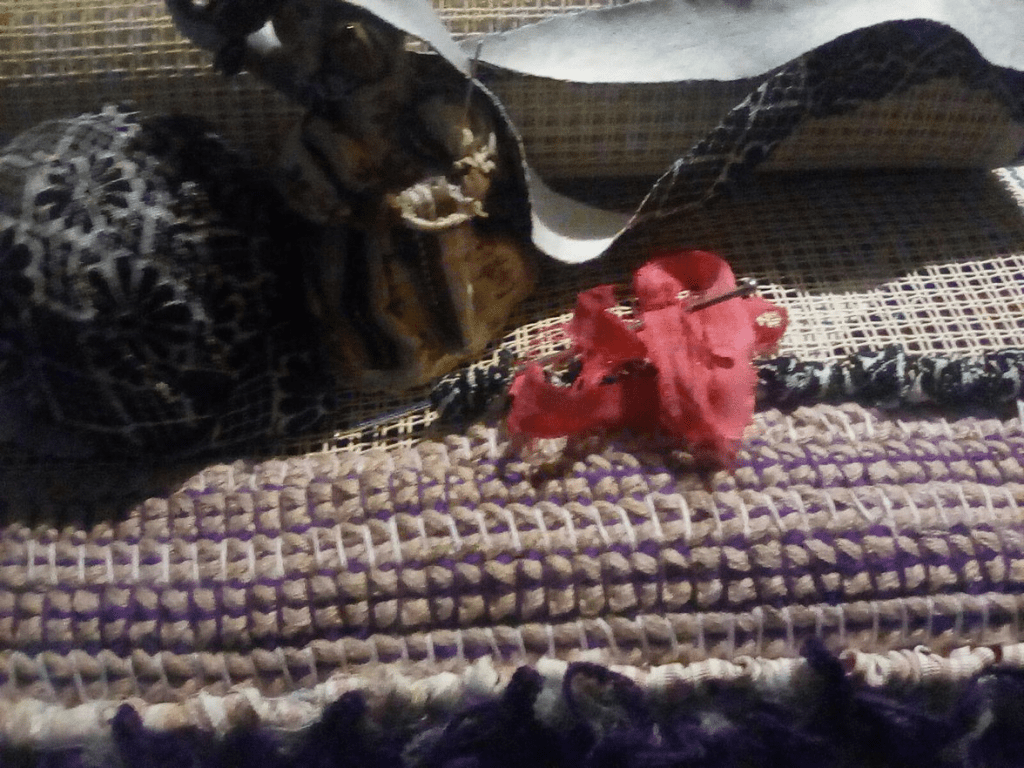
ariane crafts, all rights reserved
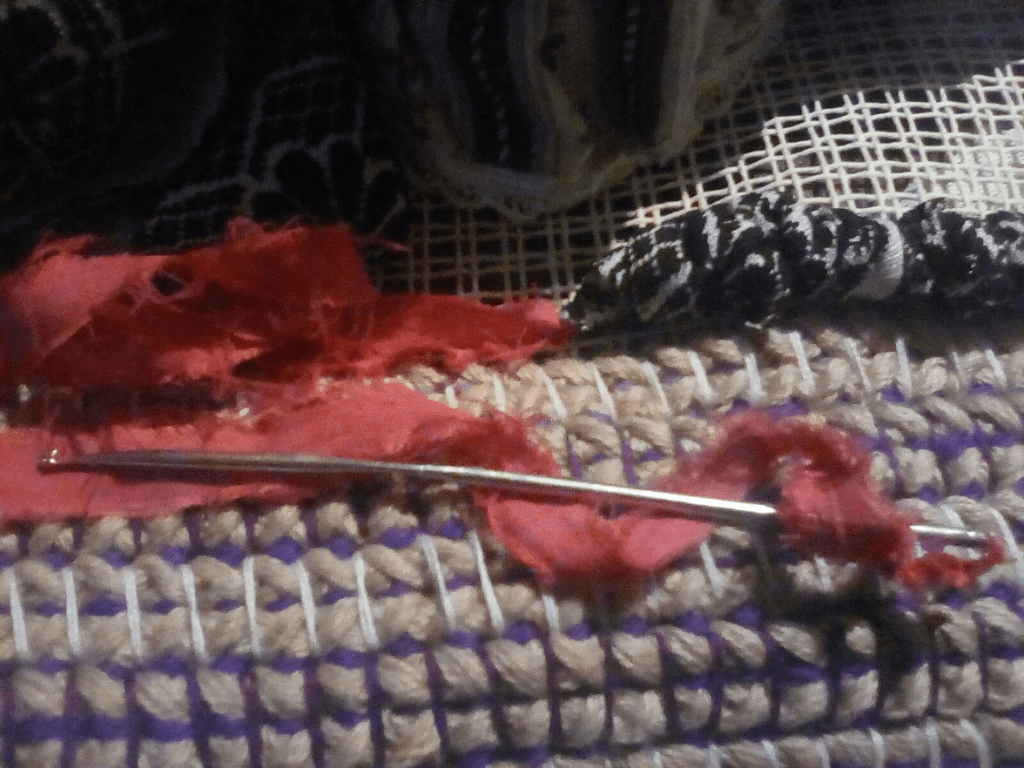
ariane crafts, all rights reserved
Locker hooking is a technique that bridges the gap between weaving and embroidery. It utilizes a “locker hook”—a tool that is approximately 6.5 inches long, featuring a crochet-style hook at one end and a large needle eye at the other. This method is uniquely suited to the creation of heavy-duty textiles, as the “locking” strand ensures that the pile cannot be unraveled by pulling on a single loop—a common failing of traditional hooked rugs(22)
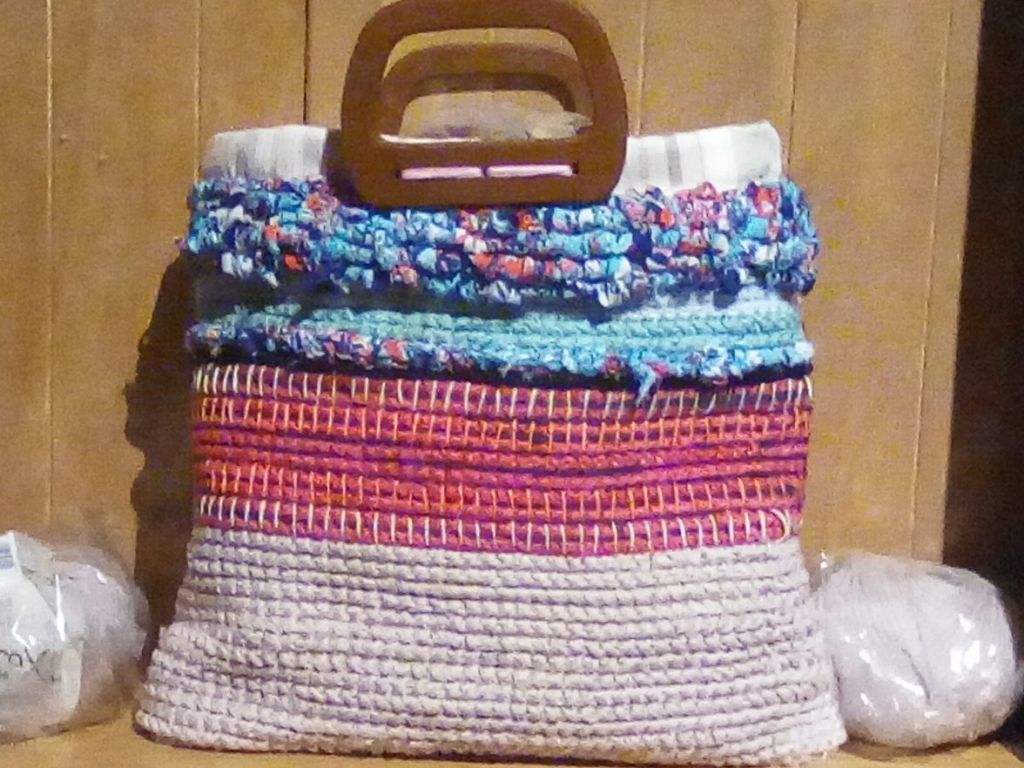
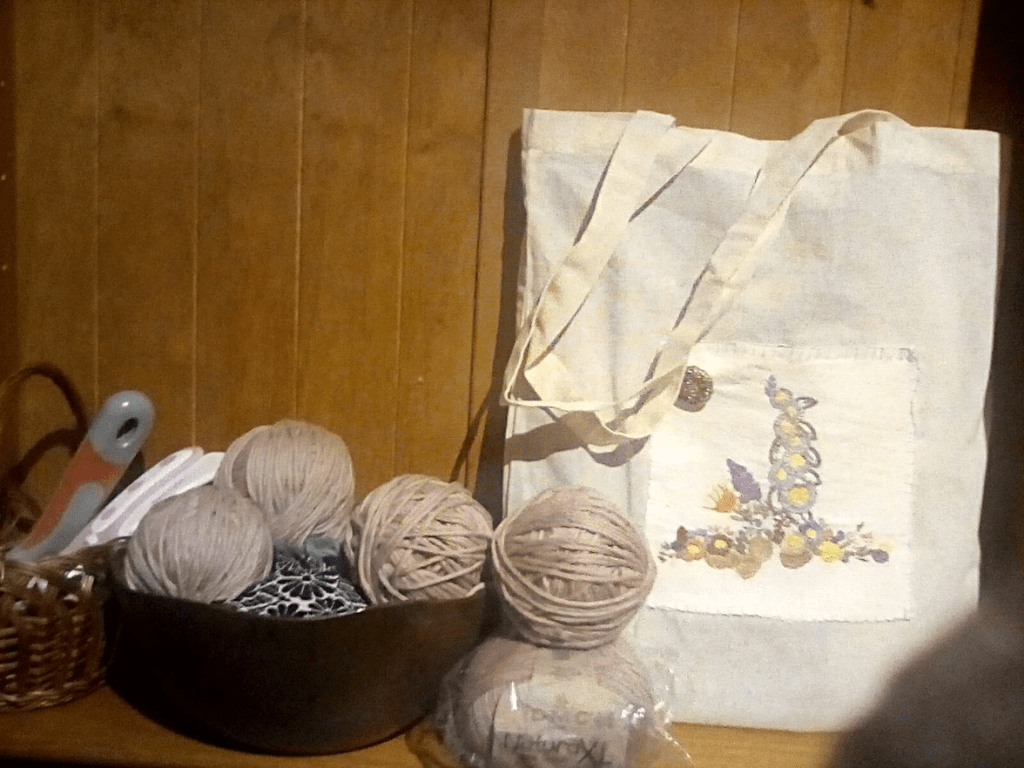
some of my locker hooking accessories in the bowl : rotary cutters.
ariane crafts, all rights reserved
The process involves threading a strong, often hidden, yarn through the eye of the hook. As loops of decorative material (such as silk strips or chenille) are pulled up through a canvas mesh, the hook is drawn horizontally through the centers of the loops, pulling the locking strand with it and securing the entire row in one motion. This technique was a vital innovation in the early twentieth century, allowing for the creation of sturdy, high-traffic textiles using a wide variety of recycled and luxury materials (23).
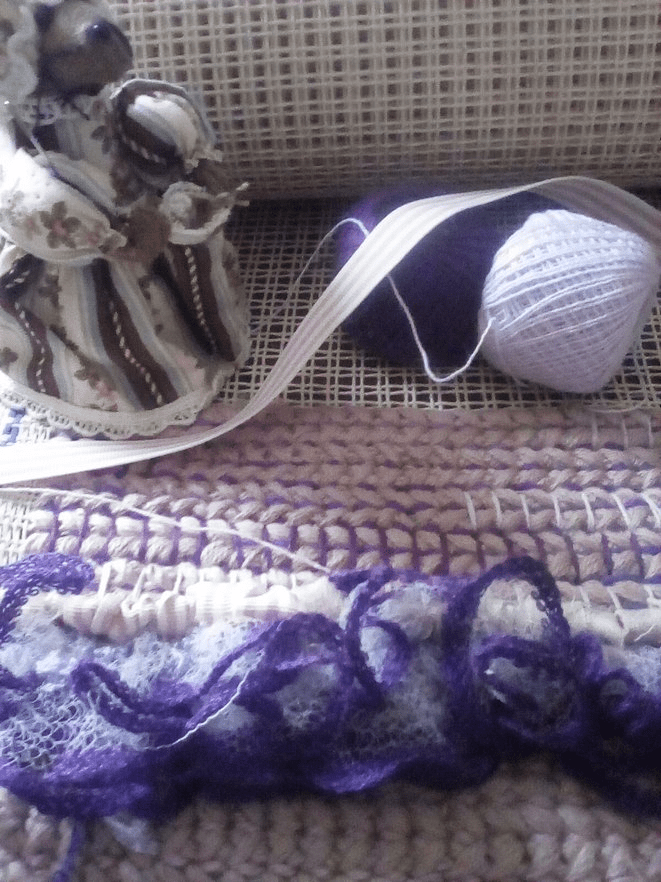
ariane crafts, all rights reserved
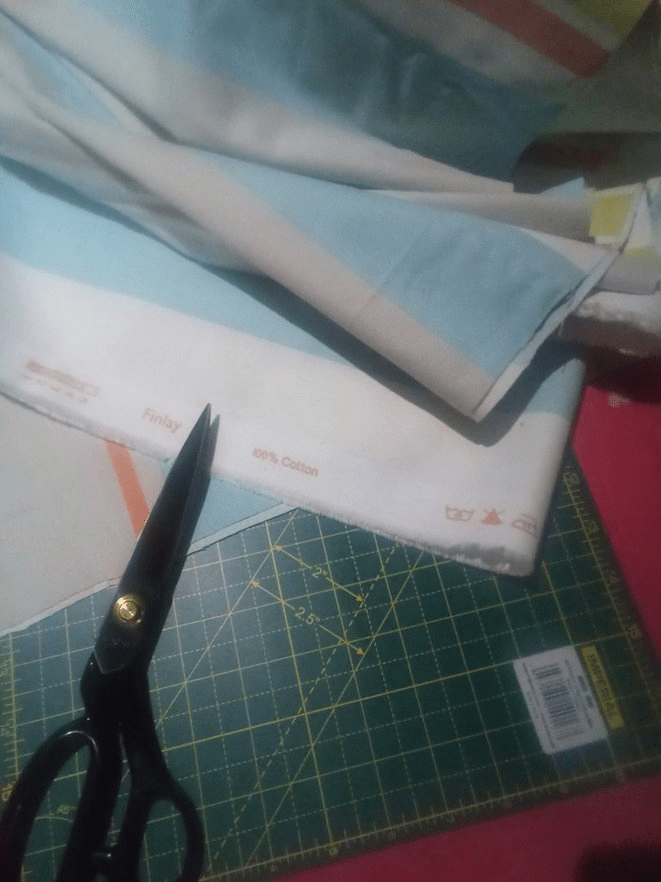
ariane crafts, all rights reserved
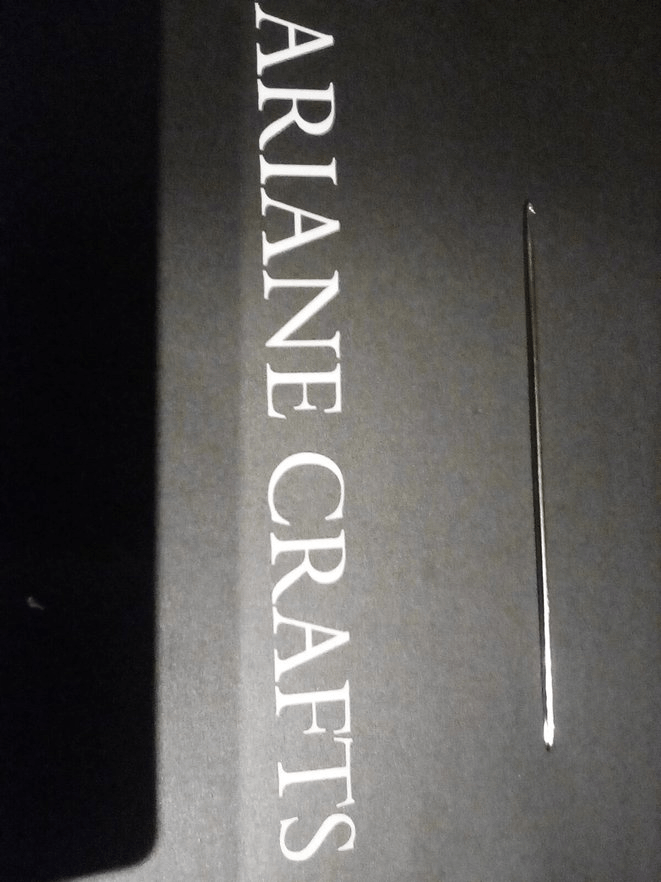
locker hooking needle
Bibliography
AC Silver, ’18th Century Table Settings’, AC Silver, 2019.
AKD Furniture, ‘What is Georgian Furniture?’, AKD Furniture Blog, 2024.
Ariane Crafts, ‘Ariane Crafts: Textile Art’, Ariane Crafts Trademark, 2025.
Butchoff Antiques, ‘English Furniture of the Georgian Period’, Butchoff Blog.
Connecting Threads, ‘The Greater Caribbean Region: Consumers’, Connecting Threads Project.
Creativiu, ‘Coptic Stitch Bookbinding Tutorial: Step-by-Step Guide for Handmade Journals’, Creativiu.
Etons of Bath, ‘Georgian Fabrics: Drama and Opulence’, Etons of Bath Inspiration.
Etons of Bath, ‘Sumptuous Georgian Upholstery: How Fabrics Transform a Period Interior’, Etons of Bath.
Global Threads Manchester, ‘The Penistone Cloth: Textiles and Slavery – From the Pennines to Barbados and Beyond’, Global Threads.
Hartwell, S., ‘Rug-Making Supplies: Readicut’, Messybeast, 2014.
Hartwell, S., ‘Rugmaking: History’, Messybeast, 2014.
Hemingway, P., ‘Nålbinding: A Short History of an Ancient Craft’, Spin Off Magazine, 2022.
Horbury History, ‘History of Readicut’, Horbury History, 2016.
Jacobson, D., ‘What in the World is Locker Hooking?’, Tangle Alaska, 2023.
Kakhia, T., ‘Dyes, Colors, Pigments’, Tarek Kakhia Books.
Larsdatter, K., ’18th Century Purses, Reticules, and Work Bags’, Larsdatter.
Latin American and Caribbean Design, ‘Woven Identities: Indigenous Textiles, Cultural Appropriation and the Decolonization of Latin American Fashion’, CUNY Commons.
Manucurist, ‘Best Nail Polish Colors for Dark Skin’, Manucurist Journal.
Mount Vernon Ladies’ Association, ‘Textiles of Colonial Life’, Mount Vernon Education.
Papercraft Panda, ‘Overview: How to Create a Book Using the Coptic Binding Method’, Papercraft Panda.
SFO Museum, ‘Essential Style: Vintage and Antique Purses’, SFO Museum Exhibitions.
Sheepy Hollow, ‘Locker Hooking in Australia’, Sheepy Hollow, 1980.
Skillshare, ‘Guide: Coptic Stitches and Book Binding’, Skillshare Blog.
Smith, T., ‘Caribbean Madras Fabric’, Tihara Smith Blog.
Swiftspeed Team, ‘Amber Color: Science, Properties and HEX Code Explained’, Swiftspeed, 2026.
Textile as Art, ‘Brocades: The Tradition of Bringing Silk to Life’, Textile as Art.
Trapunto, ‘Locker Hook Experiments’, Trapunto Blog, 2011.
Wakefield Museums & Libraries, ‘Readicut Wool Co. Ltd’, Wakefield Collections.
Welch, C., ‘Primitive Rug Hooking Has a Remarkable History: Part 1’, Friends of the DD Collins House, 2018.